The British Foreign Office is currently paralyzed by a fit of institutional pique because a change in Washington's temperature has frozen their favorite vanity project. The prevailing media narrative—the one you’ve likely swallowed whole this morning—is that Donald Trump’s withdrawal of support for the Chagos Islands handover is a "disruption" of a tidy, logical diplomatic process.
That narrative is a lie.
The proposed deal to hand sovereignty of the British Indian Ocean Territory (BIOT) to Mauritius was never about decolonization or international law. It was a managed retreat by a tired establishment that has forgotten how to value strategic geography. Trump isn't "throwing a wrench" into the works; he’s pointing out that the engine was already on fire.
The Myth of the Secure Lease
The central pillar of the competitor’s argument is that the deal "secured" the future of the Diego Garcia military base through a 99-year lease. This is the kind of logic only a bureaucrat could love.
In the real world, sovereignty is the only currency that matters. Once you hand the keys to the front door to a third party, your "lease" is worth exactly as much as that party’s willingness to keep the lights on. Mauritius is not a neutral, vacuum-sealed democracy. It is a nation deeply entwined with Chinese investment and influence.
By transferring sovereignty, the UK was effectively placing the most vital staging ground in the Indian Ocean under the indirect oversight of Beijing. If you think a 99-year lease prevents a future Mauritian government from "renegotiating" terms under pressure from Chinese creditors, you haven't been paying attention to the last twenty years of debt-trap diplomacy in Africa and the Indo-Pacific.
International Law is a Tool Not a Master
The "lazy consensus" screams about the International Court of Justice (ICJ) advisory opinion and UN General Assembly resolutions. They frame the UK as a "rogue state" for holding onto the islands.
Let's be precise: ICJ advisory opinions are exactly that—advisory. They are not legally binding. The UN General Assembly is a theatre of optics, not a court of global governance. The UK’s "obligation" to cede the territory is a self-imposed psychological burden, not a legal one.
I have watched diplomatic missions burn through millions in taxpayer funds trying to "align with international sentiment," only to find that "sentiment" shifts the moment a country shows weakness. The Chagos deal was a signal of exhaustion. It told the world that Britain is no longer interested in maintaining the infrastructure of a global power if the paperwork gets too messy.
The China Factor the Press Ignores
Mauritius is a member of the Belt and Road Initiative. It has received billions in Chinese loans for infrastructure, from airports to stadiums. To suggest that a Mauritian-owned Chagos archipelago would remain a sanctuary for Western intelligence is worse than naive; it is professionally negligent.
The Diego Garcia base is the "unsinkable aircraft carrier." It is the pivot point for operations in the Middle East, South Asia, and the South China Sea.
- Logistics: It is one of the few places on earth capable of supporting long-range bomber missions with total autonomy.
- Surveillance: It sits at the heart of global undersea cable networks and satellite tracking.
- Denial: Controlling Chagos means denying a hostile power a foothold in the center of the Indian Ocean.
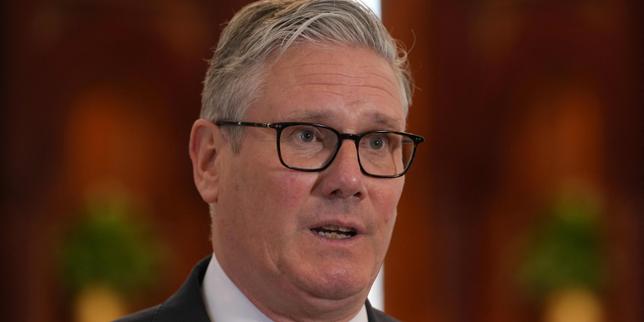
Trump’s team understands a fundamental truth that the Starmer government refuses to acknowledge: You do not trade hard power for "good vibes" at the United Nations.
The Displacement Fallacy
The human rights angle is frequently used as a moral cudgel to shut down strategic debate. Yes, the expulsion of the Chagossians in the 1960s and 70s was a dark chapter. It was handled poorly, executed coldly, and remains a stain on the record.
However, handing the islands to Mauritius does nothing for the Chagossian people. Mauritius has no historical claim to the islands other than an administrative convenience created by the British colonial office in the 19th century. The Chagossians are not Mauritians; they are a distinct people who have been used as pawns by Port Louis to expand its exclusive economic zone (EEZ) by 15,000 square kilometers.
If the UK wanted to right the wrong, it would offer the Chagossians the right of return under British sovereignty or direct compensation. Handing the land to a third-party state that never owned it is not "decolonization"—it’s just changing landlords while the strategic security of the West evaporates.
The "Special Relationship" Reality Check
The UK government thought they could sneak this deal through before the US election, banking on a continuation of the Biden administration's passive approach to traditional alliances. They miscalculated.
The incoming Trump administration views the world through the lens of competition, not "rules-based order" platitudes. If the US provides the bulk of the military hardware and funding that makes Diego Garcia relevant, the US gets a say in who owns the dirt beneath it.
The British Foreign Office is currently "putting the deal on hold" because they realized they cannot afford to alienate their most important security partner over a deal that offers the UK zero tangible benefits. The pause isn't a failure of diplomacy; it's a rare moment of forced clarity.
The Cost of Compliance
Every time a Western power retreats from a strategic outpost to satisfy a non-binding legal opinion, the global map shrinks for democracy. We saw it with the Panama Canal. We see it in the South China Sea.
The Chagos handover was slated to be a "model" for resolving maritime disputes. Instead, it would have been a blueprint for how a mid-sized power can be bullied into giving up its crown jewels by a combination of lawfare and lobbyist-driven narratives.
Imagine a scenario where the UK followed through. Five years from now, a Chinese "research vessel" docks in the newly Mauritian-governed Chagos. Ten years from now, a "commercial" port facility is built with Chinese labor on an outer island. The 99-year lease on Diego Garcia becomes a 99-year hostage situation.
Stop Asking if the Deal is Fair
The wrong question is: "Is the handover fair to Mauritius?"
The right question is: "Does the handover make the world more or less stable?"
By every metric of realpolitik, the answer is less. It introduces volatility where there was certainty. It introduces foreign interference where there was a closed loop of security.
The UK needs to stop apologizing for its geography. If London wants to remain a serious player in the AUKUS era, it must hold its ground. Diego Garcia is not a colonial relic; it is a 21st-century necessity.
Trump’s intervention isn't an attack on British sovereignty. It is a reminder of what sovereignty actually looks like. It’s the power to say "no" to a bad deal, even when the rest of the world is shouting "yes."
The deal isn't "on hold." It’s dead. And we should be grateful for the autopsy.
Keep the islands. Build the base. Ignore the bureaucrats.