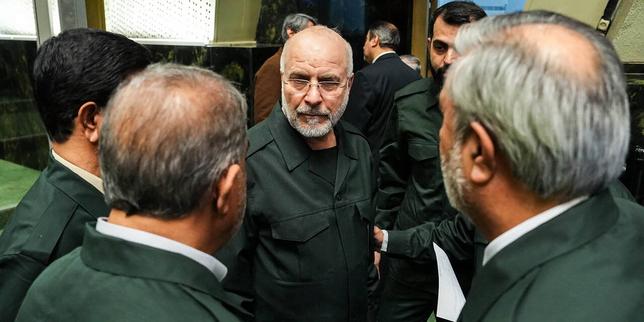
The survival of the Iranian political apparatus currently hinges on a high-stakes recalibration of its negotiating architecture with the West. While the international community often focuses on the presidency or the foreign ministry, the actual nexus of power has shifted toward the legislative branch under Speaker Mohammad Bagher Ghalibaf. This shift is not merely a change in personnel; it represents the institutionalization of "Revolutionary Pragmatism"—a framework designed to secure sanctions relief without compromising the core ideological pillars of the Islamic Republic. Understanding Ghalibaf’s role requires a cold-eyed assessment of how he bridges the gap between the Deep State (the IRGC and the Office of the Supreme Leader) and the formal diplomatic requirements of international engagement.
The Strategic Triad of Ghalibaf’s Influence
The Speaker of the Parliament (Majlis) in Iran serves three distinct functions that make him the indispensable conduit for future negotiations with Washington. Unlike previous reformist or moderate negotiators who often lacked the backing of the security establishment, Ghalibaf operates from a position of "integrated authority."
- Security Pedigree as Negotiating Capital: As a former IRGC commander and Tehran police chief, Ghalibaf possesses the "hard-power" credentials necessary to sell a diplomatic compromise to the hardline factions of the regime. In the Iranian political economy, a deal signed by a technocrat is viewed as a betrayal; a deal brokered by a general is viewed as a tactical retreat in a larger war.
- Legislative Gatekeeping: The 2020 "Strategic Action Plan to Lift Sanctions" demonstrated the Parliament's ability to dictate the pace of nuclear escalation. By controlling the floor, Ghalibaf can manufacture "legal constraints" that serve as leverage in international talks, allowing Iranian negotiators to claim their hands are tied unless specific concessions are met.
- The Technocratic Interface: Ghalibaf has long branded himself as a man of "jihadi management"—a term used to describe efficient, results-oriented governance within a revolutionary framework. This makes him the preferred interlocutor for a West seeking a partner who can actually deliver on domestic implementation.
The Cost Function of Sanctions vs. Regime Continuity
The Iranian strategy, mediated by Ghalibaf, operates on a specific cost-benefit calculus. The regime's "resistance economy" has reached a point of diminishing returns where the internal cost of social instability exceeds the external cost of limited diplomatic concessions.
The primary bottleneck for the Iranian state is the mismatch between its regional expansionist goals and its shrinking capital reserves. Ghalibaf’s objective is to solve for a "partial equilibrium": achieving enough sanctions relief to stabilize the middle class and fund the security apparatus, while maintaining a high enough level of nuclear latency to ensure a deterrent against external regime change. This is not a search for "normalization" in the Western sense, but a search for "calculated de-escalation."
Mapping the Power Architecture: The Majlis-Supreme Leader-IRGC Nexus
The efficacy of Ghalibaf as a negotiator is derived from his placement within the informal decision-making circles of the Supreme National Security Council (SNSC). The structural relationship can be mapped as follows:
- The Office of the Supreme Leader (The Decider): Sets the red lines for negotiations, specifically regarding the "irreversibility" of certain nuclear advancements.
- The IRGC (The Enforcer): Ensures that no diplomatic opening threatens the military-industrial complex’s control over the domestic economy.
- The Ghalibaf Majlis (The Architect): Converts these ideological and security requirements into legislative frameworks and backchannel signals.
This creates a "unified front" strategy. In previous iterations of nuclear talks (2015), there was a clear rift between the Rouhani administration and the security establishment. Today, that rift has been surgically closed. Ghalibaf represents the "middle path"—he is sufficiently loyal to the Supreme Leader to be trusted, yet sufficiently pragmatic to understand that the current economic trajectory is unsustainable.
The Mechanics of Backchannel Signaling
Ghalibaf’s recent international movements and rhetoric suggest a sophisticated signaling strategy aimed at the United States. This involves a three-step process:
- Normalization of the Negotiator: Position the Speaker as a "rational actor" who understands the language of international relations, contrasted against the more "unpredictable" elements of the hardline front.
- Conditional Escalation: Using parliamentary resolutions to increase enrichment levels or restrict IAEA access, not as an end goal, but as a "bid" to increase the price of the next round of negotiations.
- The "Single Voice" Narrative: Communicating to Washington that, unlike in the past, a deal struck now would have the full weight of the Iranian state behind it, including the military and the clergy.
Risks and Structural Limitations
Despite Ghalibaf’s strategic positioning, three variables create significant friction in his ability to deliver a lasting breakthrough.
The first limitation is the "Hardliner’s Dilemma." Within the Iranian parliament, a faction of "ultra-purists" views any engagement with Washington as a precursor to ideological erosion. Ghalibaf must constantly balance his pragmatic maneuvers with populist, anti-Western rhetoric to avoid a domestic flank attack. This creates a "rhetorical tax" that often makes his public statements appear more hostile than his private intentions.
The second bottleneck is the lack of institutional trust between Tehran and Washington. The Iranian side, particularly the faction Ghalibaf represents, views the U.S. withdrawal from the JCPOA in 2018 not as a policy shift, but as a fundamental breach of the international system's reliability. Therefore, Ghalibaf’s strategy is likely focused on "transactional arrangements" (e.g., prisoner swaps for frozen assets) rather than a "grand bargain."
The third factor is the shifting regional dynamics. The rapprochement with Saudi Arabia and the deepening ties with Moscow and Beijing provide Iran with "strategic depth" that reduces the urgency of a deal with the West. Ghalibaf is leveraging these eastern alliances to signal that while Tehran wants sanctions relief, it no longer needs it for survival. This "Pivot to the East" serves as a floor for Iran's negotiating position.
Strategic Forecast: The Move Toward a Transactional Interim
The logical conclusion of Ghalibaf’s rise is a shift from the pursuit of a comprehensive treaty to a series of "unwritten understandings." The Iranian state, under Ghalibaf’s legislative guidance, is moving toward a model where it limits its most sensitive nuclear activities in exchange for a "blind eye" policy toward its oil exports.
This "Ghalibaf Doctrine" prioritizes economic breathing room over legal permanence. For the United States, this presents a partner who is significantly more difficult to pressure but also significantly more capable of maintaining a ceasefire. The move is away from the idealistic "change of behavior" toward a clinical "management of conflict."
Future engagements will likely see Ghalibaf utilizing the Majlis to pass "flexible" legislation that allows the executive branch to bypass certain hardline restrictions if specific economic benchmarks are met. This creates a "conditional compliance" framework that gives Tehran the exit ramp it needs while allowing the IRGC to claim it never surrendered its core principles. The strategy for any external power is no longer to wait for a "moderate" to emerge, but to negotiate with the "pragmatic hardliner" who actually holds the keys to the machinery of the state. Establishing a direct or indirect line to the Speaker’s office is now the only viable path for a durable de-escalation, as he remains the only actor capable of synchronizing the IRGC’s security requirements with the state’s economic necessity.