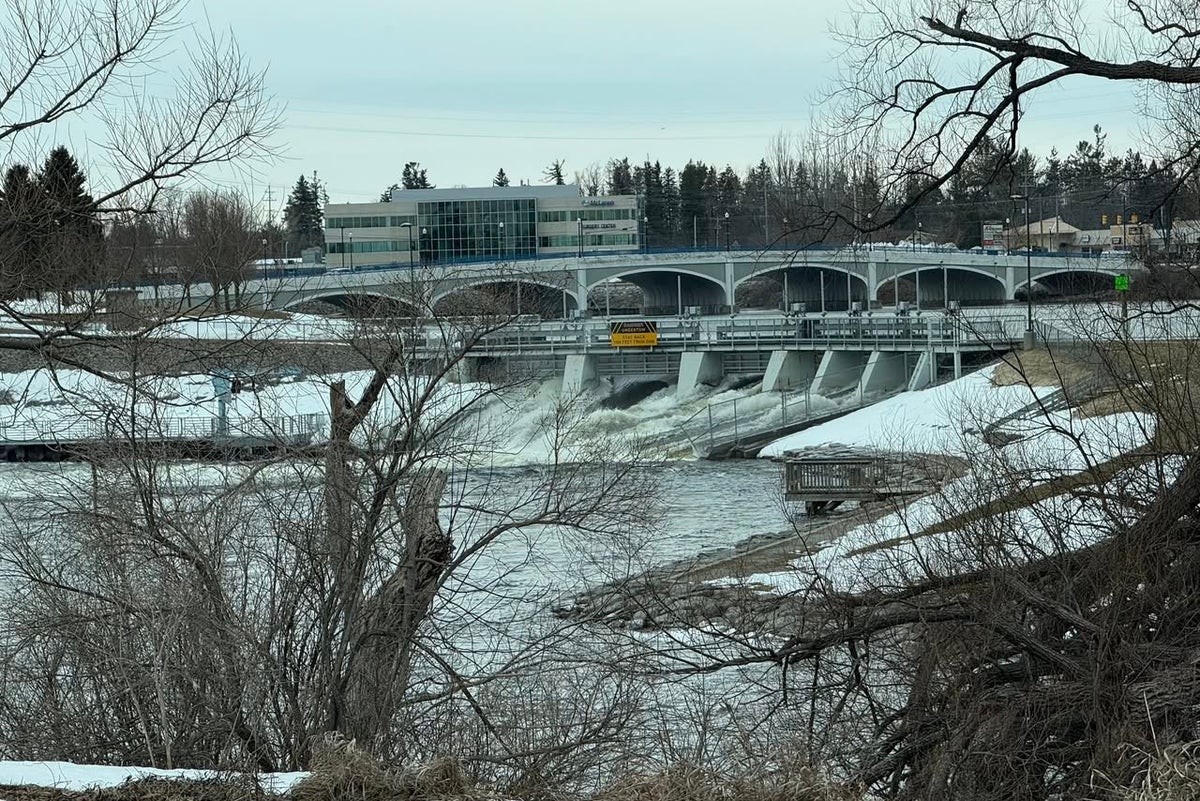
The safety of a residential population downstream of a hydroelectric or water-retention structure is a function of three variables: structural integrity, current hydrological load, and the latency of emergency communication systems. When heavy precipitation forecasts intersect with aging infrastructure—specifically the Edenville and Sanford dams in Michigan—the situation moves from a management exercise to a kinetic crisis. The immediate threat is not just the water itself, but the velocity of structural degradation when spillway capacities are exceeded.
The Triad of Dam Failure Mechanics
Understanding why a dam fails during a weather event requires moving beyond the vague concept of "too much rain." Dam failure is typically the result of one of three mechanical breakdowns, each with distinct signatures and evacuation timelines.
- Hydraulic Overtopping: This occurs when the reservoir level exceeds the crest of the dam. For earthen embankments, this is almost universally fatal to the structure. Water flowing over the top of an earthen dam initiates rapid erosion of the downstream slope, leading to a headward breach that can empty a reservoir in minutes.
- Internal Erosion (Piping): Increased hydraulic pressure forces water through small cracks or voids in the dam’s core. As water carries sediment out of the structure, it creates "pipes" or tunnels. This process is invisible until the surface collapses or a whirlpool appears in the reservoir.
- Structural Instability: High water levels increase the hydrostatic pressure against the face of the dam. If the weight of the dam (gravity) or its anchoring is insufficient, the entire structure can slide or tilt, leading to an instantaneous catastrophic release.
In the Michigan context, the primary concern revolves around the inability of spillways—the "safety valves" of a dam—to keep pace with inflow. When spillways reach 100% capacity, the margin for error drops to zero.
The Cost Function of Delayed Evacuation
Evacuation is a logistical operation where the "cost" is measured in human life versus the economic disruption of a false alarm. However, the data-driven approach to emergency management dictates that the cost of a Type II error (failing to evacuate before a breach) far outweighs the cost of a Type I error (evacuating without a breach).
The timeline for a successful evacuation is dictated by the Breach Inundation Map. These maps calculate the "wave front" velocity—the speed at which a wall of water moves downstream. In high-head dam failures, this water carries "bed load" (rocks, trees, and cars), which increases its destructive force far beyond that of standard floodwaters.
Structural prose suggests that the delay in resident response is often tied to "Normalcy Bias." Residents observe rain regularly without disaster, leading to a psychological discounting of official warnings. To counter this, emergency management must quantify the risk: a dam at 95% capacity with a forecast of three inches of rain represents a near-certainty of overtopping based on the watershed's drainage coefficient.
The Bottleneck of Aging Infrastructure and Regulatory Lag
The crisis in Michigan highlights a systemic failure in the maintenance-to-risk ratio. Many dams in the United States were designed using "Probable Maximum Precipitation" (PMP) data from the mid-20th century. This creates a fundamental mismatch between historical design and modern meteorological reality.
The bottleneck exists in three specific areas:
- Spillway Insufficiency: Older dams often have spillways sized for "100-year floods." Current climate modeling suggests these events are occurring with a frequency that renders the 100-year metric obsolete.
- Deferred Maintenance Capital: The cost to retrofit an earthen dam with an auxiliary concrete spillway often exceeds the total revenue the dam generates via hydroelectric power. This leads to a stalemate between private owners and regulatory bodies.
- The Federal-State Jurisdictional Gap: When a dam’s license is revoked by federal authorities for safety violations—as was the case with the Edenville Dam—the oversight often falls to state agencies that may lack the enforcement teeth or the budget to mandate immediate physical upgrades.
Hydrological Load and the Saturation Variable
Rainfall alone does not break a dam. The critical factor is the antecedent moisture condition of the surrounding soil. If the ground is already saturated from previous weeks of rain, 100% of the new precipitation becomes runoff.
In the Tittabawassee River watershed, the drainage basin acts like a funnel. If the "Time of Concentration"—the time it takes for a drop of rain at the furthest point of the basin to reach the dam—is shorter than the time required to draw down the reservoir, a spillway overtopping event becomes mathematically inevitable.
Technical Requirements for Resident Preparation
For those within the inundation zone, "preparation" is a misnomer for "relocation." The force of a dam breach is not survivable in standard residential wood-frame structures. The strategic priority for residents involves:
- Elevation Analysis: Identifying the exact elevation of the primary residence relative to the river's flood stage. A "flood" might reach the basement, but a "breach" could reach the roofline.
- Communication Redundancy: Relying on cellular networks is a failure point. During high-stress weather events, cell towers often face congestion or power failure. NOAA Weather Radios provide the only reliable, low-latency data stream for evacuation triggers.
- Asset Liquidity: Moving vehicles and essential documents to a "cold zone" (outside the inundation map) at the first mention of a "Watch" rather than waiting for a "Warning."
The Mechanism of Disaster Communication
The transition from a "Watch" to a "Warning" is often treated as a linear progression by the public, but in dam safety, it is a binary shift. A "Watch" means the variables for failure are present. A "Warning" means the failure is occurring or is imminent within the next 60 minutes.
The failure of communication often stems from the use of qualitative terms. Instead of "prepare for evacuation," authorities should provide the "Time-to-Impact" for specific downstream markers. If the Sanford Dam fails, residents in Midland need to know the exact number of minutes until the surge reaches the Main Street bridge. This allows for a structured, non-panicked egress.
Strategic Recommendation for Infrastructure Management
The current situation necessitates an immediate shift from "monitoring" to "active drawdown." If the forecast indicates a significant hydrological event, the reservoir must be lowered to its "dead storage" level regardless of the impact on hydroelectric production or recreational use.
Furthermore, the state must implement a "Public Safety Override" on privately owned dams. When a structure's risk profile reaches a specific threshold, the state should assume operational control of the gates to prioritize downstream life over asset preservation. The long-term play involves the decommissioning of high-hazard dams that no longer meet modern PMP standards and cannot be economically retrofitted. Until then, the primary defense remains the aggressive, early displacement of the human population before the first drop of forecasted rain hits the saturated ground.