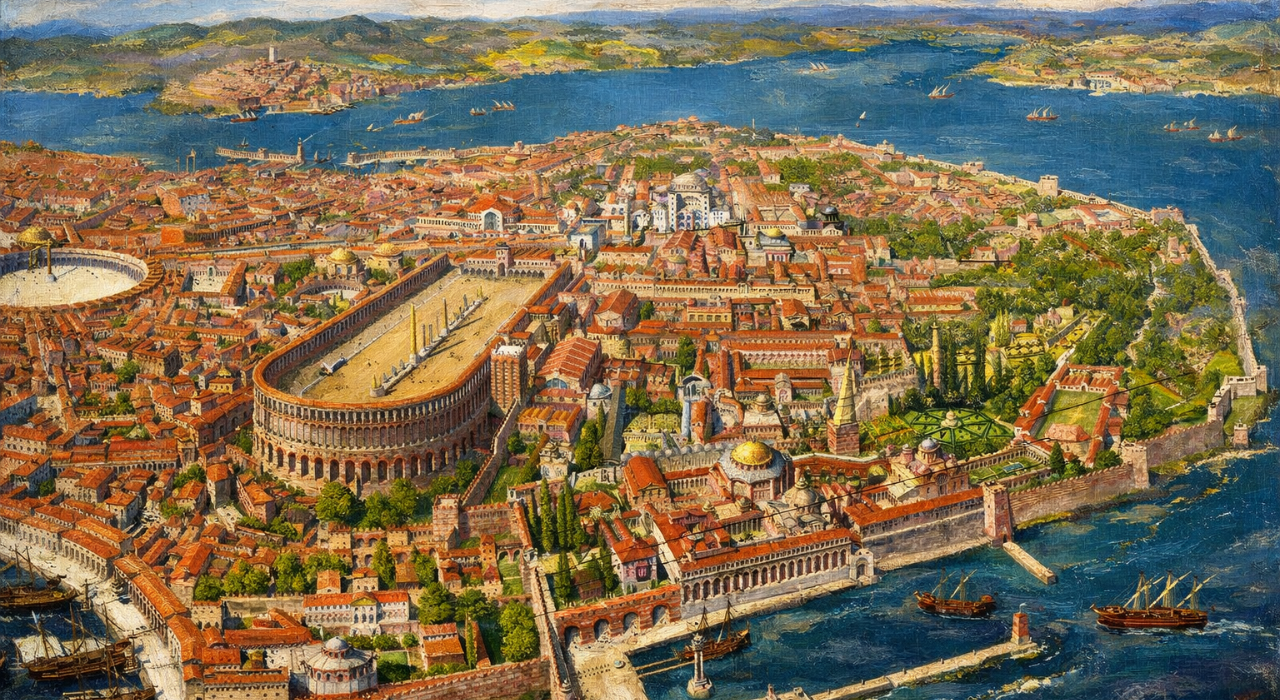
History is written by the victors, but it is romanticized by the desperate. For centuries, a specific brand of historical cope has circulated through the courts of Europe, eventually trickling down into the "did you know" trivia sections of modern travel blogs. The narrative is seductive: Andreas Palaiologos, the cash-strapped nephew of the last Byzantine Emperor, sold his imperial titles to Ferdinand and Isabella of Spain in 1494. Therefore, the logic goes, the current King of Spain is the "true" heir to the Roman Empire.
It is a neat, linear story. It is also a complete fabrication based on a fundamental misunderstanding of what the Byzantine Empire—or more accurately, the Basileia Rhomaion—actually was.
The Spanish claim isn't a "lost" piece of history. It’s a 500-year-old marketing scam that modern historians still fall for because they want the messy reality of the Mediterranean to fit into a clean, Westphalian legal box.
The Sovereignty Myth
The central flaw in the "Spain as Heir" argument is the assumption that the Byzantine throne was a piece of private property. In the Western feudal tradition, you could sell a duchy like a used carriage. You could mortgage a county. If you had the deed, you had the power.
Byzantium didn't work that way.
The Roman Emperor was not a "property owner." He was the head of a state apparatus that required three distinct pillars of legitimacy: the Senate, the Army, and the People. Even in its dying days, the title of Basileus was an office, not a family heirloom. Andreas Palaiologos had as much right to sell the Roman Empire as a former U.S. President’s nephew has the right to sell the Oval Office to a foreign billionaire.
When Andreas signed that contract in 1494, he was selling vaporware. He was an exile in Rome, living on a papal pension that was constantly being cut. He was desperate. He needed a payday. Ferdinand and Isabella, fresh off the conquest of Granada and looking for a way to stick it to the French (who also claimed the title), were happy to buy the prestige.
But a title without a state is just a nickname.
The Geography of Power
Travelers to Istanbul often look at the Hagia Sophia and wonder what might have been if the "rightful" Spanish heirs had ever shown up to reclaim their prize. This is a fantasy.
By 1453, the Roman Empire was a city-state with a few islands. By 1494, it was a memory. If we are going to play the game of "true" succession, we have to look at the people who actually lived there, governed the land, and maintained the institutions.
If you want the real successor to Byzantium, you have to look at the Ottomans.
That is the bitter pill that Western historians refuse to swallow. Mehmed II didn’t just conquer Constantinople; he claimed the title Kayser-i Rûm (Caesar of Rome). He kept the bureaucracy. He kept the tax system. He kept the Patriarchate of Constantinople as a central pillar of his administration.
The Spanish claim is based on a piece of paper signed in a villa in Italy. The Ottoman claim was based on the fact that they were sitting on the throne, wearing the silk, and collecting the taxes.
Why the "Spanish Heir" Narrative Persists
We love the idea of a "true king over the water." It appeals to our sense of lost grandeur. If Spain is the heir to Rome, then the European project feels more ancient, more unified, and more "legitimate."
It also serves a specific political purpose in the 21st century. It frames the fall of Constantinople as a temporary setback rather than a definitive cultural shift. By clinging to the Andreas Palaiologos contract, Western commenters can pretend that the Roman line survived in a "safe," Catholic, Western European kingdom.
But history doesn't care about your comfort.
The Law of the Sword vs. The Law of the Pen
Let’s look at the legal reality of 15th-century geopolitics.
- The Will of Andreas: In his final will, Andreas left the titles to Ferdinand and Isabella.
- The Pope’s Role: The Papacy never formally recognized the transfer of the Empire itself, only the right to the title.
- The Spanish Usage: Charles V, arguably the most powerful man in the world at the time, didn't even bother using the Byzantine titles. He had the Holy Roman Empire, which was a separate (and arguably more functional) mess.
If the Spanish monarchs themselves didn't think the title was worth putting on their letterhead, why are we fighting for it now?
The Museumization of History
When you walk through the Royal Palace in Madrid, you are surrounded by the symbols of a global empire that actually existed. Spain doesn't need the ghost of a dead Greek state to be significant.
The obsession with the Byzantine claim is a symptom of "Successor Syndrome." It’s the same impulse that leads Russia to claim it is the "Third Rome" or the Holy Roman Empire to claim it was "Holy" or "Roman." Everyone wants the brand recognition of Rome without the actual responsibility of governing the Mediterranean.
Stop Looking for Heirs
There is no true heir to the Byzantine Empire.
The Roman experiment ended in 1453. It didn't move to Madrid. It didn't move to Moscow. It died in the breaches of the Theodosian Walls.
To suggest that a financial transaction between a bankrupt royal and a pair of rising Spanish monarchs "transferred" the soul of an empire is to treat history like a game of Monopoly. It ignores the millions of people who lived under Ottoman rule and continued to call themselves Rhomaioi (Romans) for centuries without ever caring who the King of Spain was.
If you are visiting Spain to find the "True Rome," you are looking in the wrong place. Spain has its own magnificent, blood-soaked, and glorious history. It doesn't need to wear the skin of a dead empire to matter.
The "lost claim" isn't a mystery to be solved. It’s a footnote to be ignored.
The Roman Empire is gone. The contract is void. The check bounced five centuries ago.
Move on.


