The coffee in the cockpit of a Boeing 777 usually tastes like nothing—a bitter, lukewarm necessity for a man who has spent twenty years chasing horizons. Captain Elias Thorne (a composite of the pilots now navigating the darkening corridors of Middle Eastern airspace) was somewhere over the Gulf when the first notification flickered on his primary flight display. It wasn't an engine failure. It wasn't a weather cell.
It was a void.
The GPS coordinates, which usually anchor a multi-million-dollar machine to the reality of the earth, began to drift. On the screen, the aircraft appeared to be over the center of Baghdad. In reality, Elias was banking toward the glimmering, synthetic archipelago of Dubai. This is the new ghost in the machine. It is called "spoofing," and it is the invisible weapon currently dismantling the clockwork efficiency of the world’s most ambitious aviation hubs.
For decades, the transit points of the Middle East—Dubai, Doha, Abu Dhabi, and Bahrain—were the neutral gears of global capitalism. They were the places where East met West at 3:00 AM in a flurry of duty-free gold and high-speed Wi-Fi. But the geography of peace has shifted. The relentless rain of ballistic missiles and the subtle, electronic smog of drone warfare have turned these shimmering terminals into high-stakes puzzles.
The math of a modern airport is unforgiving. At Dubai International (DXB), a plane lands or takes off roughly every ninety seconds. It is a symphony of timing. When you introduce a variable like a sudden drone swarm or a regional missile alert, that symphony doesn't just slow down. It shatters.
The Invisible Wall
Consider the physics of a diverted flight. When a regional power launches a battery of strikes, the "sky" doesn't just turn red. It closes. Civil aviation authorities are forced to draw sudden, jagged lines across the map, carving out "No-Fly Zones" that didn't exist an hour ago.
Imagine you are a passenger on a flight from London to Singapore. You are halfway through a film, tucked under a thin blanket, oblivious to the fact that the airspace three miles ahead of you has just become a kinetic combat zone. To the airline, this is a logistical nightmare involving thousands of kilograms of extra fuel. To the pilot, it is a frantic recalculation of weight, balance, and dwindling options.
The detour around restricted zones adds hours to journeys. It strains the literal metal of the fleet. But more than that, it strains the trust we place in the sky. We have spent half a century believing that the air is a common utility, as reliable as gravity. Now, we are learning that the air can be partitioned, weaponized, and stolen.
The strikes aren't always physical. While a missile can be intercepted by a battery of Patriot missiles or an Iron Dome system, the electronic interference—the "soft" strike—is harder to kill. Iranian-linked electronic warfare units have perfected the art of projecting fake GPS signals. This isn't just about getting lost. It’s about the aircraft’s internal safety systems, like the Ground Proximity Warning System, suddenly believing the plane is heading for a mountain that isn't there.
Silence.
That is the sound of a cockpit when the digital maps go dark. The pilots must revert to "dead reckoning," a primitive form of navigation that feels absurd in a cockpit filled with touchscreens and AI-assisted flight directors. They are essentially navigating a spaceship by looking out the window at the stars and the coastline, praying the landmarks remain recognizable.
The Economics of Anxiety
The hubs of the Gulf were built on a specific promise: The World is Connected. If you look at a map of the globe centered on the Arabian Peninsula, you see why Dubai and Bahrain became the lungs of global travel. They sit within an eight-hour flight of two-thirds of the human population. This wasn't an accident of history; it was a triumph of engineering and sovereign wealth.
But that model assumes the lungs can breathe.
When strikes occur—or even the threat of them looms—the insurance premiums for hull war risks skyrocket. These aren't just line items on a spreadsheet. They are the reason your ticket price jumps by $200 overnight. They are the reason a carrier might decide that Bahrain is no longer a viable "stopover" and instead chooses to bypass the region entirely, opting for longer, more expensive routes over the poles or through African corridors.
The "relentless" nature of the current tension creates a state of permanent hyper-vigilance. At Bahrain International, the air traffic controllers aren't just managing altitude and airspeed anymore. They are de facto participants in a geopolitical chess match. They have to know, in real-time, the trajectory of every "unidentified aerial phenomenon" (the polite term for a suicide drone) that enters their sector.
Think of the ground crews. The men and women in neon vests who work the tarmac in 110-degree heat. Their job is already a battle against the elements. Now, they work under the shadow of sirens. In January, when regional tensions spiked, ground operations at several major hubs were paused not because of sandstorms, but because the radar signatures over the horizon were too ambiguous to ignore.
The physical damage to an airport is rarely the goal of these strikes. You don't need to blow up a runway to kill an airport. You only need to make the world believe that the runway is unsafe.
The Human Cargo
We often talk about "logistics" as if we are moving boxes of shoes. But these are people.
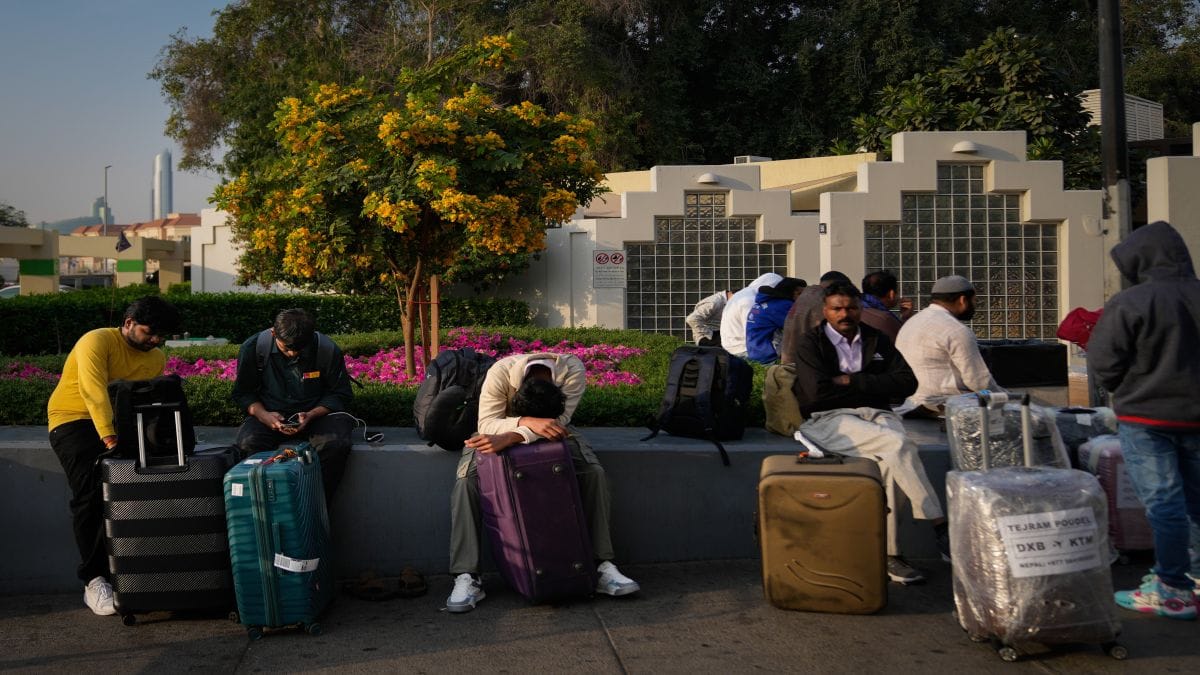
There is a specific kind of exhaustion that belongs to a family stranded in a terminal during a regional "security pause." You see them slumped against their carry-on bags, children sleeping on coats, eyes glued to the flickering "Delayed" or "Cancelled" signs. They are the collateral damage of a war that isn't technically theirs.
One traveler, Sarah, a consultant who flies through Doha monthly, described the feeling of being "held in the air." Her flight was placed in a holding pattern for forty minutes because of "technical interference" in the corridor.
"You look out the window at the pitch-black desert," she said. "And you realize that the only thing keeping you from falling is a series of electronic pings. When you hear that those pings are being faked, the air feels a lot thinner."
This psychological tax is the true victory for the aggressor. By turning the busiest airports in the world into zones of uncertainty, they degrade the prestige of the Gulf nations. They transform symbols of futuristic prosperity into reminders of ancient, terrestrial grudges.
The New Radar
The response from the aviation industry has been a frantic, high-tech scramble. Engineers are now testing "GPS-independent" navigation systems. Some involve looking at the magnetic field of the earth; others involve optical sensors that "read" the ground like a human eye.
We are, in a sense, trying to teach our planes how to see again, because we can no longer trust their ears.
But technology can only patch a wound that is fundamentally political. The airports of Dubai and Bahrain are marvels of the 21st century, but they are anchored in a 19th-century reality: land, power, and the ability to reach out and touch your neighbor. The "relentless strikes" are a message that no amount of marble flooring or terminal luxury can insulate a nation from the geography of its neighborhood.
As Captain Elias finally touched down in Dubai, three hours behind schedule and two tons of fuel lighter than planned, he did something he hadn't done in years. He didn't just check his instruments. He waited until his tires hit the asphalt, felt the jarring vibration of the reverse thrusters, and let out a breath he didn't know he was holding.
The runway lights flickered, reflected in the sweat on his forehead. Outside, the terminal was a hive of activity, thousands of people rushing to gates, oblivious to the electronic ghosts he had just outrun.
He parked the plane, packed his bag, and walked through the terminal. He passed a giant digital screen advertising a "Seamless Future." He looked at the screen, then looked up through the glass ceiling at the dark, silent sky, and wondered how much longer we could pretend the stars were enough to guide us home.
The sky is no longer a neutral territory. It is a map being redrawn in real-time by shadows and signals, and we are all just passengers waiting for the next coordinate to be true.
The lights of the city glowed bright, defiant against the desert, but for the first time, they looked fragile. It is one thing to build a city in the sand; it is another entirely to build one in a sky that has forgotten how to be still.