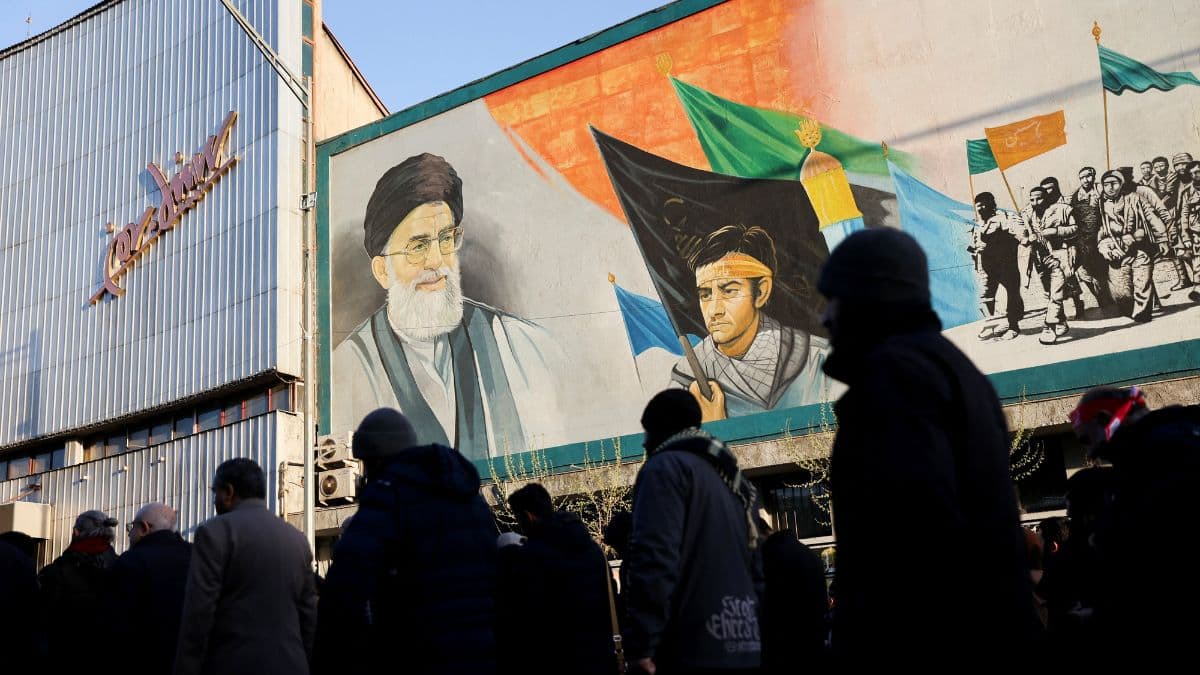
The Iranian Supreme National Security Council’s refusal to engage in direct negotiations with the United States is not a static diplomatic posture; it is a calculated risk-management strategy designed to preserve internal regime cohesion and regional leverage. When Ali Shamkhani or his successors signal a rejection of "Trump-style" diplomacy, they are reacting to a perceived asymmetry in the cost-benefit ratio of any potential settlement. For the Iranian leadership, the risk of "negotiation-induced instability"—where the process of talking undermines the ideological foundations of the state—outweighs the potential economic gains of sanctions relief.
The Strategic Triad of Iranian Resistance
The Iranian security apparatus evaluates diplomatic engagement through three primary lenses that dictate its refusal to negotiate.
1. The Asymmetry of Concessions
In a standard diplomatic exchange, both parties trade variables of roughly equal value. However, the Iranian perspective views the U.S. "Maximum Pressure" campaign as an attempt to trade temporary policy shifts (sanctions waivers) for permanent structural changes (dismantling nuclear infrastructure and ballistic missile programs). This creates a fundamental valuation gap.
- Temporary Variables: Executive orders, FATF compliance, and temporary oil export waivers.
- Permanent Variables: Centrifuge counts, research and development benchmarks, and the regional "Forward Defense" doctrine.
Because a future U.S. administration can revoke an executive order with a signature, while Iran cannot easily "un-dismantle" a technical infrastructure or a regional militia network, the security council views the exchange as fundamentally fraudulent.
2. The Credibility Gap and the JCPOA Precedent
The 2018 withdrawal from the Joint Comprehensive Plan of Action (JCPOA) functions as a case study in "Contractual Fragility" for Tehran. This historical data point has transformed the Iranian negotiating stance from a policy of engagement to a policy of "Strategic Reciprocity."
The logic follows a simple causal chain:
- Iran accepts technical limitations in exchange for economic integration.
- The U.S. exits the agreement based on political shifts, not technical violations.
- Tehran incurs the cost of reintegration without the benefit of long-term stability.
This cycle informs the current refusal to talk. From a game theory perspective, if the probability of a counterparty defaulting on a contract is perceived as high, the rational actor will refuse to enter the contract regardless of the potential upside.
3. Internal Cohesion and Ideological Utility
The "Enemy Narrative" serves a critical function in maintaining the domestic security architecture. Direct negotiations with a "Great Satan" figure (specifically a populist leader like Donald Trump) threaten the internal legitimacy of the hardline factions. If the regime moves toward normalization, it loses the primary justification for its high-budget security apparatus and its suppression of certain domestic dissent.
The Mechanism of "Maximum Resistance"
To counter "Maximum Pressure," Iran utilizes a mechanism of "Maximum Resistance," which is defined by three operational pillars.
The Nuclear Escalation Ladder
Iran uses technical advancements in its nuclear program not as an end goal, but as a series of "Negotiation Chips" stored for future leverage. Each increase in enrichment levels (from 3.67% to 20%, and subsequently toward 60%) represents a calibrated response to U.S. sanctions.
The goal is to increase the "Cost of Inaction" for the international community. By making the status quo increasingly dangerous, Tehran attempts to force the U.S. to offer more significant front-end concessions before any formal talks begin.
The Regional Proxy Vector
Iran’s security chief views the rejection of talks as a signal to its regional partners—Hezbollah, the Houthis, and various PMF groups in Iraq. If Tehran were to negotiate its regional influence away, it would lose its primary defense-in-depth strategy.
This "Forward Defense" doctrine shifts the theater of conflict away from Iranian soil and onto the borders of its adversaries. Any negotiation that includes "Regional Stability" as a line item is seen as a direct threat to Iranian national survival.
The Economic Pivot to the East
A key reason Iran feels it can afford to reject U.S. offers is the "Look to the East" policy. By strengthening ties with China (through the 25-year Strategic Cooperation Agreement) and Russia, Iran seeks to build a "Sanctions-Proof" economy.
- China's Role: Providing a buyer of last resort for Iranian crude, often through "ghost fleet" tankers and non-dollar denominated trade.
- Russia's Role: Cooperation in the Caspian and Syrian theaters, alongside defense technology transfers.
This shift reduces the efficacy of the U.S. dollar as a weapon of statecraft, thereby lowering the pressure on Tehran to return to the bargaining table.
The Cost of the Non-Negotiation Stance
While the strategy preserves the regime's ideological purity, it introduces significant "Systemic Friction" that threatens long-term stability.
The Hyper-Inflationary Feedback Loop
The primary casualty of the non-negotiation policy is the Iranian Rial. The lack of access to the SWIFT banking system and the freezing of foreign reserves create a persistent currency devaluation.
$$Inflation_Rate \propto \frac{1}{Access_to_Global_Markets}$$
This formula dictates the domestic reality: as the regime refuses to talk, the cost of living for the average Iranian citizen increases exponentially. This creates a "Pressure Cooker" effect where the security apparatus must spend more resources on domestic control than on regional expansion.
Technical Stagnation
Isolation from Western technology leads to "Infrastructure Decay," particularly in the oil and gas sector. Without Foreign Direct Investment (FDI) and Western "Enhanced Oil Recovery" (EOR) techniques, Iran’s production capacity faces a natural decline. The reliance on Chinese technology is a secondary solution that often comes with unfavorable terms and lower efficiency.
The Strategic Play for the Next 24 Months
The Iranian security establishment is currently playing a "Waiting Game" based on the U.S. electoral cycle. The refusal to negotiate with a specific leader is a tactical delay intended to see if a more predictable or conciliatory administration takes power.
However, this delay is not passive. Over the next two years, expect the following maneuvers:
- Enrichment Threshold Management: Iran will likely maintain enrichment levels just below the "Red Line" that would trigger a kinetic response from Israel or the U.S., while still building a stockpile that makes a "Zero-Enrichment" solution impossible for future negotiators.
- Drone and Missile Proliferation: Expect increased exports of UAV technology to conflict zones. This serves as both a revenue stream and a proof-of-concept for Iranian military hardware, enhancing its deterrent value.
- Digital Sovereignty: Further investment in the "National Information Network" (intranet) to decouple the Iranian population from the global internet, mitigating the risk of Western-backed digital uprisings during periods of economic hardship.
The current rejection of talks is not an end-state; it is a defensive crouch. The strategic recommendation for any counterparty is to recognize that Tehran will only move toward the table when the "Cost of Resistance" (domestic unrest + infrastructure collapse) finally exceeds the "Cost of Concession" (loss of ideological purity + regional retreat). Until that equilibrium is reached, the rhetoric of non-negotiation will remain the dominant operating procedure of the Iranian Security Council.
Would you like me to analyze the specific economic impact of the China-Iran 25-year agreement on this non-negotiation strategy?