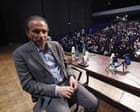
The political class is obsessed with "transparency" as if it’s a magical salve for incompetence. The latest pearl-clutching centers on Nick Greiner, the elder statesman of the NSW Liberal Party, warning the executive that burying a review of their 2023 election defeat would trigger an internal "insurrection."
Greiner is a giant of the movement, but on this, he is fundamentally misreading the room. For an alternative look, see: this related article.
The media and the party’s rank-and-file are salivating over this review because they want a scapegoat. They want a document that points a finger at specific factional bosses, certain candidates, or a lack of "diversity" so they can feel a sense of closure. Greiner thinks releasing it avoids a blow-up. He’s wrong. Releasing an autopsy into a shattered organization doesn't heal the rift; it provides the ammunition for the next decade of civil war.
The Myth of the Helpful Post-Mortem
Political reviews are almost never about fixing the future. They are about litigating the past. When a business fails to hit its quarterly targets, a post-mortem is a tool for survival. When a political party loses an election they were supposed to win, a post-mortem is a suicide note written in public. Further coverage on this trend has been published by The Guardian.
I have seen dozens of these "independent reviews" in both the corporate and political spheres. They follow a predictable, tired script:
- The base felt "ignored."
- The messaging was "unclear."
- The "ground game" was outmatched by digital-savvy opponents.
These are not insights. They are platitudes. By demanding the NSW Liberal executive air this dirty laundry, Greiner is inviting the party to wallow in its own failure rather than building a viable platform for 2027.
The "insurrection" Greiner fears is already here. It’s baked into the DNA of a party that has forgotten how to govern and has spent the last two years arguing about who gets to sit in which leather chair. A PDF document won't stop that. In fact, the moment that review hits the inbox of every branch member, it will be leaked to every journalist in Macquarie Street within seconds.
Why Secrecy is Actually a Strategy
The "lazy consensus" among political commentators is that "sunlight is the best disinfectant." This is a lie. Sunlight often just helps the rot spread faster.
In a high-stakes environment like the NSW Liberal Party—which is currently a volatile mix of religious conservatives, moderate "teals-lite," and factional powerbrokers—total transparency is a death sentence. To rebuild, you need a closed room, a locked door, and the ability to tell people they are wrong without it becoming a front-page headline in the Sydney Morning Herald.
Greiner’s warning about a "backlash" assumes that the executive’s primary job is to keep the members happy. It isn't. The executive's job is to win.
If the review contains hard truths about the demographic shift in Western Sydney or the terminal decline of the Liberal brand in the affluent North Shore, those truths are better handled as a private roadmap for the leadership, not a public confession. When you confess your weaknesses to your members, you are also confessing them to Labor and the Greens. Why would any sane organization hand their opponent a cheat sheet on how to beat them?
The "Dying Brand" Problem
The real issue that Greiner and the NSW executive are dancing around isn't the review itself—it's the fact that the party is currently a product without a market.
People ask: "How do the Liberals win back the seats lost to Teals?"
The answer they want is: "By being more like the Teals."
The brutal truth is: "They probably can't, and trying to do so will alienate the rest of their base."
The review likely highlights this existential crisis. Greiner thinks the "insurrection" comes from the silence. I argue the insurrection comes from the realization that there is no easy fix. If the executive releases the report, they confirm they are lost. If they keep it buried, they maintain the illusion of a plan. In politics, the illusion of a plan is often more stable than the reality of a catastrophe.
The Professional Managerial Class Trap
The Liberal Party has become infested with the same "professional managerial" mindset that kills heritage brands in the private sector. They think they can "brand" their way out of a policy vacuum. They think that by hiring a few more consultants to write a "comprehensive review," they are doing the work of politics.
Politics is about power, persuasion, and the ruthless pursuit of an agenda. It is not a HR department performance review.
Greiner’s intervention is the classic move of a man who remembers a different era of politics—one where "internal democracy" actually meant something. Today, internal democracy in the Liberal Party is just a theater for factional warlords to test their strength.
What Actually Happens Next
If the party follows Greiner's advice and dumps the report, expect the following:
- Targeted Leaks: Specific sections will be used to de-select sitting members.
- Funding Freezes: Donors, seeing the chaos documented in black and white, will tighten their wallets.
- A Culture of Fear: Staffers will spend more time protecting their backs than attacking the Minns government.
The NSW Liberal Party doesn't need a review. It needs a leader who can tell the various factions to shut up and get in line. It needs a platform that offers something other than "Labor, but slightly slower."
Stop asking for the review. Start asking why the party believes a document can save it from its own identity crisis.
The executive should keep the review buried. They should incinerate the copies, delete the files, and move on. The "insurrection" of the members is a temporary headache; a decade of documented, public dysfunction is a terminal illness.
If the members want to revolt because they weren't allowed to read a 100-page autopsy of their own failure, let them. Better a riot in the branches than a funeral in the polls.
The most dangerous thing you can give a drowning man is a mirror. He doesn't need to see how bad he looks; he needs to know which way is up. Greiner is offering the mirror. The executive should be looking for a life raft.
Burn the report. Move on.