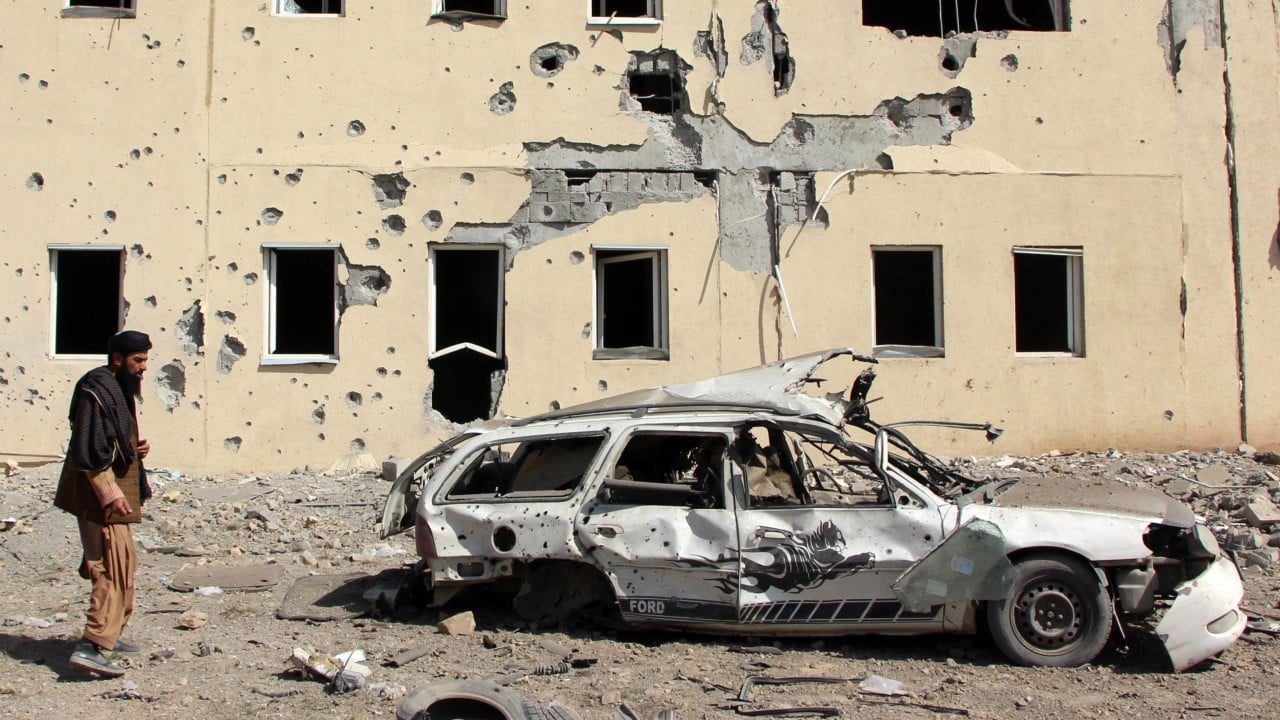
The headlines are predictable. They scream about "chaos," "power vacuums," and the "spread of war" as if the Middle East were a precarious house of cards one explosion away from total collapse. When a top Hezbollah leader is confirmed dead, the media treats it like a definitive turning point. They tell you the organization is reeling. They tell you the regional balance of power has shifted.
They are wrong.
This obsession with high-value targets is a sedative for Western audiences who want to believe that complex ideological conflicts can be won by checking names off a kill list. It is a tactical victory masquerading as a strategic solution. If you think removing a single commander—or even an entire tier of leadership—permanently degrades a decentralized, state-backed paramilitary force, you haven’t been paying attention for the last forty years.
The Martyrdom Loophole
Western military doctrine loves a good hierarchy. We look at an organization like Hezbollah and try to map it like a Fortune 500 company. We assume that if you take out the CEO and the board of directors, the stock price plunges and the firm files for bankruptcy.
In the world of asymmetric warfare, the "CEO" is a placeholder.
Hezbollah is not a corporation; it is a franchise of an ideology, funded by a sovereign state (Iran) and deeply embedded in the social fabric of Lebanon. When Israel strikes a top leader, they aren't destroying the "brain." They are merely triggering a pre-programmed succession plan. These organizations are designed to survive decapitation. They are built on the premise that their leaders are mortal but their cause is eternal.
I’ve watched intelligence agencies celebrate "decisive blows" for decades. In 1992, Israel assassinated Abbas al-Musawi, then the Secretary-General of Hezbollah. The consensus at the time? Hezbollah was crippled. The reality? He was replaced by Hassan Nasrallah, who turned the group from a ragtag militia into the most heavily armed non-state actor on the planet.
Tactical success is often the precursor to strategic failure.
The Fallacy of "Spreading War"
The media loves the phrase "war spreads across the Middle East." It suggests a sudden, uncontrollable contagion. This framing is intellectually lazy. The war isn't "spreading"—it is being calibrated.
What we are seeing is not a chaotic spillover but a series of measured, high-stakes negotiations conducted through ballistics. Iran, Israel, and Hezbollah are all operating within a framework of "threshold management."
- Israel is testing how far it can degrade Hezbollah's leadership without triggering a full-scale ground invasion that would bog down its reserves.
- Hezbollah is testing how many rockets it can fire into Haifa before the international community stops being a buffer.
- Iran is managing its proxies to ensure it keeps its seat at the geopolitical table without getting its own infrastructure nuked.
Calling this "chaos" ignores the cold, hard logic behind every strike. Every "escalation" is a data point. When a leader dies, the response isn't a blind thrashing; it's a calculated move to re-establish deterrence. The war doesn't spread; it merely changes its shape.
Why Technical Superiority is a Trap
Israel possesses the most advanced kinetic intelligence in human history. Their ability to track a specific individual to a specific basement in a specific suburb of Beirut is a feat of engineering. But there is a massive gap between Technical Intelligence and Sociopolitical Reality.
You can have the best signal intelligence in the world, but if your kinetic actions radicalize a new generation or solidify the political standing of your enemy, you are just running on a treadmill.
Consider the math of resentment.
- Strike A kills a commander.
- Outcome B creates a vacuum filled by a younger, more radical, more tech-savvy operative who hasn't been tracked for twenty years.
- Outcome C provides a recruitment surge based on the "martyrdom" of the fallen leader.
In this environment, $1 + 1$ often equals $-5$. The more "successful" the assassination campaign, the more resilient the underlying structure becomes. It forces the survivor to adapt, to decentralize further, and to improve their own counter-intelligence. By the time you’ve killed the "top leader," his successor has already learned from every mistake that led to that leader's death.
The "Lazy Consensus" on Regional Collapse
"The Middle East is on the brink." How many times have you read that this year? This decade? This century?
The "brink" is the status quo. The region is not a powder keg waiting for a match; it is a furnace that has been burning at a controlled temperature for generations. The idea that a single bombing campaign in Lebanon will trigger a "regional conflagration" that draws in every neighbor is a misunderstanding of how these states operate.
Jordan isn't going to war. Egypt isn't going to war. The Gulf States are too busy trying to diversify their economies away from oil to get dragged into a proxy fight they can't win. The "spread" is a localized exchange between specific actors with specific grievances.
The danger isn't a "Great War" in the 1914 sense. The danger is the "Forever Friction"—a permanent state of low-to-mid-intensity conflict that drains resources, kills civilians, and provides a convenient excuse for authoritarianism on all sides.
Stop Asking "Who is Next?"
When a leader falls, the press immediately starts speculating on the successor. This is the wrong question. It’s "People Also Ask" fodder that leads nowhere.
The right question is: "What infrastructure remains?"
An organization’s power doesn't reside in the guy giving the televised speech. It resides in:
- The Logistics Chains: How are the missiles getting from Tehran to the Bekaa Valley?
- The Financial Networks: How is the money moving through the "shadow" banking systems in Europe and Africa?
- The Social Services: How many schools and hospitals is the group running to ensure the local population will never betray them?
Killing a general does nothing to the truck driver moving the rockets. It does nothing to the accountant laundering the cash. It does nothing to the schoolteacher telling children that the "martyr" was a hero.
The Brutal Reality of Asymmetric Warfare
If you want to actually "win" against an entity like Hezbollah, you don't use Hellfire missiles to kill individuals. You use boring, slow, and expensive tools. You disrupt the money. You offer a better alternative to the social services they provide. You make the ideology irrelevant.
But that’s hard. It takes decades. It doesn't look good on a 24-hour news cycle.
Assassinations are the fast food of foreign policy. They provide a quick hit of "we did something" without actually nourishing the strategic goal. They are a display of power that masks a fundamental lack of influence.
I have seen intelligence budgets balloon because of "successful" strikes that only led to more sophisticated threats three years down the line. We are addicted to the tactical high of the "clean kill." We ignore the messy, lingering infection of the aftermath.
The Counter-Intuitive Truth
The death of a top Hezbollah leader is actually a stabilizing event in the short term. It allows Israel to claim a "win" and back off the ledge of a ground invasion. It allows Hezbollah to play the victim and consolidate domestic support. It allows Iran to posture and "vow revenge" while actually doing very little that would risk their own survival.
Everyone gets what they want—except the people living in the crossfire who were told this strike would "bring security."
Security doesn't come from a pile of high-ranking corpses. It comes from the exhaustion of the underlying conflict. Until that exhaustion sets in, every dead leader is just a vacancy filled by a hungrier, more dangerous ghost.
Stop looking for the "turning point." The wheel is just spinning.
Go find a map and look at the tunnels, the supply lines, and the demographics. That's where the war is being won or lost. The guy on the poster? He's already a memory.
Build a better strategy or get comfortable with the status quo. Because as long as we keep chasing "top leaders," we are just participating in a very expensive, very bloody game of Whac-A-Mole.
Turn off the breaking news. The real story isn't that a leader died. The real story is that his death changed nothing.