The security architecture of South Asia is currently fracturing under the weight of a monumental miscalculation. For decades, the Pakistani military establishment operated under the assumption that a Taliban-led Afghanistan would provide "strategic depth" and a compliant neighbor. That assumption has not just been proven wrong; it has ignited a regional wildfire. The belief that the Taliban’s only path to peace with Islamabad is through renouncing terrorism is a shallow reading of a much more visceral, historical conflict. In reality, the Taliban cannot renounce the very groups Pakistan wants them to crush without triggering a civil war within their own ranks.
Islamabad now finds itself in a trap of its own making. By hosting, funding, and legitimizing the Taliban during the twenty-year American occupation, Pakistan banked on the idea that ideological kinship would trump nationalist aspirations. Instead, the moment the Taliban took Kabul in August 2021, the power dynamic inverted. The student became the master, and the border—a line the Taliban has never formally recognized—became a sieve for militants.
The Myth of Control
The prevailing narrative suggests that the Taliban are simply being "uncooperative" or "stubborn" regarding the Tehrik-i-Taliban Pakistan (TTP). This misses the structural reality of how the Taliban functions. The movement is not a monolithic corporate entity that can issue a memo to cease operations. It is a coalition of commanders, many of whom share blood, marriage ties, and decades of foxhole camaraderie with TTP fighters.
To the Taliban leadership in Kandahar, the TTP are not "terrorists" to be bartered away. They are the "local" branch of the same movement that fought the NATO coalition. Asking the Taliban to eliminate the TTP is equivalent to asking them to amputate their own limb to satisfy a neighbor they no longer fear. Pakistan’s leverage has evaporated. During the insurgency, Pakistan held the keys to the Taliban’s logistics and sanctuary. Today, the Taliban hold the keys to Pakistan’s internal security.
The surge in violence across Khyber Pakhtunkhwa and Balochistan is the direct result of this shift. Since 2021, attacks inside Pakistan have increased by over 70 percent. These are not random acts of desperation. They are a coordinated effort by the TTP, emboldened by the Afghan Taliban’s victory, to carve out a similar Sharia-compliant emirate on the Pakistani side of the border.
The Durand Line Problem
At the heart of this friction is a 130-year-old scar: the Durand Line. While Islamabad views this border as a settled international boundary, no Afghan government—including the previous Republic and both iterations of the Taliban—has ever accepted it. To the Taliban, the fence Pakistan spent over $500 million to build is an illegal barrier cutting through the Pashtun heartland.
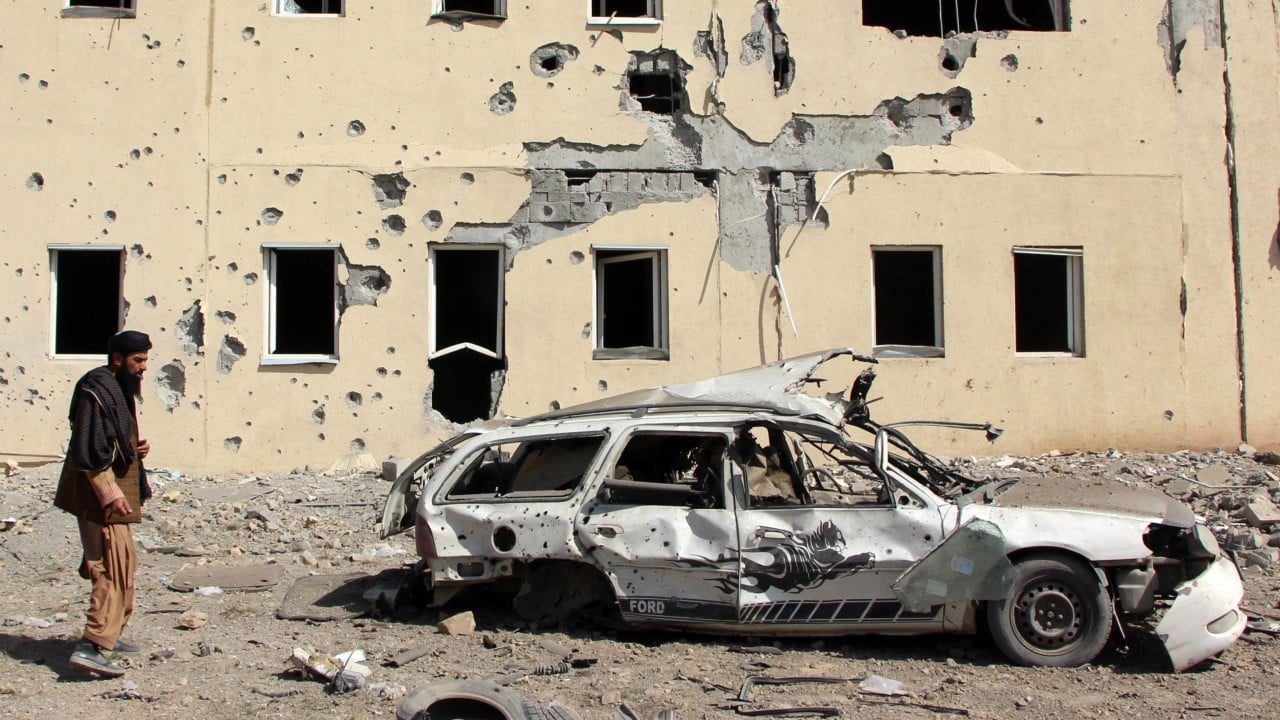
The friction manifests in regular skirmishes between border guards. These are not mere misunderstandings. They are assertions of sovereignty. When the Taliban dismantle sections of the fence, they are signaling that their primary loyalty is to Pashtun identity and their own version of an Islamic state, not to the diplomatic needs of their former patrons in Rawalpindi.
Pakistan’s response has been a mix of economic pressure and sporadic kinetic strikes. They have closed trade crossings, which throttles the Afghan economy, and conducted airstrikes inside Afghan territory targeting TTP hideouts. This "carrot and stick" approach is failing because the Taliban have learned to live with the stick, and the carrot—international recognition—is something Pakistan cannot provide on its own.
The Economic Asymmetry
Afghanistan is a broken economy, but the Taliban have proven remarkably resilient at extracting domestic revenue. They have centralized customs collections and stepped up mining operations. While the country is impoverished, the regime is not yet desperate enough to sell out its ideological allies for Pakistani trade concessions.
Conversely, Pakistan is navigating a precarious economic tightrope. Inflation, debt, and the need for constant IMF bailouts mean that a prolonged security crisis on the western border is something the country can ill afford. The instability scares away foreign investment and forces a massive diversion of resources toward counter-terrorism operations.
The Failed Diplomacy of the Haqqanis
For years, the Haqqani Network was seen as Pakistan’s "ace in the hole." Sirajuddin Haqqani, now the Acting Interior Minister of Afghanistan, was the bridge between the two sides. However, even the Haqqanis have shifted. Being a part of a sovereign government changes one’s priorities. Sirajuddin now has to balance his historical ties to Pakistan with his need to maintain his standing within the Taliban’s internal power structure.
If he appears too soft on Pakistan, he loses the loyalty of the hardline rank-and-file who view the Pakistani state as a "Western puppet." This internal competition for "purity" within the Taliban prevents any meaningful compromise. Each time Pakistan demands a crackdown on the TTP, the Taliban leadership offers "mediation" instead of "elimination." They want to act as the elder brother in a dispute between two Muslim entities, rather than a subordinate doing Islamabad’s bidding.
The Blowback of Proxy Warfare
The current crisis is a masterclass in the dangers of using non-state actors as instruments of foreign policy. Pakistan spent forty years perfecting the art of "asymmetric warfare," using various militant groups to balance against India and influence Afghanistan. The problem with proxies is that they eventually develop their own interests.
The TTP has successfully rebranded itself. They no longer frame their struggle as a global jihad against the West, but as a "nationalist" struggle for the tribal areas of Pakistan. This shift in messaging has made it harder for the Pakistani state to counter them ideologically. By adopting the same rhetoric the Taliban used against the Americans—portraying the government as "invaders" and "infidels"—the TTP has created a mirror image of the Afghan insurgency.
A Change in Tactics
Pakistan is now pivoting. Realizing that the Taliban will not hand over TTP leaders, the military has begun a more aggressive campaign of "intelligence-based operations." There is also a growing sentiment within the Pakistani civilian leadership that the country must "de-hyphenate" its relationship with the Taliban.
This means treating the Taliban regime not as a special partner, but as a hostile or at least adversarial neighbor. The policy of "brotherly Islamic nations" is being replaced by the cold reality of realpolitik. We are seeing:
- Strict visa regimes for Afghan nationals.
- Mass deportation of undocumented Afghan refugees.
- Increased military presence in the "Red Zone" border districts.
- Potential for long-range drone strikes against high-value targets.
These measures are designed to increase the cost of the Taliban’s defiance. However, they also risk pushing the Taliban closer to regional rivals or driving them toward even more radical behavior as a means of survival.
The Regional Vacuum
As the Pakistan-Taliban relationship sours, other players are moving in. China is interested in Afghan lithium and copper but requires stability to extract them. Russia is concerned about the export of extremism into Central Asia. Iran has its own fraught history with the Taliban over water rights and sectarian differences.
None of these powers are willing to fill the role of the Taliban’s "patron" in the way Pakistan did. This leaves the Taliban isolated but unbowed. They have calculated that the world needs them—for counter-narcotics, for preventing an ISIS-K surge, or for regional transit—more than they need to conform to the world’s rules.
The Internal Pakistani Dilemma
The most significant hurdle to a solution is not in Kabul, but in Islamabad and Rawalpindi. There is a deep-seated lack of consensus on how to handle the "militancy" problem. For years, the state distinguished between "Good Taliban" (those who fight elsewhere) and "Bad Taliban" (those who fight Pakistan).
This distinction has collapsed. The groups are interconnected through funding, ideology, and personnel. You cannot support one without indirectly strengthening the other. Until the Pakistani establishment fully abandons the use of religious militancy as a tool of statecraft, any "peace" with the Taliban will be a temporary truce at best.
The reality is that the Taliban will not renounce terrorism because, in their worldview, they didn't use terrorism—they used "Jihad" to win a war. They see their model as successful and the TTP’s struggle as a continuation of that success. To expect them to change their fundamental identity for the sake of a border agreement is a fantasy.
Pakistan must now decide if it is willing to sustain a permanent "cold war" on its western front. This involves a massive reinvestment in border security, a total overhaul of its counter-insurgency doctrine, and the political will to face the blowback of a direct confrontation with the TTP and its Afghan hosts. The era of "strategic depth" is over. In its place is a strategic nightmare that requires a cold, hard look at the failures of the past four decades.
Stop looking for a grand bargain that doesn't exist. Instead, prepare for a long-term containment strategy that treats the Afghan border not as a gateway to influence, but as a frontline for national survival.