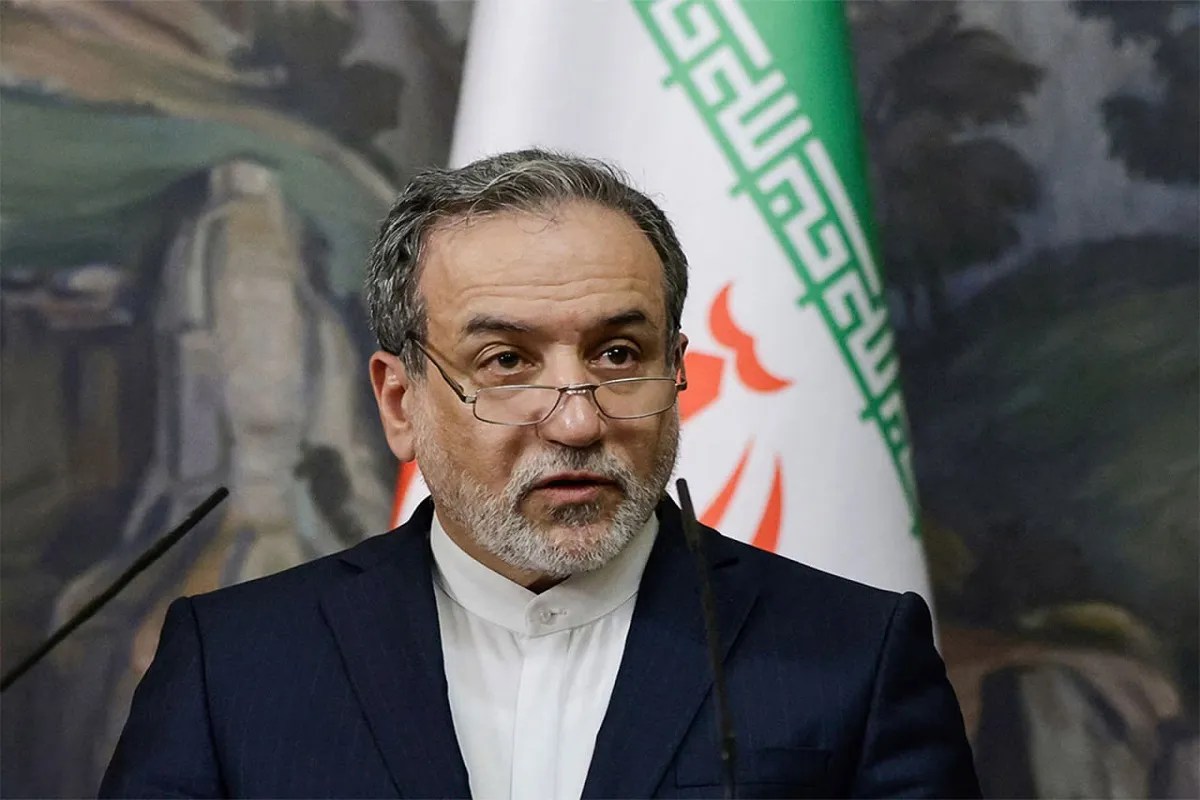
The fragile hope of a diplomatic breakthrough between Washington and Tehran has disintegrated. Foreign Minister Abbas Araghchi recently confirmed that the "Oman Process"—the back-channel pipeline used to de-escalate tensions—is effectively dead. While the public narrative blames shifting American conditions, the reality is far more clinical. The bridge between the two nations fell because the foundation of "mutual benefit" no longer exists in a world redefined by two active wars and a looming U.S. election. For months, intermediaries in Muscat tried to keep the oxygen flowing to a potential deal. Now, the tanks are empty.
The collapse of these talks is not a simple disagreement over terms. It is a fundamental systemic failure. You might also find this similar story interesting: Why the Chagos Islands deal just hit a massive wall.
The Mirage of Modern Diplomacy
When Abbas Araghchi spoke about the Americans changing their conditions, he was describing the symptoms, not the disease. Diplomacy requires a baseline of stability that neither side can currently provide. The Biden administration, caught in the gears of a bruising election cycle, cannot afford to look "soft" on a regime that is actively supplying drones for the Russian war effort in Ukraine. Conversely, Tehran finds itself boxed in by a domestic hardline faction that views any concession to the West as a betrayal of the Islamic Republic’s core identity.
Negotiations failed because the "Oman Process" was built for a different era. It was designed to manage a nuclear standoff in a vacuum. Today, the nuclear file is inextricably linked to regional missile strikes, the Red Sea shipping crisis, and the shifting borders of Eastern Europe. You cannot negotiate a nuclear freeze when the hardware being frozen is the same hardware hitting infrastructure in Kyiv. As extensively documented in detailed coverage by The Guardian, the results are widespread.
Why the Oman Backchannel Broke
The Sultanate of Oman has long served as the silent room where enemies speak. However, a room is only useful if both parties want to talk about the same thing.
The U.S. moved the goalposts because the playing field changed. Initial talks focused heavily on the Joint Comprehensive Plan of Action (JCPOA) frameworks. But as the conflict in the Middle East expanded, the White House began layering in demands regarding regional proxies and ballistic missile exports. From the Iranian perspective, this was a breach of the original spirit of the Muscat meetings. From the American perspective, it was a necessary adjustment to a heightened threat profile.
The breakdown suggests that both sides have done the math and decided that the cost of a bad deal is higher than the cost of no deal. For Iran, the "Look East" strategy—cementing ties with Moscow and Beijing—provides enough of an economic cushion to resist Western pressure. For the U.S., the political risk of unfreezing billions in Iranian assets during a hot war in the Levant is a non-starter.
The Nuclear Clock is Not Resetting
We are entering the most dangerous phase of the Iran-U.S. standoff since 2018. Without the "Oman Process," there is no safety valve.
Technicians in Iran are continuing to refine uranium to 60 percent purity. That is a heartbeat away from weapons-grade. In the past, the threat of nuclear escalation was a lever used to force people to the table. Now, it seems the table has been removed from the room entirely. Araghchi’s admission that talks are off the table reflects a grim acceptance that the diplomatic path has reached a dead end.
The Regional Domino Effect
The failure of these talks radiates far beyond Washington and Tehran. It signals to regional actors—specifically Israel and the Gulf states—that the "American Umbrella" of diplomatic restraint is folding. When diplomacy fails, military logic takes over.
- Israel's Calculus: Without a diplomatic ceiling on Iran’s nuclear progress, the pressure for a kinetic strike increases.
- The Drone Factor: Iran’s integration into the Russian defense supply chain has transformed it from a regional nuisance into a global strategic adversary for NATO.
- The Energy Market: Any total collapse in communication increases the risk of a miscalculation in the Strait of Hormuz, which could send oil prices into a tailspin.
The Cost of the Shifting Conditions
Araghchi’s specific grievance—that the U.S. is "changing its conditions"—is a classic diplomatic stalling tactic. It allows Tehran to claim the moral high ground while continuing its enrichment program. However, the U.S. counter-argument is equally firm: you cannot expect the conditions of 2015 to apply to the geopolitical wreckage of 2026.
The sanctions regime is now so dense that "unwinding" it would require a level of political capital that simply does not exist in the current U.S. Congress. Even if a deal were signed tomorrow, the likelihood of it surviving a change in administration is near zero. This "permanence gap" is the real reason the talks failed. Tehran will not trade its nuclear leverage for a "temporary" reprieve that can be snatched away by the next occupant of the Oval Office.
A New Reality of Managed Conflict
The era of seeking a "Grand Bargain" is over. What we are seeing now is a shift toward managed conflict. Both sides are no longer trying to solve the problem; they are merely trying to prevent it from exploding before they are ready.
This is a high-wire act without a net. The "Oman Process" was the net. By publicly acknowledging its failure, Araghchi has signaled to the world that the safety measures are gone. The rhetoric from Tehran suggests they are prepared to sit in the cold, leaning on their "Resistance Economy" and their burgeoning alliances with other sanctioned nations. They are betting that the West’s internal divisions and the strain of multiple global conflicts will eventually force a more desperate, and therefore more favorable, American offer.
The American side is betting on the opposite. They believe that sustained economic pressure, coupled with the internal stresses of the Iranian state, will eventually force a total capitulation. Both sides are gambling with the stability of the global energy supply and the risk of a multi-front war.
The Intelligence Gap
One of the most overlooked factors in the collapse of these talks is the deteriorating quality of "bridge-building" intelligence. In previous years, there were clear lines of communication between mid-level officials who understood the "red lines" of their counterparts. Today, those lines are frayed. The mistrust is no longer just political; it is personal and institutional.
When Araghchi says the talks have failed, he isn't just talking about a specific document. He is talking about the death of the idea that the U.S. is a reliable negotiating partner. That sentiment is echoed in the corridors of power in Washington, where the prevailing view is that Iran is merely using talks to buy time for its centrifuges.
Beyond the Muscat Meetings
The failure in Oman isn't a pause. It is a pivot.
We are moving into a period where "diplomacy by deed" replaces diplomacy by dialogue. Actions on the ground—missile tests, drone shipments, naval maneuvers—will be the primary way these two nations communicate. This is a much more dangerous language. It is prone to mistranslation.
The "Real Reason" the talks failed is that both governments have concluded that they gain more domestically from an external enemy than they do from a compromised peace. In Washington, "getting tough on Iran" is a rare point of bipartisan consensus. In Tehran, the "Great Satan" remains a necessary pillar of the revolutionary narrative.
The collapse of the Oman Process is a cold reminder that some gaps are too wide to bridge with words alone. The path forward is no longer through a quiet room in Muscat, but through the hard, unpredictable reality of a region where the guardrails have been removed. If the U.S. is changing its conditions, it is because the world those conditions were written for no longer exists.
The next move won't happen at a conference table. It will happen in the enrichment halls of Natanz or the waters of the Persian Gulf. Prepare for a long, volatile silence.