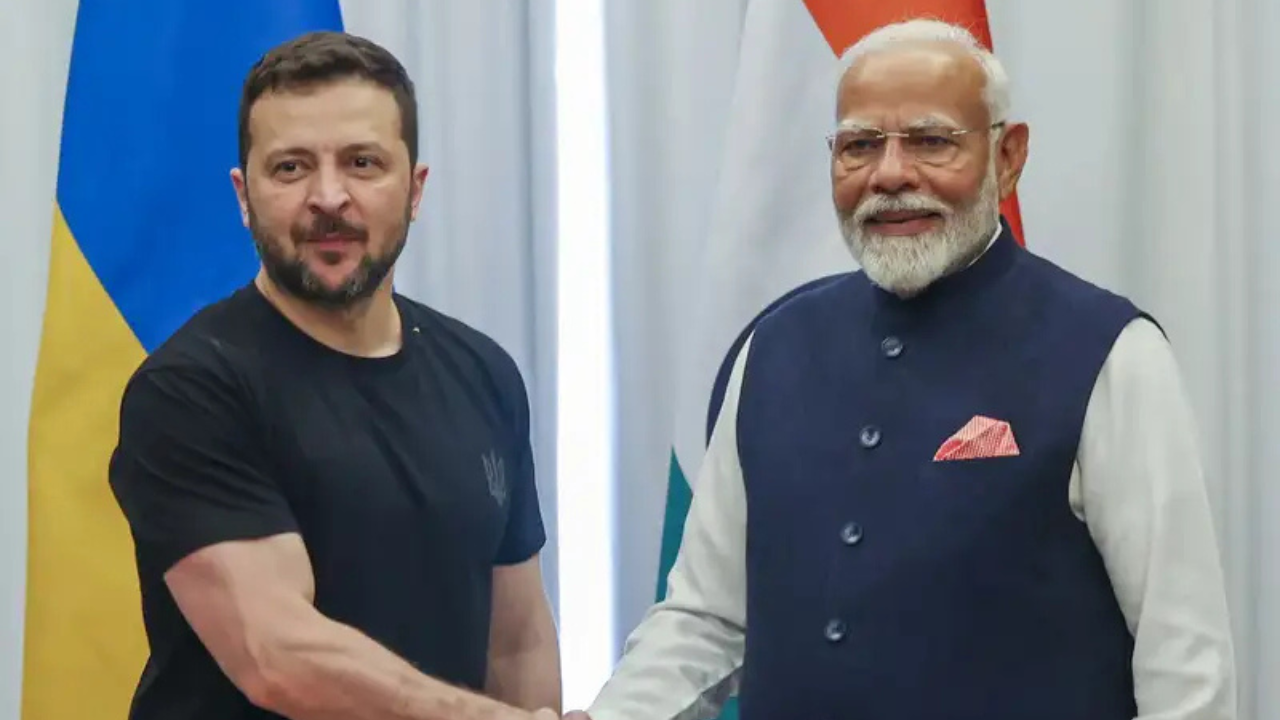
Volodymyr Zelenskyy is no longer just fighting a war of attrition on the ground. He is now engaged in a high-stakes diplomatic squeeze play aimed at the only three men on earth who possess the specific gravity to shift Vladimir Putin’s calculus. By publicly calling on Donald Trump, Narendra Modi, and Xi Jinping to exert direct pressure on the Kremlin, the Ukrainian President is acknowledging a brutal reality: the current Western support apparatus, while vital for survival, lacks the decisive leverage required to end the slaughter.
The strategy is transparent but fraught with risk. Kyiv is attempting to bypass the slow-moving machinery of Brussels and the cautious incrementalism of the Biden administration to engage with the world’s most significant power brokers. Each of these "big players" represents a different, critical lever. Trump holds the key to future American military aid. Modi represents the moral and economic weight of the Global South. Xi remains the only person capable of cutting off Russia’s industrial and financial lifeline. You might also find this related coverage useful: The Heartbreaking Reality of the Jordan Road Fire and What Surviving Loss Actually Looks Like.
The Trump Factor and the End of Blank Checks
The most immediate and volatile variable in Zelenskyy’s equation is the potential return of Donald Trump to the White House. While much of the European establishment views a second Trump term with genuine dread, Kyiv is forced to be more pragmatic. They cannot afford to alienate a man who might soon control their most important supply line.
Zelenskyy’s outreach to Trump is an attempt to frame the defense of Ukraine not as a moral crusade, but as a "deal" that benefits American interests. The logic is simple. If Trump wants to fulfill his promise of ending the war in twenty-four hours, he cannot do it by simply cutting off Ukraine; that would result in a chaotic Russian victory that makes America look weak on the global stage. Instead, Kyiv is betting that Trump’s desire for a "win" can be redirected toward forcing Putin to the negotiating table through the threat of a massive, unrestricted surge in US weaponry. It is a gamble on ego over ideology. As extensively documented in detailed coverage by Al Jazeera, the results are notable.
New Delhi and the Weight of the Global South
India’s position has long been a source of frustration for the West. Prime Minister Narendra Modi has maintained a delicate balancing act, purchasing discounted Russian oil while simultaneously deepening defense ties with the United States. However, Zelenskyy’s recent focus on Modi suggests a belief that India’s "strategic autonomy" is reaching a breaking point.
India does not want a world defined by a new Cold War between a Sino-Russian bloc and the West. Such a binary would force New Delhi into a corner it spent decades trying to avoid. By urging Modi to take a more active role in the peace process, Zelenskyy is playing on India’s ambition to be a global mediator. If India continues to bankroll the Russian war machine through energy imports without using that economic leverage to demand a ceasefire, its claims to global leadership ring hollow. The "pressure" Zelenskyy seeks from Modi is not military, but a clear signal that the economic honeymoon for Moscow has an expiration date.
The Dragon in the Room
Beijing remains the ultimate prize and the most difficult target. China has provided Russia with the dual-use technology and financial workarounds necessary to keep its war economy humming. Without Xi Jinping’s tacit approval, Putin’s ability to sustain a long-term conflict would vanish within months.
Zelenskyy is testing whether China’s commitment to "territorial integrity"—a cornerstone of its own foreign policy regarding Taiwan—is more than just rhetoric. If Xi continues to support a war that violates those very principles, he risks a permanent fracture with the European markets China desperately needs. Kyiv is effectively asking Beijing to choose between its junior partner in Moscow and its primary trading partners in the West. It is a request for Xi to stop acting as a silent partner in the invasion and start acting like the responsible global power he claims China has become.
The Mechanics of External Pressure
For any of this to work, the pressure applied must be more than just diplomatic statements. It requires concrete actions that hit the Kremlin’s core interests. This includes:
- Secondary Sanctions: Forcing third-party countries and banks to choose between Russian business and access to the US dollar.
- Energy Price Caps: Ensuring that major buyers like India and China do not provide the surplus capital Putin uses to fund his military-industrial complex.
- Security Guarantees: Providing Ukraine with a credible long-term defense framework that makes a renewed Russian invasion a mathematical impossibility.
The Limits of Diplomacy
There is a significant danger in this approach. By elevating Trump, Modi, and Xi, Zelenskyy risks signaling that the current international order is broken. If the United Nations and the European Union are sidelined in favor of "big player" politics, we return to a world of spheres of influence where the fate of smaller nations is decided by a handful of men in gilded rooms.
Furthermore, there is no guarantee that these leaders actually want the same kind of peace that Ukraine does. A "Trump peace" might involve significant territorial concessions. A "Xi peace" might involve a neutered, neutral Ukraine that serves as a permanent buffer zone. Zelenskyy is inviting these giants to the table because he has no other choice, but once they are there, he may find he no longer controls the menu.
The battlefield remains the primary driver of any negotiation. No amount of diplomatic pressure from New Delhi or Beijing will matter if the Ukrainian front lines collapse. Conversely, if Russia continues to suffer unsustainable losses, the "big players" will find it much easier to push Putin toward an exit strategy. Diplomacy is not a substitute for military strength; it is the harvest of it.
The clock is ticking on Kyiv’s ability to maintain its current defensive posture. As the war enters its next phase, the focus shifts from the trenches of the Donbas to the boardrooms of the East and the campaign trails of the West. Zelenskyy has made his move, throwing the ball into the courts of three men who have spent their careers avoiding being forced into a corner. Now we see if they have the courage, or the interest, to actually end the bloodiest conflict in Europe since 1945.
Every day this conflict continues, the global order shifts further toward fragmentation. The price of failure for these three leaders isn't just a continued war in Eastern Europe; it's the total erosion of the stability they need to maintain their own power. Putin is betting that the world will eventually grow bored and look away. Zelenskyy is betting that he can make it impossible for the world’s most powerful men to ignore him.
The era of the "big players" is back, and the cost of their entry into this conflict will be measured in the borders of the future.