The ring has always been a place where geopolitical scores are settled under the guise of sport, but the latest move by World Boxing feels like a calculated survival tactic rather than a purely athletic decision. On Tuesday, April 28, 2026, the fledgling governing body announced that Russian and Belarusian boxers will be permitted to return to international competition as neutral athletes. This decision, while framed as an alignment with International Olympic Committee (IOC) standards, marks a stark pivot for an organization that was built specifically as the "clean" alternative to the Russian-led International Boxing Association (IBA).
By opening the door to athletes from these two nations, World Boxing is attempting to thread a needle that has snagged every major sports federation since 2022. The primary query for fans and officials is simple: how can an organization founded to escape Russian influence now justify inviting Russian athletes back into the fold? The answer lies in the desperate race for Olympic legitimacy and the realization that a "World" federation cannot truly claim that title while excluding one of the sport's most dominant powerhouses.
The Mechanics of Neutrality
To be clear, this is not a return to business as usual. World Boxing is implementing a rigorous vetting process that makes the old IBA standards look like a handshake deal. Under the new Individual Neutral Athlete (AIN) procedure, boxers from Russia and Belarus will compete without flags, anthems, or national symbols. They are ghosts in the bracket—athletes with no country, at least on paper.
The vetting process is designed to be invasive. World Boxing has enlisted independent third-party experts to verify that every entering athlete has no ties to the Russian or Belarusian military or national security agencies. Furthermore, any public support for the war in Ukraine—be it a social media post or an interview quote—is an automatic disqualifier.
Interestingly, the financial burden of this scrutiny falls directly on the national federations of Russia and Belarus. They must pay for the background checks of their own athletes. It is a cynical but effective way to ensure the cash-strapped World Boxing doesn't drain its own coffers to police its newest members.
The Olympic Ultimatum
The timing of this announcement is no accident. Boxing has been living on death row in the Olympic program for years. After the IOC permanently banished the IBA in 2023 for a litany of governance and corruption failures, World Boxing became the de facto lifeboat.
In February 2025, the IOC granted World Boxing provisional recognition, and just a month later, boxing was officially confirmed for the Los Angeles 2028 Olympics. But that recognition came with a heavy subtext. The IOC has been clear: if you want to be the recognized federation, you must mirror our policies. The IOC’s own stance has softened toward neutral participation for Russians and Belarusians, and World Boxing simply couldn't afford to be more Catholic than the Pope.
By adopting the AIN protocol, World Boxing is effectively checking the final box on its "Good Governance" to-do list. They are showing the IOC that they can handle the most radioactive political issue in sport with the same clinical efficiency as a doping control test.
A Membership Game of Thrones
While the news focuses on the athletes, the real story is the tectonic shift in membership. In March 2026, World Boxing's Executive Board endorsed the membership applications of the Russian and Belarusian boxing federations. This was a move many thought impossible just two years ago.
Ukraine, which joined World Boxing in late 2025, now finds itself in the uncomfortable position of sharing a federation with the very nations it is fighting on the ground. The presence of Gennady Golovkin as the head of World Boxing’s Olympic Commission adds a layer of heavyweight prestige to these negotiations, but even "Triple G" cannot punch his way through the moral complexity of this arrangement.
The organization now boasts over 170 member federations. That is a massive leap from the handful of Western nations that started the movement in 2023. By absorbing Russia and Belarus, World Boxing is effectively decapitating the IBA. If the Russian and Belarusian athletes are competing under World Boxing rules, what exactly is left for the IBA to govern?
The Loophole for Youth
One of the more nuanced aspects of this new policy is the distinction between elite and youth boxers. While elite athletes must undergo the exhaustive third-party vetting, U19 and younger athletes are exempt from the background checks regarding military ties.
The logic here follows the IOC’s philosophy that children should not be punished for the sins of their governments. However, in a sport where "youth" competitors are often months away from turning pro or joining state-sponsored sports clubs, this remains a grey area. It is a gamble that these younger athletes haven't yet been integrated into the state propaganda machine—a gamble that critics argue is naive at best and dangerous at worst.
The Branding of the Invisible
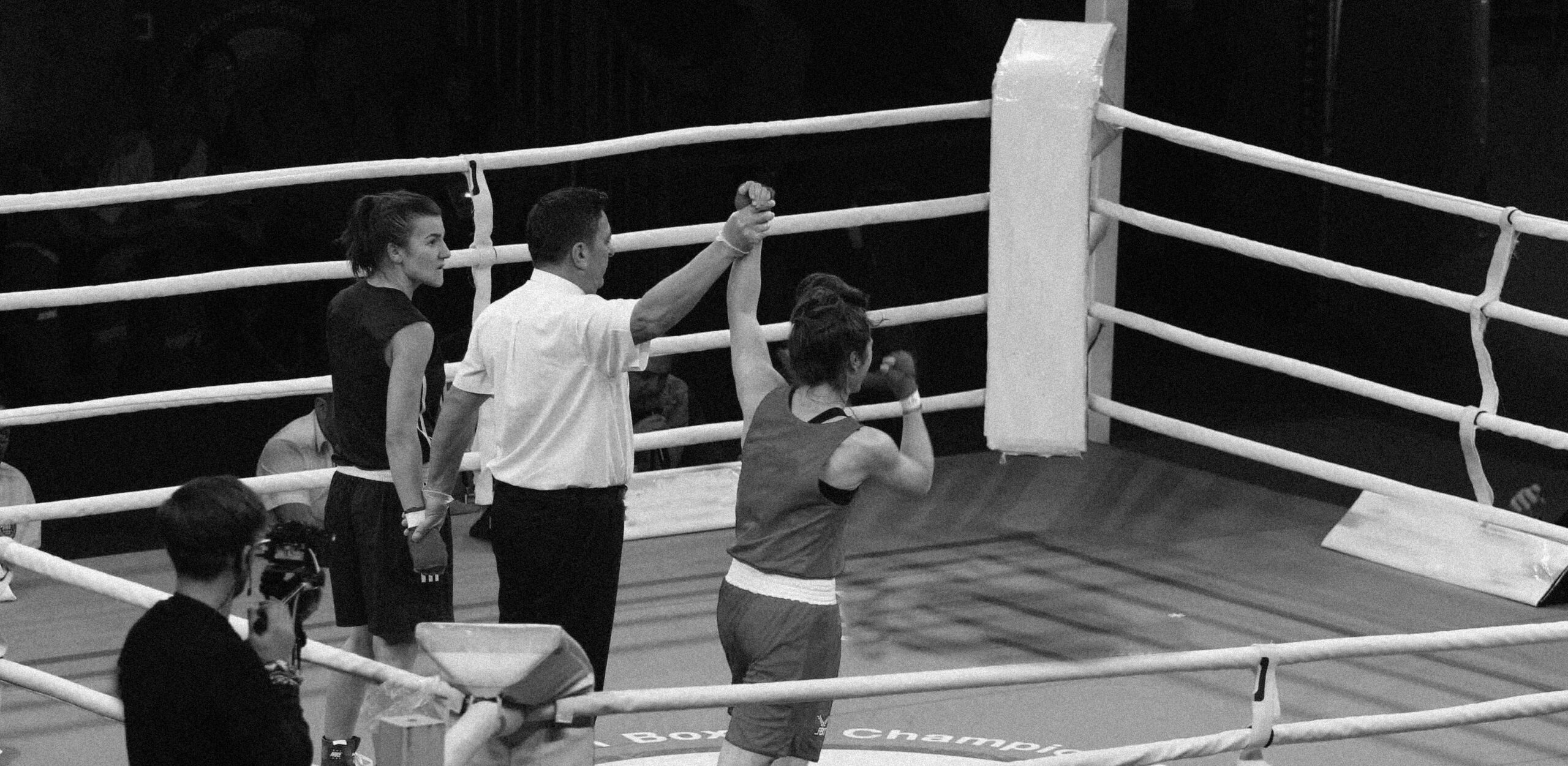
The visual landscape of upcoming tournaments will be jarring. Television graphics will list "AIN" instead of the familiar "RUS" or "BLR." Gold medalists will stand in silence as a neutral anthem plays and a generic flag is raised.
For the coaches and support staff, the rules are even tighter. They are prohibited from wearing any item that even hints at their national identity from the moment they arrive at the airport until they depart. Even the weigh-ins and technical meetings are strictly "neutral zones."
This is the price of admission. World Boxing is betting that the athletes care more about the gold and the Olympic path than the flag on their shoulder. It is a test of the "athlete-first" mantra that the organization has used as its rallying cry.
Survival at a Cost
Is this a betrayal of the original mission? For some, yes. Those who saw World Boxing as a moral crusade against Russian influence will see this as a surrender. But for those who have spent decades in the halls of sports power, it looks like a masterclass in pragmatism.
World Boxing couldn't stay a "Western" club and survive. It needed the world. To get the world, it needed to solve the Russia problem in a way that satisfied the IOC without alienating the growing number of Asian and African federations that have remained neutral or friendly toward Moscow.
The hard truth is that the ring is never truly neutral. Every time an AIN boxer steps through the ropes, the ghosts of the ongoing conflict will be there as invisible cornermen. World Boxing has successfully cleared the path for the Los Angeles 2028 Games, but in doing so, it has invited the world’s most complicated political baggage into its very center.
The vetting begins now. The first major test will be the European Boxing Championships in Sofia this September. That is where we will see if "neutrality" is a functional policy or just a convenient label for a sport that can't stop fighting itself.