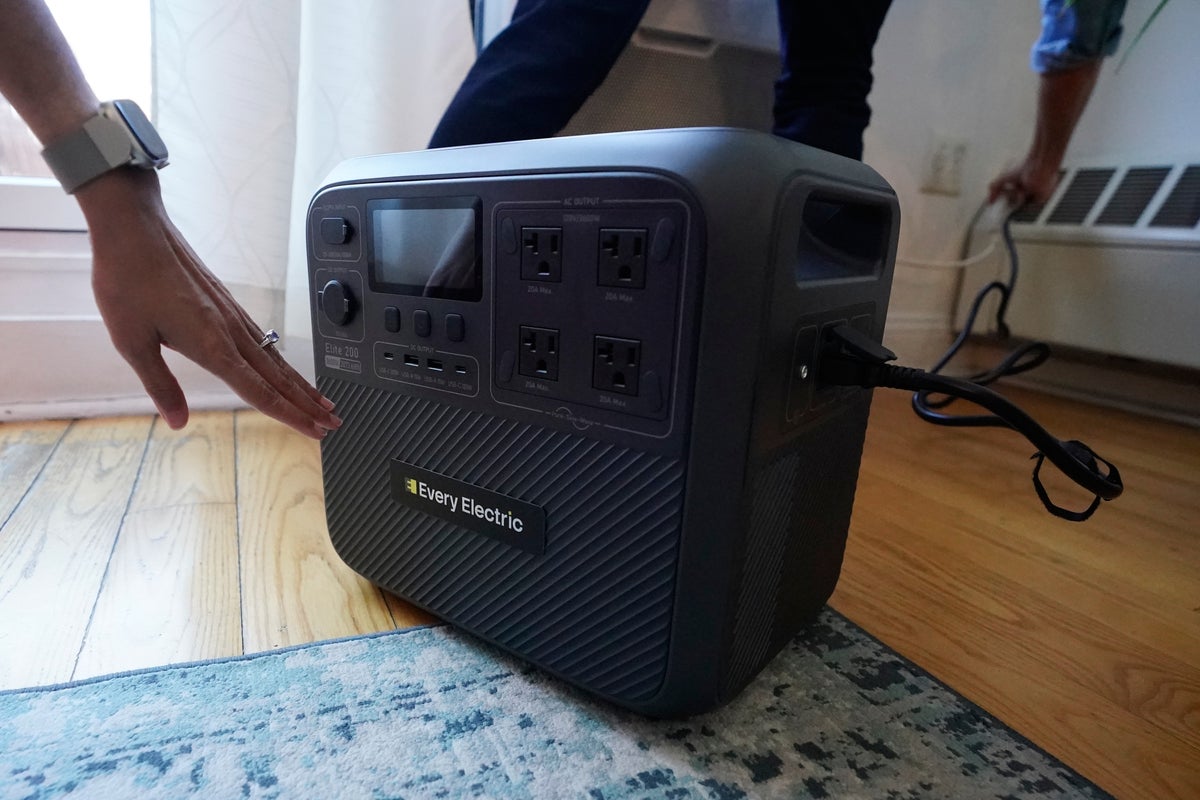
New York renters are being sold a fairy tale wrapped in a sleek plastic chassis. The narrative is seductive: plug a massive battery into your wall, attach your window air conditioner to it, and watch your Con Ed bill shrivel while you "save the grid."
It is a lie of omission.
The current hype surrounding residential energy storage for renters—specifically those modular battery units designed to bridge the gap between a shaky grid and a $400 monthly cooling bill—ignores the brutal physics of thermal loads and the predatory nature of "demand response" programs. You aren't "beating the system." You are paying $2,000 for the privilege of becoming a micro-utility for a billion-dollar energy provider that failed to upgrade its infrastructure in the 1990s.
The Math of Thermal Futility
Let’s talk about the first law of thermodynamics before we talk about your bank account. Cooling an uninsulated, pre-war Brooklyn apartment is a fool’s errand. Standard window AC units are notoriously inefficient, often hovering around a Combined Energy Efficiency Ratio (CEER) of 10 or 12.
To keep a 250-square-foot room at 72 degrees when it is 95 degrees outside requires roughly 7,000 to 10,000 BTUs of cooling capacity. If you run that unit on a battery, you are engaging in a massive energy conversion loss.
- You pull AC power from the wall to charge the DC battery (Loss #1).
- The battery sits, slowly leaking energy via self-discharge (Loss #2).
- The inverter converts DC back to AC to hum the compressor to life (Loss #3).
By the time that "clean" energy hits your AC motor, you have likely lost 15% to 20% of the electricity you paid for during the charging cycle. This isn't "saving money." It is a technical tax on your ignorance of power electronics. If your goal is truly to lower your bill, that $2,000 battery would be better spent on high-spec cellular shades and a DIY secondary glazing kit for your drafty windows. But "plastic sheets" don't have a Bluetooth app, so nobody buys them.
The Demand Response Scam
The core "benefit" touted by these new battery startups is participation in demand response. The pitch: your battery charges when electricity is cheap (off-peak) and runs your AC when electricity is expensive (on-peak).
Here is what they don't tell you: Con Edison and other major utilities aren't giving you those credits out of the goodness of their hearts. They are using your expensive, privately funded hardware to stabilize a grid they are legally obligated to maintain.
When thousands of renters buy these batteries, they create a Virtual Power Plant (VPP). The utility gets to avoid firing up a "peaker plant"—the most expensive and polluting gas plants used during heatwaves. Does the renter see the lion's share of those savings? Absolutely not. The hardware manufacturer takes a cut. The software aggregator takes a cut. You get a few dollars off a bill that was already inflated by the utility's inefficiency.
I have seen venture-backed energy firms burn through hundreds of millions of dollars trying to make the "home as a battery" model work. It always fails the same way: the hardware is too expensive for the consumer, and the "savings" are a rounding error compared to the initial investment. You are essentially providing the utility with a zero-interest loan on their infrastructure upgrades.
Batteries Are Not a Solution for Poverty
The media framing of these devices as a "win for renters" is particularly galling. The average New York renter, struggling with 3% annual rent hikes and astronomical grocery prices, cannot drop two grand on a battery to save $40 a month in July and August.
This is "green-washing" for the upper-middle class. It creates a two-tier grid:
- The Battery Elite: Those who can afford to bypass peak pricing and stay cool during a brownout.
- The Energy Underclass: Those whose bills actually increase because the utility passes on the costs of managing a volatile grid influenced by thousands of uncoordinated batteries.
If we actually cared about renter AC bills, we would be mandating heat pump retrofits for landlords, not asking tenants to buy industrial-grade chemistry sets for their living rooms.
The Lithium Fire in the Room
We need to address the safety reality that marketing departments ignore. Placing high-density lithium-ion phosphate (LiFePO4) or nickel-manganese-cobalt (NMC) batteries in cramped, poorly ventilated New York apartments is a statistical gamble.
While LiFePO4 is significantly more stable than the batteries in cheap e-bikes, the sheer scale of energy required to run an AC unit—often 1kWh to 3kWh of capacity—means these units are large. In a 400-square-foot studio, you are sleeping inches away from a chemical energy storage system that is being stressed by high-amperage draws every afternoon.
The FDNY is already overwhelmed by lithium battery fires. Introducing thousands of these "AC-ready" units into a dense urban environment without a radical overhaul of building fire codes is asking for a disaster. But sure, the app has a "cool" dark mode.
Your AC Unit Is the Real Problem
The industry is focused on the wrong end of the plug. We are trying to solve an efficiency problem with a storage solution. It’s like trying to fix a leaky bucket by buying a larger tank to refill it.
The real "disruptor" isn't a battery; it’s the inverter-driven window AC. Standard window units are binary: the compressor is either 100% on or 100% off. This creates massive "inrush current" spikes that strain the grid and waste energy. Inverter units (like those from Midea or July) can throttle down to 10% power, maintaining temperature without the "clunk-and-vibrate" cycle.
If you take $500 and buy a high-end inverter AC, you will save more on your bill than if you buy a $2,000 battery to run a $150 "dumb" AC. But there is no "energy tech" buzz around a more efficient motor. It isn't "disruptive" enough for a Series A funding round.
Stop Being a Pro-Bono Grid Engineer
If you want to help the grid, turn your AC up to 78 degrees. If you want to save money, buy some weatherstripping and a better air conditioner.
Stop falling for the "battery as a service" trap. You are being asked to subsidize the failure of the American electrical grid with your own paycheck. You are taking on the fire risk, the hardware depreciation, and the conversion losses, all so a utility company doesn't have to build a better transformer down the street.
The battery in your window isn't a symbol of freedom. It’s a monument to an infrastructure that has given up on you.
Throw the brochure away. Buy a fan. Use the $2,000 to move to an apartment with better windows.