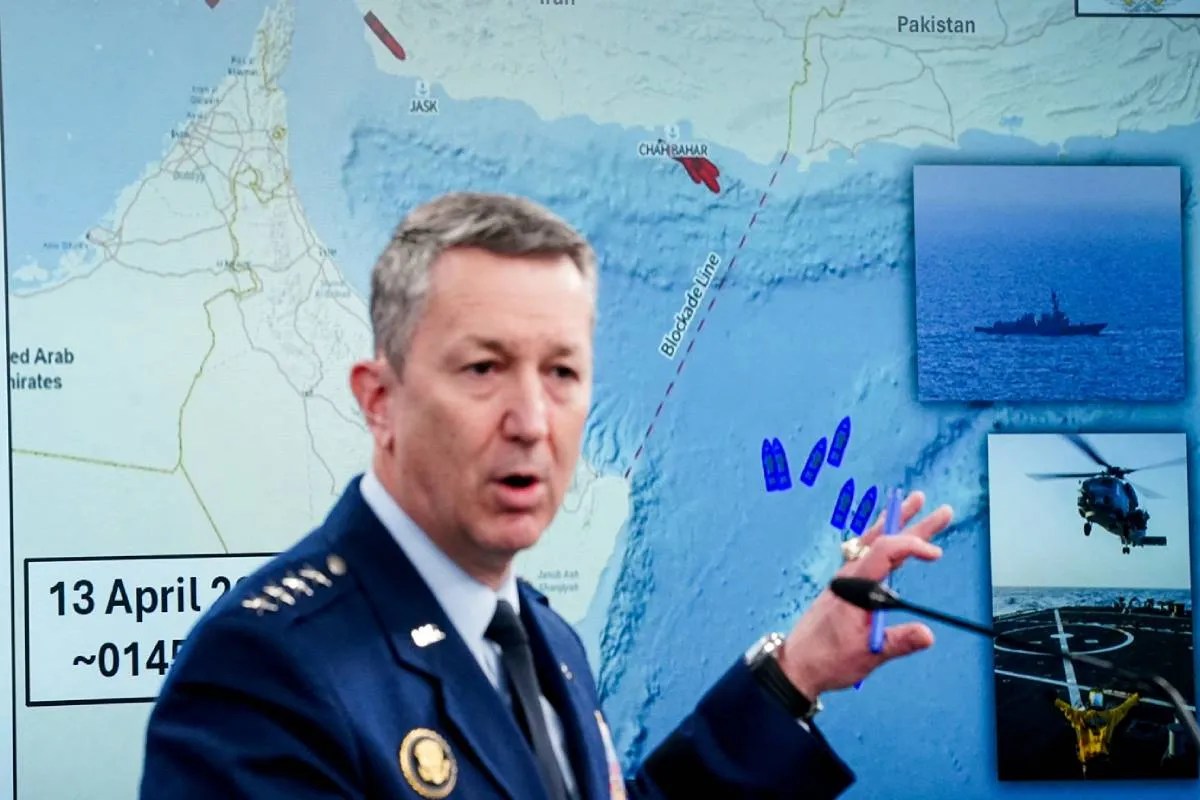
The shadow war in the Middle East has moved from the desert sands to the vital choke points of global trade. Washington has shifted its stance from reactive posturing to a proactive maritime blockade strategy that aims to starve the Iranian economy of its remaining lifelines. This isn't just about sanctions anymore. It is about physical interdiction and the clear message that any attempt to disrupt the flow of oil through the Strait of Hormuz will be met with overwhelming kinetic force. The U.S. Fifth Fleet is no longer just patrolling; it is positioning for a confrontation that Tehran seems increasingly willing to provoke.
The tension reached a fever pitch following recent intelligence reports suggesting that Iranian-backed proxies were preparing coordinated strikes on commercial shipping. In response, the U.S. signaled a departure from standard diplomatic warnings. The rhetoric coming out of the Pentagon suggests a "zero-tolerance" policy for maritime harassment. This shift signifies a realization in Washington that the previous policy of "maximum pressure" via paper sanctions has reached its limit of effectiveness. To truly cripple the regime's influence, the U.S. must control the water.
The Mechanics of a Modern Blockade
A blockade in the 21st century does not look like a line of wooden ships sitting off a coast. It is a high-tech web of satellite surveillance, drone patrols, and rapid-response strike groups. The U.S. is utilizing advanced sensor arrays to track every vessel exiting Iranian ports, specifically targeting the "ghost fleet" of aging tankers used to smuggle crude oil to illicit markets. By identifying these vessels and pressuring international registries to de-flag them, Washington is effectively turning these ships into floating pariahs.
When a ship cannot get insurance, it cannot dock at major ports. When it cannot dock, the oil stays in the hull. This creates a massive logistical bottleneck for Tehran. The Iranian Revolutionary Guard Corps (IRGC) has attempted to counter this by using small, fast-attack craft to intimidate commercial vessels, hoping to drive up global insurance premiums and force the West to back down. However, the U.S. Navy has countered by integrating unmanned surface vessels that provide constant eyes on the water without risking American lives. This technical superiority makes the traditional Iranian tactic of "swarm attacks" far less effective than it was a decade ago.
Why Sanctions Alone Failed
For years, the global community relied on the SWIFT banking system to throttle Iran. While this caused massive inflation and domestic unrest, it did not stop the IRGC from funding regional operations. The reason is simple. Black market economies thrive on cash and physical commodities. Iran mastered the art of ship-to-ship transfers in the middle of the night, often in the dark corners of the Indian Ocean where traditional monitoring was thin.
By shifting the focus to a physical blockade of key ports, the U.S. is attacking the supply chain at its most vulnerable point: the departure. You can hide a bank transaction through a dozen shell companies, but you cannot hide a 300-meter supertanker from a thermal imaging satellite. The current strategy treats the Iranian oil trade as a law enforcement problem rather than a purely diplomatic one. This transition to "maritime policing" allows the U.S. to act with more agility, seizing cargo that violates international law under the guise of maritime safety and anti-smuggling operations.
The Role of Regional Proxies
Tehran rarely acts directly when it can use a proxy. The Houthi rebels in Yemen and various militias in Iraq serve as the regime's long-distance arms. By attacking shipping in the Red Sea, these groups try to overstretch U.S. naval resources. The strategy is to force the U.S. to choose between protecting the Suez Canal approach or maintaining the blockade around Iran itself.
Washington has responded by forming international coalitions. This isn't just an American effort; it is a collective of nations that rely on stable energy prices. The involvement of European and Asian partners provides the political cover necessary to maintain a long-term presence. It turns a bilateral dispute into a global mandate for "freedom of navigation." This collective approach is precisely what Tehran feared most, as it prevents them from playing different nations against each other to find a weak link in the sanctions regime.
The Economic Fallout of a Total Shutdown
If the U.S. moves from a "soft" blockade to a "hard" one, the global oil market will react violently. We are talking about a potential spike that could push Brent crude well over $100 per barrel in a matter of days. This is the primary leverage Tehran holds. They know that a global recession is the one thing that might force Washington to blink.
However, the U.S. is currently betting that domestic production and reserves from other OPEC+ members can offset the loss of Iranian barrels. It is a high-stakes poker game where the currency is the global economy.
- Iranian Oil Export Capacity: Currently estimated at 1.2 to 1.5 million barrels per day.
- Global Spare Capacity: Mostly held by Saudi Arabia and the UAE, which could theoretically cover the gap.
- The Risk Factor: If Iran closes the Strait of Hormuz entirely, nearly 20% of the world's oil consumption is at risk.
This last point is the "nuclear option" of maritime trade. Iran has threatened it for decades, but doing so would be an act of economic suicide. It would not only alienate their few remaining customers in Asia but would likely trigger a full-scale military intervention that the regime would not survive.
Tactical Escalation and the Red Line
The U.S. has defined its red line with unusual clarity. Any direct interference with U.S. flagged vessels or the deployment of sea mines in international shipping lanes will trigger an immediate kinetic response. This is not the strategic ambiguity of previous administrations. It is a direct ultimatum.
The IRGC finds itself in a corner. Their traditional playbook of "harass and retreat" is no longer working because the U.S. has increased its persistence in the region. When an Iranian drone is shot down or a fast-attack boat is chased away, it weakens the regime's image of "defiance" at home. This internal pressure is dangerous. A regime that feels it is losing its grip on power is more likely to take a fatal miscalculation.
The current naval build-up includes not just carriers, but specialized electronic warfare vessels designed to jam the communications of the IRGC's command and control centers. This suggests that if a conflict breaks out, the U.S. intention is to blind and deafen the Iranian military before a single Tomahawk missile is even launched.
The China Factor
Beijing remains the largest buyer of Iranian "clandestine" oil. For the blockade to be truly definitive, the U.S. has to navigate the treacherous waters of Sino-American relations. Up until now, Washington has turned a partial blind eye to some of these transactions to avoid a total collapse of the relationship with China. That leniency is evaporating.
New executive orders allow the U.S. Treasury to penalize foreign ports and refineries that process Iranian crude. If a Chinese refinery is suddenly cut off from the U.S. dollar-clearing system, the cost of "cheap" Iranian oil suddenly becomes prohibitively expensive. This financial blockade, paired with the physical presence of the Navy, creates a pincer movement that Tehran has no clear way to escape.
Preparation for a Long Siege
This is not a short-term deployment. The infrastructure being built—including drone bases in the UAE and expanded logistics hubs in Bahrain—indicates that the U.S. is prepared for a multi-year maritime siege. The goal is the total exhaustion of the Iranian state’s foreign currency reserves.
Military planners are focused on "gray zone" tactics. This involves actions that fall just below the threshold of open war but are aggressive enough to achieve strategic objectives. Think of it as a slow-motion strangulation. The Iranian leadership is used to quick crises that blow over; they are less prepared for a decade of systematic exclusion from the global commons.
The world is watching the Persian Gulf not just for the price of gas, but to see if the U.S. still has the stomach to enforce the international order it created. If Tehran successfully breaks the blockade, the era of American maritime hegemony is effectively over. If the U.S. holds the line, it reinforces the dollar and the stick that comes with it for another generation.
The next time an Iranian commander looks through his binoculars at a U.S. destroyer, he isn't just looking at a ship. He is looking at the physical embodiment of a policy that has decided his country's main export is no longer welcome on the high seas. The move from rhetoric to blockade is complete. The only question left is who fires the first shot when the pressure becomes unbearable.