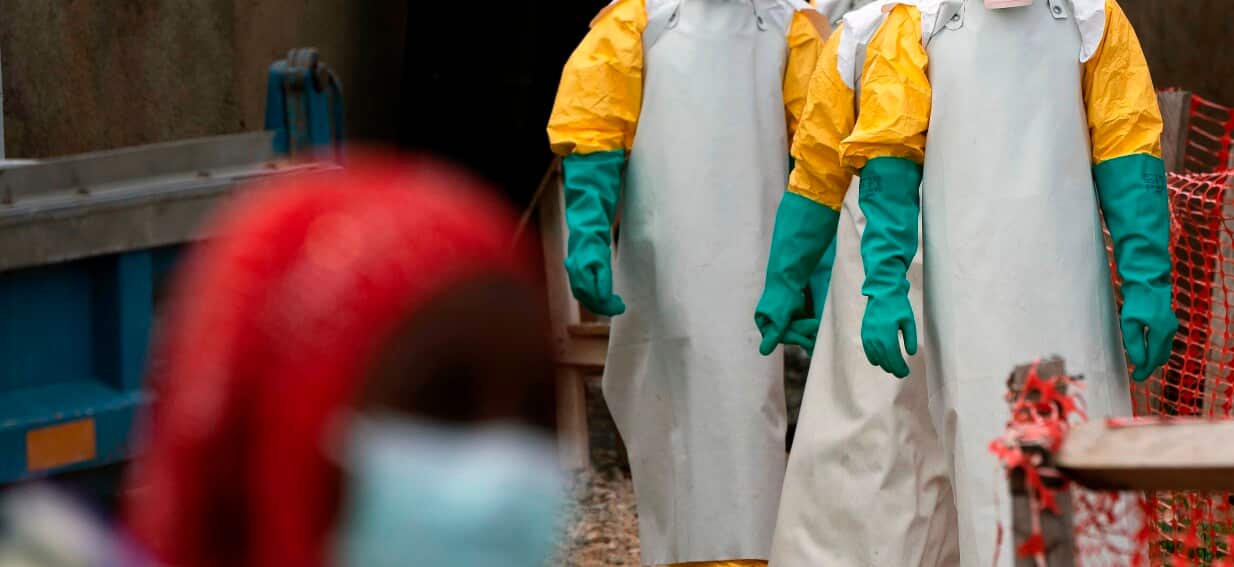
The World Health Organization just sounded the highest possible alarm. By declaring the Ebola outbreak a Public Health Emergency of International Concern, the W.H.O. isn't trying to panic you. They're trying to force global governments to open their checkbooks before the virus hits international transit hubs.
If you think this is just a localized crisis far away, you're misreading how modern biosecurity works.
When the W.H.O. makes this move, it changes everything from border screening protocols to international funding streams. It's a bureaucratic flare gun. The goal is simple: contain the virus at the source before global supply chains and travel networks face real disruption. Let's look at what this declaration actually triggers on the ground and why the next few weeks are critical.
Inside the W.H.O. Decision to Trigger an Ebola Emergency
An official emergency declaration isn't handed out lightly. The W.H.O. convenes an emergency committee of independent experts who assess strict criteria under the International Health Regulations. For Ebola to hit this level, the outbreak must be serious, unusual, or unexpected. It has to carry a real risk of international spread, and it must require an immediate, coordinated global response.
The current data shows why the committee shifted its stance. We aren't just seeing cases climb in remote villages anymore. The virus has moved into high-density areas and crossed borders, making traditional contact tracing a nightmare. Health workers face a dual threat: a highly lethal pathogen and severe operational insecurity on the ground.
When an outbreak hits a major urban center or spills across a porous border, traditional containment strategies break down fast. That’s exactly what triggered this global declaration.
The Logistics of Containment on the Ground
Containing Ebola requires intense, exhausting logistics. It is not just about medical treatment. It is about trust.
Public health teams must track down every single person who interacted with an infected patient. This means finding contacts, monitoring them for 21 days, and isolating anyone who shows symptoms. If you miss even one person, the chain of transmission keeps going.
[Image of Ebola virus transmission cycle]
Vaccination campaigns form the backbone of modern containment. The ring vaccination strategy is what works best here. Instead of trying to vaccinate an entire country, medical teams map out the infected individual's social circle. They vaccinate family members, neighbors, and colleagues. Then, they vaccinate the contacts of those contacts. This creates a human shield of immunity around the virus.
The strategy is brilliant on paper. In reality, it runs into massive roadblocks.
What Most People Get Wrong About Outbreak Response
The biggest mistake folks make is assuming that medicine solves an outbreak. It doesn't. Logistics and local trust solve outbreaks.
You can have the most effective vaccine in human history, but it's completely useless if a community refuses to let your medical team enter their village. In many affected regions, there is deep, historical distrust of central governments and foreign medical interventions.
When outsiders show up in white biohazard suits, taking away sick family members who often never return, people get terrified. They hide their sick relatives. They bury their dead in secret, bypassing safe burial protocols. Traditional funeral practices, which often involve washing the deceased, are massive super-spreading events because the Ebola virus remains highly contagious in post-mortem bodily fluids.
If you don't engage local leaders, religious figures, and trusted community elders first, your scientific intervention will fail. The W.H.O. knows this. A huge chunk of the emergency funding triggered by this declaration won't go to laboratories. It will go to local communication networks and community engagement teams.
The Economic Reality of Global Health Emergencies
Let’s talk about money because that’s what drives international policy. A global emergency declaration acts as an economic shield for developing nations.
Historically, when a country admitted to a major outbreak, neighboring nations responded by closing borders, cancelling flights, and cutting off trade. The country trying to do the right thing by reporting cases got economically punished for its honesty. That created a dangerous incentive to hide data.
The W.H.O. emergency status explicitly discourages unnecessary travel and trade restrictions. It tells the world: support the response, don't isolate the region. By formalizing the crisis, the W.H.O. unlocks emergency contingency funds and streamlines international aid. It forces wealthier nations to realize that spending a few million dollars on containment today prevents a multi-billion-dollar global crisis tomorrow.
The Immediate Action Steps for Global Health Agencies
The declaration changes the checklist for health ministries worldwide. If you manage public health infrastructure, your immediate priority list just shifted.
First, secure the supply chain for personal protective equipment and therapeutics. Frontline workers need heavy-duty gear, and they need it yesterday. Second, ramp up surveillance at major international entry points without causing gridlock. This means training border personnel to spot early symptoms and establishing clear isolation protocols if a suspected case arrives.
Finally, wealthier nations must fast-track promised financial and technical aid to the epicenter. Containment is an active, shifting battle. The quicker the funds hit the ground to support local healthcare workers, the faster this emergency status can be lifted.