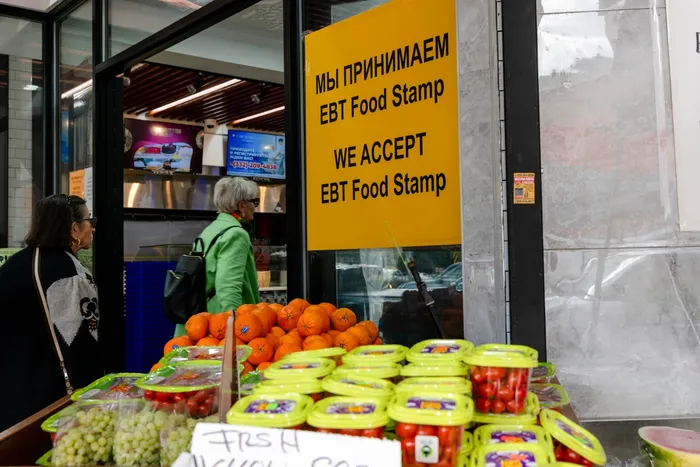
The federal government recently moved to disqualify 1,562 retailers from the Supplemental Nutrition Assistance Program (SNAP), effectively blocking an estimated $835 million in fraudulent transactions. While the USDA frames this as a victory for taxpayers, the sheer scale of the enforcement action reveals a much darker reality about the American food safety net. It is not just a few bad actors at the fringes of commerce. Instead, we are witnessing a sophisticated, multi-layered black market where food benefits are treated as a liquid currency, exchanged for cash, drugs, or high-value electronics at cents on the dollar.
To understand how nearly a billion dollars nearly vanished, you have to look past the bureaucratic press releases. Fraud on this scale suggests that the technology meant to protect the vulnerable is being systematically outpaced by criminal ingenuity. This is a story of systemic vulnerability, where the shift to Electronic Benefit Transfer (EBT) cards—intended to reduce the stigma of "food stamps"—has inadvertently created a digital gold mine for organized rings and predatory small-business owners. For a different perspective, see: this related article.
The Mechanics of the Shadow Exchange
The core of the problem lies in a practice known as "trafficking." In its simplest form, a dishonest retailer swipes a recipient's EBT card for a fake purchase of $200. The retailer then hands the recipient $100 in cash and pockets the remaining $100 as a "service fee." The government pays the full $200 to the retailer, unaware that no food ever changed hands.
This is a high-volume game. For a small corner store or "bodega" that struggles to compete with national grocery chains, the profit margin on a loaf of bread is negligible compared to the 50% "vig" they can take on a fraudulent EBT transaction. These retailers become de facto banks for the unbanked, operating a shadow financial system that thrives on the desperation of the poor and the greed of the merchant. Further coverage regarding this has been provided by Financial Times.
The USDA’s Food and Nutrition Service (FNS) uses data mining to spot these patterns. They look for "outlier" transactions—spikes in spending that don't match a store's inventory or size. If a tiny convenience store that doesn't sell fresh meat suddenly starts processing multiple $400 transactions in a single hour, the red flags go up. However, the criminals are evolving. They now use "smurfing" techniques, breaking large fraudulent transactions into smaller, more believable amounts that blend into the noise of legitimate daily sales.
The Rise of EBT Skimming
While the "willing recipient" model of fraud accounts for a massive chunk of the losses, a more predatory trend is exploding across the country: EBT skimming. Unlike traditional credit cards, EBT cards in many states lack the security of EMV chips. They rely on outdated magnetic strips, which are laughably easy to clone.
International criminal syndicates have identified this loophole. They install overlay devices on point-of-sale terminals in high-traffic areas. When a mother swipes her card to buy milk, her credentials are stolen instantly. Within hours, her entire monthly balance is drained at an ATM or a complicit retailer halfway across the state. The victim discovers the balance is zero when they get to the checkout line, often with no immediate recourse for reimbursement.
The $835 million prevented by the USDA is only the money they caught. Because the system relies heavily on reactive enforcement—investigating after the money has already been spent or requested—the true drain on the program is likely billions higher. The disqualification of 1,562 retailers is a drop in the bucket when thousands more are being recruited into these networks every year.
Why Small Retailers Are the Primary Target
Large supermarket chains have too much to lose to engage in SNAP fraud. They have automated inventory systems that make it nearly impossible to fake sales on a large scale without getting caught by internal auditors. The fraud lives in the "unorganized" retail sector: independent gas stations, small grocery stores, and specialty markets.
These entities often operate with thin paper trails. For a veteran investigator, the process of proving fraud in these locations is a grind. It requires undercover "compliance buys" where investigators attempt to trade SNAP benefits for ineligible items like alcohol, tobacco, or straight cash. It is a slow, resource-heavy process. The fact that the USDA managed to axe over 1,500 retailers in a single cycle indicates that the agency is finally leaning into more aggressive data analytics, but it also highlights how pervasive the rot has become.
There is a socio-economic pressure at play here that few analysts want to discuss. In "food deserts," these small retailers are often the only source of nutrition for a neighborhood. When the USDA disqualifies a store, the fraudulent activity stops, but the local community loses a point of access. This creates a tension between enforcement and accessibility. The government is forced to choose between allowing a criminal enterprise to continue or making it significantly harder for thousands of honest families to eat.
The Technology Gap
The private sector moved to chip-and-pin technology years ago because the fraud losses became unsustainable. The public sector, hampered by legacy contracts and the sheer logistical nightmare of replacing millions of cards, has lagged behind. This delay is essentially a subsidy for fraudsters.
We are seeing a massive transfer of wealth from the federal treasury to organized crime, facilitated by 1990s-era security. If the USDA wants to move from "preventing" $835 million in fraud to "eliminating" it, the infrastructure of the EBT system requires a total overhaul. Relying on "disqualifying" retailers is a whack-a-mole strategy. You pull the license of one store, and another opens up across the street under a different LLC name, often run by the same individuals.
The Flaw in the Enforcement Model
The current enforcement model is built on the assumption that the retailer is the primary aggressor. While often true, the "demand" side of the equation—the recipient looking for cash—is rarely addressed with the same vigor. When benefits are used for cash, it is frequently to fund expenses that SNAP doesn't cover: rent, utilities, or diapers.
By treating this strictly as a criminal matter of "fraud," the government ignores the underlying economic desperation that makes the black market possible. If a recipient can’t pay their electric bill with SNAP, and they have no other income, the 50-cent-on-the-dollar trade at the corner store becomes a rational, if illegal, choice. Until the program's flexibility matches the reality of poverty, the black market will remain a permanent fixture of the landscape.
Corporate Complicity and the Third-Party Layer
Recent investigations have started to pull back the curtain on the role of third-party payment processors. These are the companies that provide the hardware and software to retailers to accept EBT. Some of these processors have been accused of turning a blind eye to obvious fraud patterns among their clients because they earn a fee on every transaction, regardless of its legitimacy.
When the government disqualifies a retailer, the processor loses a revenue stream. There is very little incentive for these middle-men to act as a first line of defense. A more effective regulatory approach would involve holding these payment providers financially liable for high rates of fraud within their networks. If the companies providing the machines had "skin in the game," the $835 million figure would shrink overnight as suspicious accounts were frozen before the USDA even had to step in.
The Myth of the "Welfare Queen"
Politicians often use these fraud statistics to argue for cutting the SNAP program entirely. This is a strategic error. The fraud isn't proof that the program is unnecessary; it's proof that the program is being exploited by professional criminals and predatory businesses. The $835 million in prevented fraud represents meals that should have gone to children, seniors, and the working poor.
When a retailer is disqualified, the headlines focus on the "crackdown." But we should be focusing on the recovery of those funds. Under current laws, it is notoriously difficult to actually claw back the money once it has been paid out to a retailer. The disqualification is a permanent ban from the program, but it doesn't always come with a jail sentence or a full repayment of the stolen funds. It is often seen by the perpetrators as a cost of doing business.
The Impending Crisis of Digital Theft
As we look at the 1,562 disqualified retailers, we have to recognize that we are at a turning point. The nature of SNAP fraud is shifting from "social engineering" (the cash-for-benefits trade) to "technical exploitation" (skimming and hacking). The latter is far more dangerous because it can be automated and scaled.
A single criminal group can drain thousands of accounts in a single night without ever stepping foot in a retail store. They use botnets to check balances and "cash out" through compromised online grocery portals. The USDA's traditional tools—undercover buys and store inspections—are useless against a hacker sitting in a different country.
The prevention of $835 million is a sign of a system under heavy fire. The government is celebrating a defensive victory, but they are losing the war of attrition. Without a mandatory transition to encrypted chips, multi-factor authentication for EBT transactions, and a radical restructuring of how small retailers are vetted, the "disqualification" list will only grow longer while the actual losses continue to climb.
The most effective way to protect the program isn't just more "investigations." It is the total removal of the incentive. If the cards cannot be skimmed, and if the data analytics can freeze a transaction in real-time before the "cash" is handed over, the black market collapses.
The USDA must stop acting like a reactive auditor and start acting like a high-stakes financial security firm. The integrity of the American social safety net depends on whether the government can secure its digital currency before the shadow economy swallows it whole. If you are a retailer currently gaming the system, the message is clear: the data is catching up to you, but the question remains whether the law can move fast enough to actually stop the bleeding.
The $835 million "save" isn't a success story. It is a warning.