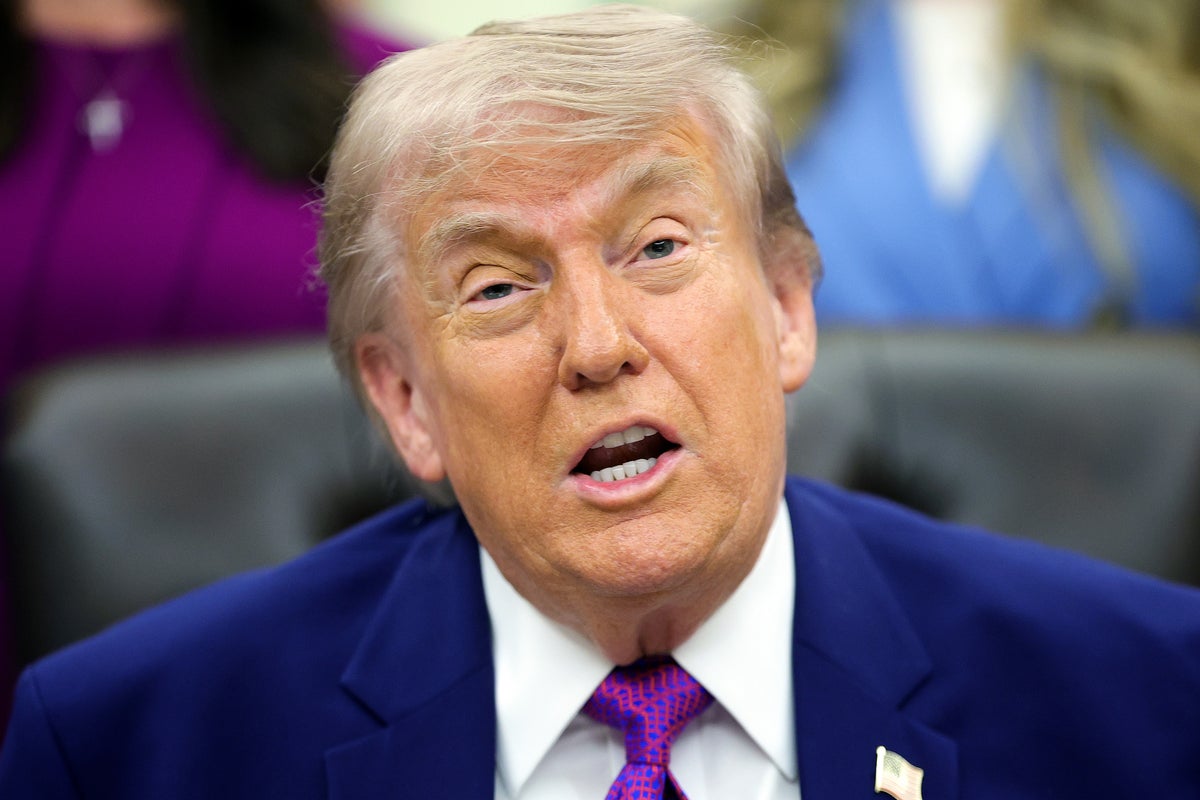
The "Military Genius" Myth and the Strategic Reality
The media is currently hyperventilating over the phrase "on life support." They see a dying ceasefire in the Middle East and conclude that American influence is evaporating. They look at the rhetoric coming out of Mar-a-Lago and see a desperate defense of a failing doctrine.
They are wrong.
The pundits are measuring success by the absence of noise. In the brutal world of high-stakes geopolitics, noise is a tool, not a failure. When the status quo is a slow-motion car crash—which the Iran-Israel-Hezbollah triangle has been for decades—a ceasefire that "fails" isn't a setback. It’s a clearance of the board.
We’ve spent forty years watching "career diplomats" try to freeze conflicts in amber. All they’ve achieved is the subsidization of proxy wars. The current administration’s approach, often derided as chaotic or "military genius" posturing, is actually a violent correction toward reality.
The Ceasefire Trap
Most people believe a ceasefire is a step toward peace. It isn't. In the context of Iran and its regional proxies, a ceasefire is a rearming period. I have watched billions of dollars in "stabilization funds" evaporate the moment a temporary truce expires, only for the conflict to return with higher-caliber munitions.
A ceasefire "on life support" is exactly where you want your enemies. It forces them to reveal their bottom-line positions without giving them the breathing room to rebuild their supply lines. If the agreement is fragile, the leverage remains with the party willing to walk away.
The "lazy consensus" says that a collapsed deal is a loss for the negotiator. Logic suggests otherwise. A deal that only exists because you’re subsidizing your opponent’s compliance isn’t a deal; it’s a protection racket. If the current framework is crumbling, it means the artificial constraints that favored Tehran are finally being stripped away.
Iran’s Three-Front Illusion
The common narrative suggests Iran is a monolithic chess player. This is a fundamental misunderstanding of the Islamic Revolutionary Guard Corps (IRGC) logistics. Iran is overextended. Their domestic economy is a tinderbox, their "Axis of Resistance" is under immense kinetic pressure, and their nuclear breakout timeline is being used as a desperate bargaining chip.
When Trump claims "military genius" in his approach, the critics laugh because they’re looking for a West Point white paper. They should be looking at the leverage of the "Maximum Pressure" campaign 2.0. By keeping the ceasefire in a state of perpetual near-collapse, the U.S. prevents Iran from normalizing its regional aggression.
A permanent ceasefire today would codify Iran’s gains in Lebanon and Yemen. Why would any sane strategist want that?
The Cost of Stability
Stabilization is the most expensive lie in Washington. I’ve seen departments burn through budgets trying to "foster" (a word for people who don't have a plan) relationships with actors who have zero intent to de-escalate.
The contrarian truth: Instability is a diagnostic tool.
By removing the "life support" from a flawed ceasefire, you force the regional players to show their hand. You find out who is actually willing to fight and who was just posturing for the sake of international aid.
The Logistics of a "Lash Back"
Critics are obsessed with the optics of the "lash back" against the military establishment. They claim it undermines the chain of command. In reality, it’s a necessary purge of the sunk-cost fallacy that dominates the Pentagon’s Middle East desks.
If you’ve been doing the same thing for twenty years and the result is a nuclear-capable Iran and a burning Levant, your expertise is a liability.
The current strategy isn't about "peace" in the Miss Universe sense. It’s about kinetic realignment.
- Economic Asymmetry: You don't need to drop bombs if you can make the enemy's currency worthless.
- Predictable Unpredictability: If the adversary doesn't know where your "red line" is, they have to treat every line as a red line.
- Decoupling from Proxies: Forcing Iran to fund its own wars instead of relying on the unintended "leakage" of international humanitarian aid.
Debunking the "World War III" Fearmongering
Every time a ceasefire wobbles, the headlines scream about the brink of Armageddon. This is a tactic used to scare the public into accepting bad deals.
Consider the Abraham Accords. They didn't happen through "holistic" (another empty word) dialogue. They happened because the Gulf States realized the old American guard was gone, and they had to align with the only other power in the region capable of checking Iran: Israel.
The friction we see now is the friction of a new regional order being ground into existence. It’s loud, it’s ugly, and it’s dangerous. But it’s honest.
The Professional’s Guide to Ignoring the Noise
If you want to understand what’s actually happening with the Iran plan, stop reading the editorial boards and start looking at the shipping manifests in the Persian Gulf and the insurance premiums for tankers.
The "experts" will tell you that a breakdown in talks leads to oil price spikes. Yet, despite the "life support" status of the ceasefire, markets remain remarkably resilient. Why? Because the markets have already priced in the incompetence of the traditional diplomatic core. They know that a "failed" deal that keeps Iran boxed in is better for long-term stability than a "successful" deal that grants them a hundred billion dollars in sanctions relief.
The Strategy of the Exit
The goal of any negotiation isn't to stay at the table forever. It’s to get what you want and leave.
The competitor article suggests that Trump is "defending" his plan. He isn't defending it; he’s doubling down on the premise that the table itself is the problem. If the ceasefire dies, the blame will be placed on the critics and the "weak" negotiators of the past. This isn't just politics—it’s the intentional construction of a "No-Win" scenario for the adversary.
Imagine a scenario where the ceasefire officially ends tomorrow.
- Iran loses its diplomatic cover.
- The U.S. regains total freedom of movement regarding sanctions.
- Regional allies are forced to pick a side.
That isn't a failure of diplomacy. That is the definition of clarity.
Stop Asking if the Deal is Dead
People keep asking: "Can the ceasefire be saved?"
That is the wrong question. The right question is: "Why would we want to save a deal that serves the interests of a regime that chants for our destruction?"
The obsession with "saving" the deal is a symptom of a bureaucratic mindset that values the process over the outcome. We have been conditioned to think that a signed piece of paper is a victory. It’s not. A victory is an Iran that cannot afford to fund Hezbollah. A victory is a region where the U.S. doesn't have to beg for a temporary pause in hostilities.
If the ceasefire dies, let it. The "life support" is only there to give the world time to prepare for what comes next.
The age of the "managed conflict" is over. We are entering the age of the resolved conflict. It won’t be "seamless." It won’t be pretty. But it will be final.
Stop mourning the death of a bad agreement and start preparing for the leverage that comes with its funeral.