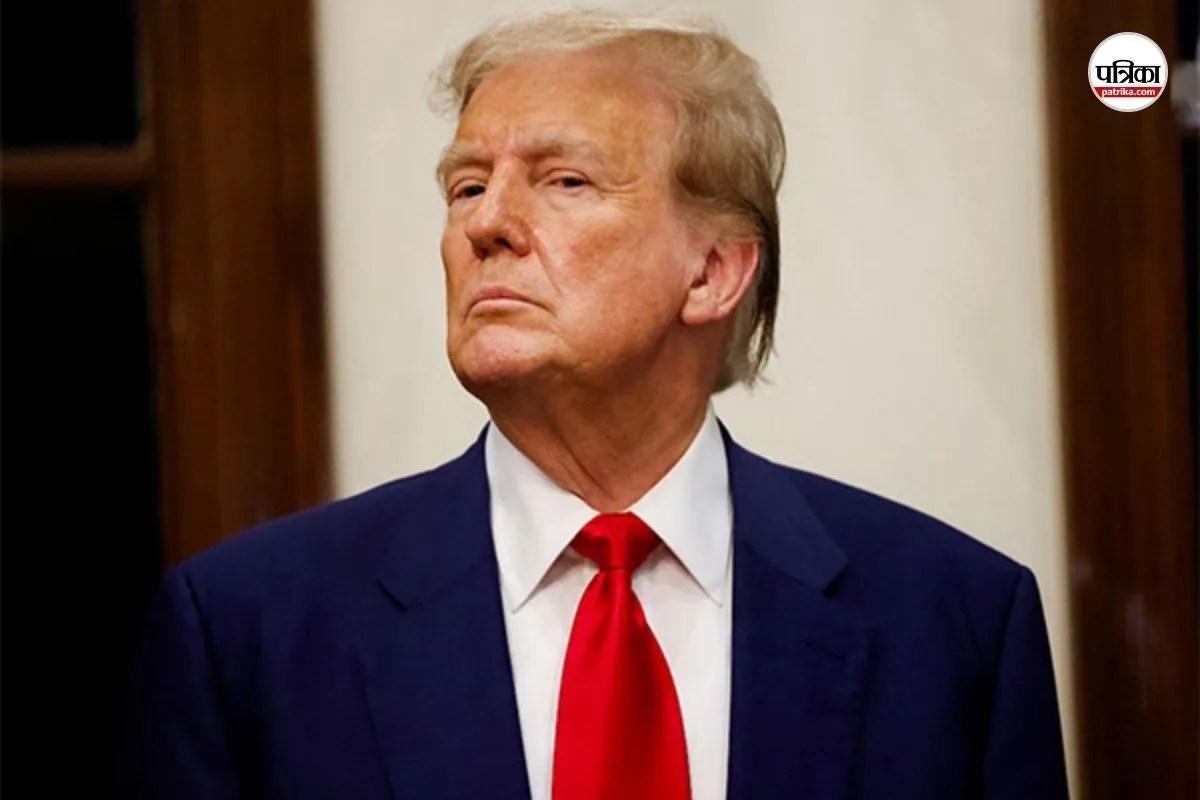
The shift in American trade policy under the Trump administration represents a departure from the post-Cold War consensus of multilateralism toward a model of reciprocal bilateralism. This framework is not merely a collection of tariffs but a structural reconfiguration of how the United States interacts with emerging markets, specifically India. The administration's logic operates on the premise that the existing global trade deficit is a symptom of systemic "free-riding" by developing economies that utilize American consumer markets while maintaining protectionist barriers. To address this, the new trade plan utilizes a three-pillar mechanism: aggressive tariff equalization, the weaponization of market access, and the localized containment of geopolitical instability in the Middle East to secure energy corridors.
The Reciprocity Function and Tariff Equalization
The core of the new trade framework is the Principle of Mirror Tariffs. In traditional trade theory, most-favored-nation (MFN) status ensures that trade barriers are kept low across the board. The Trumpian model replaces this with a cost-function approach where the U.S. tariff rate is pegged directly to the rate imposed by the trading partner. If India maintains a 60% duty on high-end electronics or automobiles, the U.S. architecture seeks to impose a matching 60% duty on Indian exports of equivalent value.
This creates a binary choice for partner nations:
- De-escalation: Lowering domestic barriers to maintain access to the $27 trillion U.S. economy.
- Substitution: Accepting a loss of market share as the U.S. pivots its supply chains to lower-tariff jurisdictions or reshores production entirely.
The strategy assumes that the U.S. consumer market is an "inelastic asset"—a destination so vital that countries like India will choose internal deregulation over external exclusion. However, this logic ignores the Price Elasticity of Demand for American consumers. If tariffs are equalized upward rather than downward, the resulting inflationary pressure functions as a regressive tax on the American public, potentially slowing the very GDP growth required to sustain the trade war.
Geopolitical Stabilization as a Trade Prerequisite
The administration’s interventions in the Middle East are often viewed through a military lens, but they function as a risk-mitigation strategy for supply chain logistics. The "India-Middle East-Europe Economic Corridor" (IMEC) requires a stable Levant and a neutralized Iranian influence to be viable. Without a security guarantee in the Middle East, the maritime and rail links connecting Mumbai to Haifa and eventually Europe remain high-risk investments.
The trade plan views regional conflict as a "friction cost" that must be eliminated to ensure the flow of energy and goods. By brokering normalization agreements, the administration seeks to lower the insurance premiums and freight costs associated with the Indo-Pacific trade routes. This is a move toward Geopolitical De-risking, where trade deals are contingent upon the partner nation’s alignment with U.S. security objectives. For India, this creates a complex dependency: access to the new trade framework is effectively "taxed" by the requirement to distance itself from BRICS+ initiatives that challenge U.S. hegemony in the Middle East.
The Structural Realignment of the India-US Corridor
India occupies a unique position in this framework as the primary "China + 1" candidate. However, the Trump administration’s approach suggests that being an alternative to China is insufficient; India must also become a transparent market for American capital. The new framework identifies specific bottlenecks in the Indian economy that the U.S. intends to leverage:
- Intellectual Property (IP) Arbitrage: The U.S. seeks to tighten patent protections in the pharmaceutical and tech sectors, viewing India’s generic drug industry as a form of "hidden subsidy" that undermines American R&D.
- Data Sovereignty: The plan pushes against India’s data localization laws. The administration views data as a commodity that must flow freely to American servers to maintain the dominance of U.S. AI and cloud infrastructure companies.
- Agricultural Access: This remains the most volatile variable. The U.S. demands a reduction in subsidies for Indian farmers, a move that would provide a vent for American grain and dairy surpluses but risks significant domestic political blowback for the Indian government.
The Efficiency Gap in Bilateralism
The transition from the Indo-Pacific Economic Framework (IPEF) to this new bilateral model creates an Efficiency Gap. Multilateral agreements, while slow to negotiate, provide a uniform set of rules that reduce the "noodle bowl effect"—the complexity of overlapping and conflicting trade requirements. By pursuing individual "grand bargains" with India and other nations, the U.S. increases the administrative burden on multinational corporations.
The second limitation of this strategy is the Reshoring Illusion. The administration argues that higher trade barriers will bring manufacturing back to the U.S. heartland. In reality, capital is mobile but labor is not. If the cost of production in India rises due to tariffs, capital does not necessarily flow back to Ohio or Pennsylvania; it flows to the next-most-efficient low-cost producer, such as Vietnam or Mexico, unless those nations are also captured by the same tariff equalization logic.
Strategic Forecasting of Market Outcomes
The implementation of this trade plan will likely result in a bifurcated global economy. We are moving toward a "High-Trust, High-Barrier" zone led by the U.S., where trade is frictionless between aligned partners who adhere to American IP and security standards, and a "Low-Cost, High-Risk" zone centered around the remaining BRICS members.
For India, the strategic play is no longer about balancing these two worlds but about calculating the Net Present Value (NPV) of the U.S. partnership. If the cost of lowering agricultural and digital barriers is offset by a massive influx of American semiconductor and aerospace manufacturing, the deal is viable. If, however, the U.S. maintains high entry barriers despite Indian concessions, the framework will collapse under its own weight.
Investment portfolios should pivot toward sectors with high "Policy Immunity"—industries like defense, critical minerals, and high-end services that are deemed essential to the U.S. national interest regardless of the specific tariff rate. Conversely, consumer goods and low-margin manufacturing are now high-beta assets, sensitive to every shift in the administration’s "Mirror Tariff" calculations. The era of the "global village" is dead; we have entered the era of the Fortress Market.
India must accelerate its internal "Gati Shakti" infrastructure projects to lower the cost of logistics from 14% of GDP to the global average of 8%. This is the only way to absorb the impact of potential U.S. tariffs while remaining competitive. The administration’s plan is a clear signal: the U.S. will no longer subsidize global security and trade for "free." Every nation must now pay its way or find itself excluded from the world's most lucrative consumer engine.


