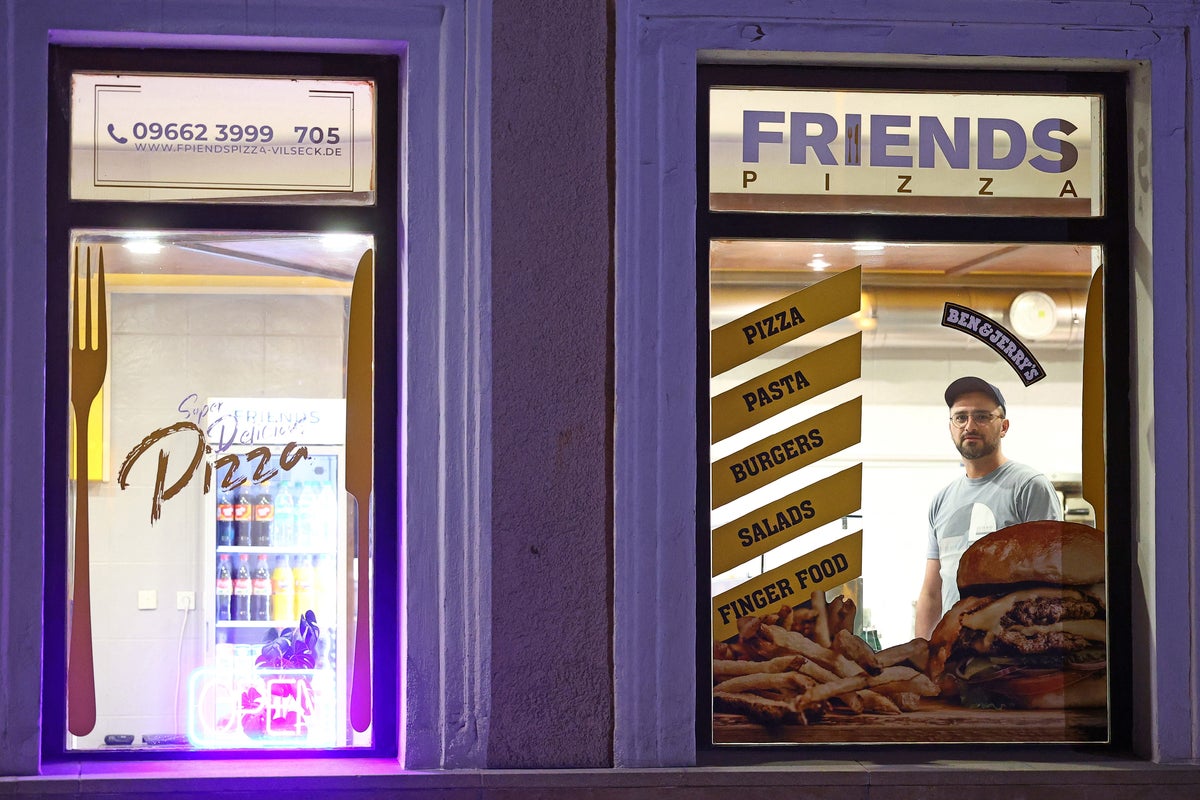
The hand-wringing over Grafenwöhr is a masterclass in economic Stockholm Syndrome.
Mainstream media outlets are currently flooding the zone with tear-jerking profiles of "picturesque" Bavarian towns that will supposedly collapse into the dirt the moment the last American M1 Abrams is loaded onto a transport ship. They paint a picture of a parasitic symbiosis—thousands of local jobs, from schnitzel-slinging restaurateurs to specialized contractors, all vaporized by a single stroke of a pen in the Oval Office.
They are wrong. They are missing the forest for the very expensive, camo-painted trees.
The presence of U.S. forces in towns like Grafenwöhr and Vilseck isn’t an economic engine; it’s a massive, taxpayer-funded subsidy that has frozen the local economy in a 1955 time capsule. To argue that removing this presence is a "catastrophe" is to argue that a patient is being harmed by finally removing a crutch they’ve leaned on for eighty years.
The Myth of the "Anchor Industry"
Local mayors talk about the U.S. Army as an "anchor industry." In any other context, we’d call it a monopoly. When a single entity controls the labor market, the real estate demand, and the retail flow of an entire region, it doesn't create "stability." It creates a monoculture.
Think about the opportunity cost. The Grafenwöhr Training Area (GTA) covers approximately 232 square kilometers. That is a massive footprint of prime European real estate dedicated to tank maneuvers and live-fire drills. In a world where Germany is screaming for housing, renewable energy expansion, and industrial space for actual productive enterprises, we are told that the best use for this land is hosting foreign soldiers who shop at the PX and occasionally buy a beer in town.
I’ve seen towns across the Rust Belt and Northern England fall into this exact trap. They tether their entire identity to a single plant or a single mine. When that "anchor" leaves, they don't know how to breathe. The tragedy isn't the departure; it's the decades of stunted growth leading up to it.
The Dutch Disease of Defense
In economics, "Dutch Disease" describes how the discovery of natural resources can actually lead to the decline of the manufacturing sector. A similar phenomenon happens in garrison towns.
Because the U.S. military provides a steady, predictable stream of "easy" money, the local entrepreneurial spirit goes to die. Why innovate? Why build a tech startup or a high-value manufacturing firm when you can just open another laundromat or a mediocre bar that caters to 19-year-old GIs?
The "jobs" people are so worried about losing are largely low-skill, service-sector positions with zero upward mobility and no relevance to the 21st-century global economy. By "saving" these jobs, politicians are actually condemning the next generation of Bavarians to be permanent servants to a foreign military presence.
If the troops leave, the initial shock will be sharp. Yes, people will lose jobs. But that shock is the smell of smelling salts. It forces a radical reallocation of capital and talent. It forces a town to ask: "What do we actually produce that the world wants?"
The Sovereignty Tax You Don’t See
The competitor pieces love to cite the billions of Euros U.S. troops pump into the local economy. They rarely mention the costs Germany pays to keep them there.
Germany spends hundreds of millions annually on "stationing costs," which include everything from construction projects to land maintenance and damage claims. Furthermore, there is the massive, unquantifiable cost of lost tax revenue on everything sold within the base gates.
Then there is the NATO "free-rider" argument, usually framed as a moral failing. Let’s look at it through a business lens instead. As long as the U.S. provides the "security umbrella," Germany has zero incentive to build a modern, efficient, and sovereign defense industry. The result? The Bundeswehr is a laughingstock, with equipment that doesn't work and a bureaucracy that makes Kafka look like a visionary.
A U.S. withdrawal isn't a threat to German security; it’s the only thing that will finally force Germany to become a serious adult on the world stage. You cannot claim to be the economic powerhouse of Europe while outsourcing your front-door security to a country 4,000 miles away that is increasingly disinterested in the bill.
The Real Estate Goldmine
Let’s talk about the land. Imagine a scenario where the GTA is decommissioned.
- Housing: Germany has a chronic housing shortage. Converting even 20% of base land into residential zoning would create a construction boom that would dwarf the "loss" of barber shop revenue.
- Industry 4.0: Bavaria is the heart of German engineering. Reclaiming this land provides space for the "Mittelstand"—the medium-sized companies that are the actual backbone of the country—to expand without being choked by land prices.
- Ecological Tourism: Much of this land has been shielded from industrial farming for decades. It is an ecological treasure trove. The potential for high-end, sustainable tourism and research is massive, far outstripping the value of a shooting range.
The "thousands of job losses" headline is a classic example of focusing on the visible loss while ignoring the invisible gain. It’s Bastiat’s "Broken Window Fallacy" on a geopolitical scale.
The "People Also Ask" Reality Check
People ask: "Will Grafenwöhr become a ghost town?"
Brutal Answer: Only if its leaders are unimaginative cowards. If they spend the next five years begging Washington to stay instead of courting Siemens, BMW, or green-energy developers, then yes, they deserve to be a ghost town.
People ask: "Is Germany ready to defend itself?"
Brutal Answer: No. And it never will be as long as the U.S. Army acts as a permanent security blanket. Necessity is the mother of invention; comfort is the mother of stagnation.
The Battle Scars of Conversion
I’ve analyzed base closures from the 1990s in the United States. In the BRAC (Base Realignment and Closure) rounds, the towns that screamed the loudest about their impending doom often ended up with higher per-capita income and more diverse economies ten years later.
Why? Because a base is a walled garden. It’s an island. It doesn't integrate with the local economy; it extracts from it and provides a floor that prevents anyone from reaching for the ceiling.
The downside to my take is simple: the transition period sucks. It is painful. It requires local government to actually lead instead of just collecting rent. It requires workers to retrain. It requires a temporary dip in local GDP. But staying the course is a slow-motion suicide.
Stop Mourning a Subsidy
The narrative that Germany is a victim of U.S. foreign policy shifts is a lie. Germany is a victim of its own complacency.
Trump’s threats to withdraw are often framed as "punishment." In reality, he might accidentally be handing Germany its greatest economic opportunity since the Marshall Plan. He is offering to remove the distortion that has warped the Bavarian economy for nearly a century.
The picturesque towns aren't facing an ending. They are being given a chance to finally start.
Stop asking how to keep the tanks. Start asking what you’re going to build on the tracks they leave behind.