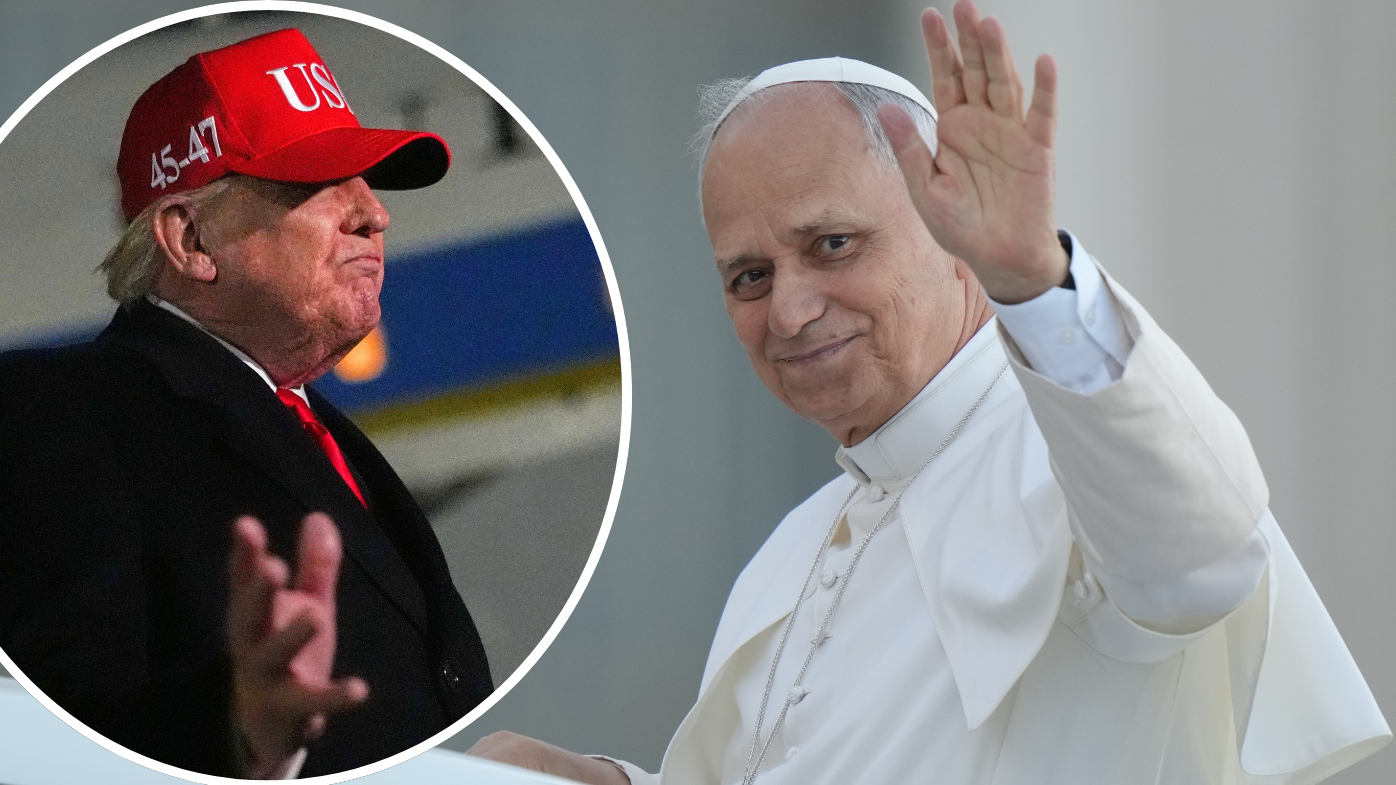
The honeymoon period between the White House and the Vatican didn't just end; it imploded. On Sunday, Donald Trump took to social media to blast Pope Leo XIV as "weak on crime" and "terrible for foreign policy." This isn't just another political spat. It’s a total breakdown in relations between the world’s most powerful secular leader and the first American-born Pope.
If you're wondering why this matters right now, look at the map. With U.S. and Israeli military operations ramping up in Iran and the recent overthrow of the Maduro regime in Venezuela, the Vatican has become the most vocal critic of American "diplomacy of force." Trump isn't taking that criticism lying down. He’s claiming credit for the Pope’s very existence in the Vatican, arguing that if he weren't in the White House, Leo wouldn't be in the chair of St. Peter.
The American Pope vs the American President
It’s ironic. When Pope Leo XIV (the former Cardinal from Chicago) was elected in May 2025, many thought his American roots would bridge the gap between Washington and Rome. Instead, those shared roots have only made the friction more personal. Trump’s latest tirade follows a series of sharp rebukes from the Pontiff regarding U.S. immigration raids and the escalation of war in the Middle East.
- The "Weak" Label: Trump’s primary grievance is that Leo is "very liberal" and soft on Iran.
- The Personal Jab: Trump went as far as to say he prefers the Pope’s brother, Louis Prevost, because he’s "all MAGA."
- The Proxy War: The Vatican recently declined an invitation to join Trump’s proposed "Board of Peace" in Gaza, a move that felt like a slap in the face to the administration’s regional strategy.
Why the Iran Conflict Changed Everything
The tension reached a boiling point over the last few weeks as U.S.-Israel military operations against Iran intensified. Pope Leo didn't just call for peace; he denounced the "delusion of omnipotence" that he believes is fueling the war. For an administration that sees its foreign policy as a moral necessity, being told by the Holy Father that your hands are "full of blood" is a bridge too far.
Trump’s response has been characteristically blunt. He believes God is on his side because "God is good and wants to see people taken care of." This theological clash is rare. We haven't seen a Pope and a President trade barbs this directly since the early days of the 2016 campaign when Pope Francis questioned Trump’s Christianity over the border wall. But back then, they weren't dealing with a potential global conflict involving nuclear-armed nations.
The Venezuela Connection
Don't overlook the January 2026 capture of Nicolás Maduro. While the Trump administration celebrated the Delta Force operation as a victory for democracy, Pope Leo XIV slammed it. He called it a violation of international borders and a return to the "seal of war." This fundamental disagreement on how to handle "bad actors" globally is the wedge that keeps driving them apart.
What This Means for 2026 and Beyond
You might think this is just noise, but it has real-world consequences for Catholic voters in the U.S. and diplomatic efforts abroad. The Vatican still carries immense soft power. When the Pope calls a president’s actions "unacceptable" or "inhuman," it complicates every alliance the U.S. is trying to build.
- Diplomatic Isolation: The Vatican’s refusal to participate in U.S.-led peace boards makes it harder for the administration to claim a global mandate.
- The New Ambassador: In March, the Pope appointed Archbishop Gabriele Caccia as the new envoy to Washington. His job is essentially damage control, but with Trump’s latest comments, that task looks impossible.
- Domestic Fallout: Trump is betting that his base cares more about "law and order" than the Pope’s approval. He’s leaning into his evangelical support to counter the Vatican's influence.
Honestly, don't expect a handshake at the Vatican anytime soon. The rhetoric is getting darker, and the stakes—nuclear tension and mass migration—are too high for either side to blink. If you want to understand where U.S. foreign policy is headed, stop looking at the State Department for a second and look at the Sunday bulletins coming out of Rome.
Keep an eye on the upcoming G7 summit. If the Pope continues to use his platform to call for an "off-ramp" in Iran, Trump's social media feed is going to get a lot more crowded. For now, the "special relationship" between the U.S. and the Holy See is effectively on ice.