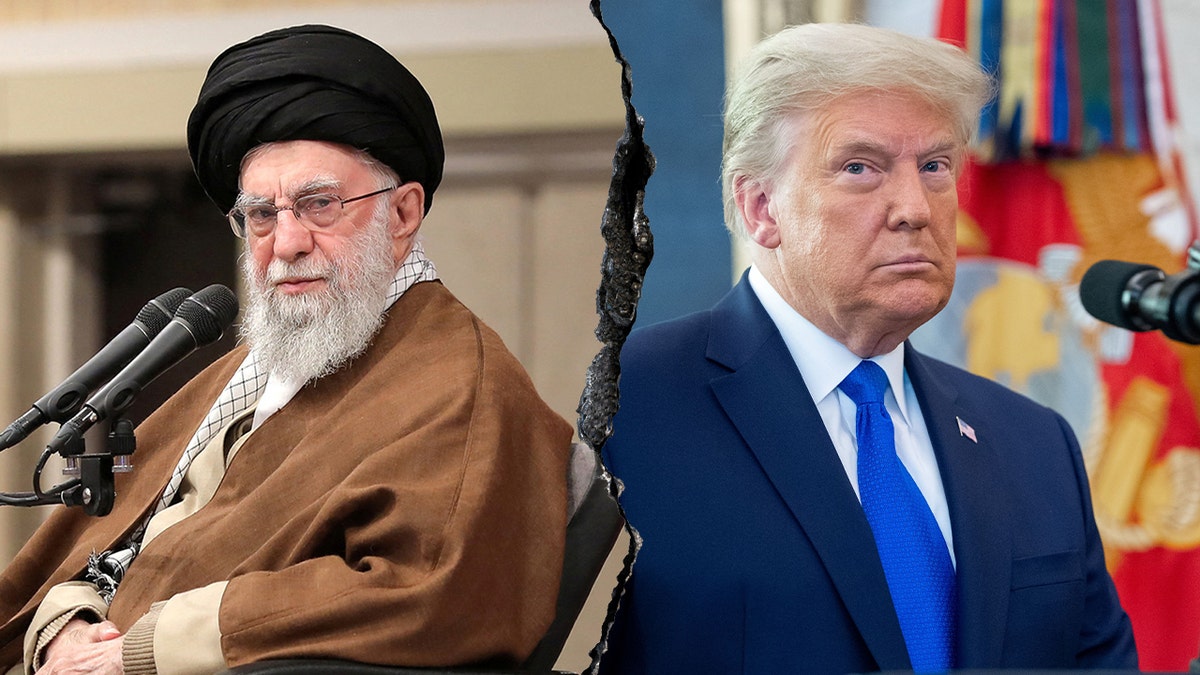
Donald Trump has signaled a significant hardening of his stance on Middle Eastern security, asserting that a nuclear-armed Iran would have already "blown to pieces" both the Middle East and Europe. In a sweeping assessment of current geopolitical tensions, the former president and current candidate dismissed the possibility of a premature American withdrawal from the region. He argues that the vacuum left by a diminished U.S. presence would not only invite Iranian hegemony but would inevitably lead to a global catastrophe of unprecedented proportions. This rhetoric marks a departure from his previous "America First" isolationist leanings, suggesting that the reality of the Iranian nuclear program has forced a recalibration of his strategic priorities.
The Nuclear Brink and the European Security Gap
The assertion that Europe is at risk from Iranian nuclear ambitions is not merely political theater. While much of the public discourse focuses on the immediate threat to Israel or Sunni Arab states, the range of Iranian ballistic missile technology has steadily increased. If Iran achieves a deliverable nuclear warhead, the strategic depth of the European continent shrinks instantly. Trump is tapping into a long-standing fear among defense analysts that a nuclear-capable Tehran would use its arsenal as a shield, under which it could conduct conventional or proxy warfare with total impunity.
Western intelligence agencies have spent years tracking the enrichment levels at facilities like Natanz and Fordow. The shift from 20% to 60% purity—and the looming shadow of the 90% "weapons-grade" threshold—represents more than a technical milestone. It represents a fundamental shift in the global balance of power. Trump’s claim that the region would be "blown to pieces" reflects a belief that a nuclear Iran would trigger a frantic arms race among its neighbors. Saudi Arabia and Egypt would be under immense domestic and external pressure to acquire their own deterrents, turning the most volatile region on Earth into a nuclear powder keg.
The Myth of the Early Exit
For years, the political zeitgeist in Washington drifted toward a "pivot to Asia." The idea was simple: the Middle East is a quagmire of diminishing returns, and the real challenge lies in the South China Sea. Trump’s recent comments effectively kill the notion that an "early exit" is a viable option for his potential next administration. He is acknowledging a hard truth that many in his own party have tried to ignore. The United States cannot simply pack up and leave without surrendering control of the world’s most vital energy corridors to its primary adversaries.
Maintaining a presence in the Middle East is not about "forever wars" in the way critics often frame them. It is about logistical dominance. The U.S. Fifth Fleet, headquartered in Bahrain, and the sprawling Al Udeid Air Base in Qatar are the physical manifestations of a global order that prevents regional skirmishes from escalating into global depressions. When Trump rules out a hasty departure, he is speaking the language of realpolitik. He recognizes that an American withdrawal would be interpreted as a green light for Iranian expansionism, potentially leading to the very "blowing up" he warns against.
Deterrence Through Unpredictability
One of the hallmarks of the Trumpian approach to foreign policy is the use of rhetoric as a tool of strategic ambiguity. By painting a picture of total destruction, he attempts to establish a floor for negotiations that is far lower than what his predecessors accepted. The 2015 nuclear deal (JCPOA) was built on the premise of managed containment. Trump’s current narrative suggests that containment is no longer enough. He is framing the Iranian threat in existential terms to justify a "maximum pressure" 2.0 strategy that would likely include even more stringent economic sanctions and a more visible military posture.
Critics argue that this escalatory language actually pushes Iran closer to the bomb. They suggest that when a regime feels backed into a corner, the nuclear option becomes its only perceived path to survival. However, the counter-argument—and the one Trump appears to be betting on—is that the Iranian leadership is fundamentally rational and risk-averse when faced with a credible threat of total annihilation. By claiming that Europe and the Middle East are on the verge of destruction, he is attempting to force European allies to take a harder line on Tehran, ending the diplomatic "middle ground" that has defined the last decade.
The Economic Fallout of a Nuclear Middle East
The instability Trump describes carries a massive price tag. Global markets loathe uncertainty. The mere threat of a closed Strait of Hormuz—a narrow waterway through which 20% of the world's oil passes—sends shockwaves through the global economy. A nuclear-armed Iran would have a permanent hand on the throat of the global energy supply. This is the "how" behind Trump’s warning. It isn't just about explosions; it is about the collapse of the financial systems that rely on stable energy prices.
If the Middle East were to "blow to pieces," the resulting migration crises and economic depressions would hit Europe first and hardest. This explains why Trump is linking European security so closely to Iranian nuclear progress. He is making the case that a U.S. exit from the region would be an act of economic suicide for the West.
Rebuilding the Regional Alliance
To prevent the scenario he describes, Trump’s strategy relies heavily on the expansion of the Abraham Accords. The normalization of relations between Israel and several Arab nations created a new security architecture designed specifically to counter Iranian influence. This "Middle East NATO" concept only works if the United States remains the primary security guarantor. Ruling out an early exit is a signal to partners in Riyadh and Abu Dhabi that the U.S. will not leave them to face Tehran alone.
This commitment is a double-edged sword. It provides stability, but it also ties American interests to the specific regional rivalries of its allies. The risk is that instead of preventing a conflict, the U.S. presence might embolden allies to take more aggressive stances, inadvertently sparking the very conflagration everyone seeks to avoid.
The situation remains a deadlock of high-stakes gambling. On one side is the drive for Iranian regional dominance, and on the other is a renewed American commitment to a heavy-handed, permanent presence. The path forward is fraught with the potential for miscalculation. If Trump’s assessment is correct, the window for a diplomatic solution is closing, and the choice is no longer between peace and war, but between a managed standoff and a catastrophic regional collapse.
The gravity of a nuclear Iran cannot be overstated. When the rhetoric shifts from policy disagreements to the language of total destruction, the room for error disappears entirely. The United States is signaling that it will remain the central pillar of Middle Eastern security, not out of a desire for empire, but out of a perceived necessity to prevent a global domino effect that begins in Tehran and ends in the capitals of Europe.