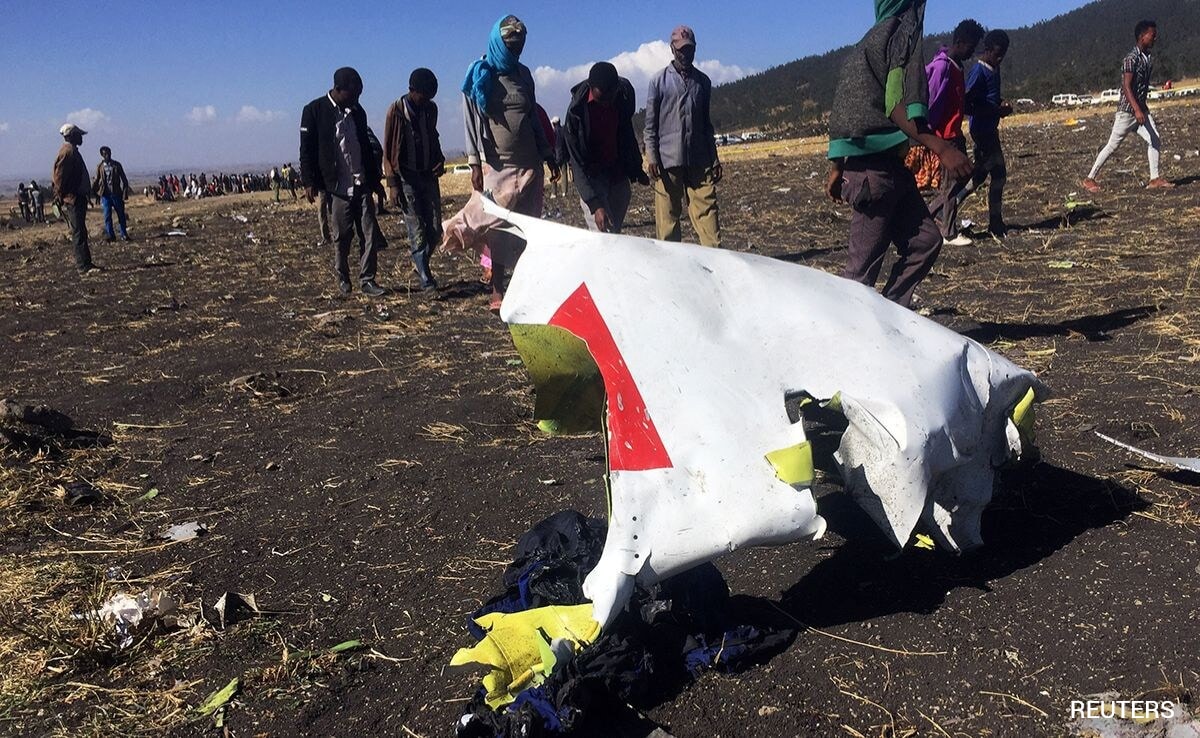
A federal jury in Chicago recently ordered Boeing to pay $49.5 million to the family of a young woman killed in the 2019 Ethiopian Airlines flight 302 crash. This verdict serves as a brutal financial reckoning for a company that spent years trying to quantify the unquantifiable. While the headlines focus on the massive payout, the underlying mechanics of this trial reveal a much darker reality about how the aviation industry handles systemic failure and the legal strategy of avoiding accountability.
The 157 people aboard that Boeing 737 MAX 8 didn't just die in a vacuum of bad luck. They died because of a software override known as the Maneuvering Characteristics Augmentation System (MCAS). The system, designed to compensate for the plane's tendency to pitch up due to its larger engines, essentially fought the pilots for control based on data from a single, faulty sensor. This $49.5 million award is specifically for the family of 24-year-old Samya Stumo, a rising star in global health and the niece of consumer advocate Ralph Nader.
The Strategy of Admitting Liability
Boeing made a tactical decision long before this jury sat down. They admitted liability for the crash. On the surface, this looks like an act of contrition. In the cold world of high-stakes litigation, it was a shield. By admitting liability, Boeing prevented the jury from hearing evidence about the design flaws, the internal emails mocking regulators, or the decision to keep pilots in the dark about MCAS.
The trial was narrowed down to a single question: What is the monetary value of the grief and loss experienced by this specific family?
This legal maneuvering effectively silenced the broader conversation about corporate culture within the courtroom. The jury was instructed to focus only on the compensatory damages—the hole left in the Stumo family—rather than punishing Boeing for the actions that led to the hole. Yet, the jury’s decision to award nearly $50 million suggests that even within those narrow constraints, the level of loss was perceived as staggering.
Why This Payout Breaks the Mold
Most aviation settlements happen in the dark. Families are often pressured to sign non-disclosure agreements in exchange for a guaranteed sum, avoiding the years-long trauma of a public trial. Boeing has already settled the vast majority of claims related to the two MAX crashes in Indonesia and Ethiopia.
The Stumo family refused to go quietly.
Their insistence on a public trial forced a spotlight back onto the human element of a disaster that Boeing has tried to relegate to its balance sheets. The $49.5 million figure is significantly higher than typical wrongful death settlements in aviation, which often hover in the low millions. This creates a new benchmark. It tells Boeing and its insurers that the "cost of doing business" just became significantly more expensive.
The Math of Loss
Calculating these damages involves a cold-blooded look at a person’s potential. Attorneys for the family highlighted Samya Stumo’s career trajectory. She wasn't just a passenger; she was an asset to the world of public health.
- Lost Wages: The projected earnings of a highly educated professional over 40 years.
- Loss of Companionship: The psychological weight of a daughter and sister being erased.
- Grief and Suffering: The immediate and long-term mental anguish of the survivors.
When a company like Boeing faces these numbers, they aren't just looking at one family. They are looking at the precedent. This verdict sends a ripple through the legal departments of every major aerospace manufacturer. If a single life is worth $50 million, a single mechanical oversight can bankrupt even a titan of industry.
The MCAS Ghost Still Haunts the Hangar
We cannot talk about the money without talking about the metal. The 737 MAX was a product of a company trying to compete with Airbus’s A320neo without the expense of a "clean sheet" design. By slapping larger, more efficient engines onto a 50-year-old airframe, Boeing changed the center of gravity.
To make the plane "feel" like an older 737—and thus avoid the requirement for expensive pilot simulator training—they hid MCAS in the background.
The pilots of Flight 302 were never told the system existed in their initial manuals. When the sensor failed, the plane's nose was forced down repeatedly. The pilots followed the checklists they had, but the plane was effectively trying to kill them based on a lie from its own hardware. This trial was a delayed echo of those final, terrifying minutes in the cockpit.
A Culture of Engineering vs. A Culture of Finance
For decades, Boeing was an engineering firm that happened to make money. After the merger with McDonnell Douglas in 1997, many industry veterans argue it became a finance firm that happened to make planes. The shift in focus from "how do we make this the safest machine ever built" to "how do we maximize shareholder value" is the invisible thread connecting the 2019 crashes to the more recent mid-air door plug blowout on an Alaska Airlines flight.
The Stumo verdict is a direct strike against the idea that safety can be traded for speed.
The aviation industry operates on razor-thin margins and immense pressure. When a plane is grounded, it costs millions per day. When a new model is delayed, orders are canceled. Boeing chose to prioritize the certification timeline over the robustness of the flight control architecture. They bet that they could manage the risk. They lost that bet, and now they are paying for it—one massive jury award at a time.
The Global Implications
Aviation is a global business, but the litigation is often centered in the United States because of the way our legal system handles damages. This verdict puts immense pressure on Boeing to settle the remaining outstanding cases. They cannot afford to let more of these go to a jury, especially if those juries start to feel that the payouts should reflect the company's total revenue rather than just the individual's lost potential.
The FAA and international regulators are also watching. While the FAA has cleared the MAX to fly again, the public's trust remains fragile. Every time a $50 million headline hits the wire, it reminds the flying public that these planes are associated with a preventable tragedy. It erodes the "Boeing Brand" in a way that marketing campaigns cannot fix.
The Accountability Gap
Despite the massive payout, no Boeing executive has faced criminal charges for the deaths of 346 people. The company entered into a Deferred Prosecution Agreement with the Department of Justice, paying a $2.5 billion fine—most of which went to airlines and the families. This "corporate death penalty" was avoided, a fact that many families, including the Stumos, find offensive.
The civil court system is currently the only place where Boeing is being forced to look at the faces of the people they failed.
The $49.5 million isn't just a number; it’s a statement that a human life cannot be reduced to a line item in a risk-assessment spreadsheet. It challenges the corporate calculus that suggests it is cheaper to pay for an occasional failure than to build a perfect system.
Moving Beyond the Payout
Boeing is currently under intense scrutiny for its manufacturing quality. The 737 MAX is flying, but it is doing so under a cloud of skepticism. This verdict forces the company to confront the fact that its financial liability isn't just about fines from the government; it's about the deep, enduring cost of losing the public’s trust and the devastating impact on families.
The Stumo family has pledged to use their platform to continue fighting for transparency in aviation. They aren't looking for a "win" because there is no winning when your daughter is gone. They are looking for a shift in how planes are built and how companies are held to account when they fall short.
Boeing must now decide if they will continue to fight these cases or if they will finally address the systemic issues that made these payouts necessary in the first place. The era of the "liable admission" as a legal shield is ending. Juries are seeing through the strategy and are putting a price on negligence that even a multi-billion dollar corporation can't ignore.
The next time Boeing considers a shortcut in the design phase, the $49.5 million ghost of Samya Stumo will be in the room.