The silence is the first thing you notice. In the border towns where the hills of Galilee meet the rugged slopes of Southern Lebanon, silence hasn't existed for months. It had been replaced by a rhythmic, bone-shaking percussion—the dull thud of outgoing artillery, the sharp, tectonic crack of an interception, and the low, predatory hum of drones that never seem to sleep.
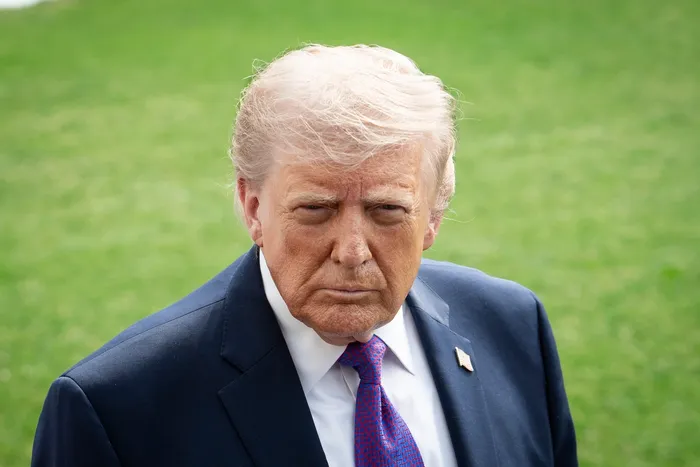
When the news broke that a 10-day ceasefire had been brokered by Donald Trump, the silence didn't feel like peace. It felt like a held breath. Recently making news lately: The Jurisprudence of Deterrence and the Russian Judicial Mechanism for Foreign Combatants.
Peace is an abstract noun for diplomats in wood-paneled rooms. For a mother in Kiryat Shmona or a shopkeeper in Tyre, peace is the absence of a specific frequency of vibration in the chest. It is the ability to walk to a window without wondering if the glass is about to become a thousand jagged needles. This 240-hour window wasn't just a diplomatic maneuver; it was a desperate gasp of oxygen for a region drowning in fire.
The Mechanics of a Pause
Donald Trump announced the deal with his signature flair for the dramatic, framing it as a step toward "lasting peace." But the reality on the ground is far more granular and fragile than a televised statement. A ceasefire of this nature is a logistical nightmare wrapped in a prayer. It requires thousands of fighters on both sides of a jagged, invisible line to simultaneously take their fingers off the trigger while their adrenaline is still red-lining. Additional details regarding the matter are detailed by The Guardian.
Think of it like trying to stop a high-speed train on a dime. The momentum of war doesn't just vanish because a document was signed in a different time zone. There are "vanguard" units, isolated patrols, and autonomous drone systems that all have to be brought to heel within minutes.
The terms are simple on paper: ten days of total cessation. No rockets. No airstrikes. No incursions. The goal is to create a "cooling-off period," a vacuum where the heat of combat can dissipate enough for negotiators to actually hear one another speak. If the guns stay quiet for 240 hours, the theory goes, the habit of not killing might just become more attractive than the alternative.
The Ghost Streets
Consider a hypothetical family—let's call them the Amars—living just a few miles from the Blue Line. For the last several months, their world has shrunk to the size of a reinforced concrete basement. Their children haven't played in the sun. They haven't been to a school that wasn't a makeshift basement classroom.
For the Amars, this 10-day window isn't about geopolitical leverage. It is about laundry. It is about the mundane, beautiful act of hanging clothes on a line under a clear sky without fear. It is about driving to a grocery store to find fresh milk because the supply chains, crippled by constant shelling, might finally pulse with life again for a week and a half.
These are the invisible stakes. We talk about "strategic buffers" and "demilitarized zones," but the true map of this conflict is drawn in the psychological trauma of millions. When the rockets stop, the ears start ringing with the sudden weight of the quiet.
The tragedy of a 10-day window is its brevity. Every hour that passes is a grain of sand falling through a very small hourglass. By day three, you start to relax. By day seven, the dread returns, because you know the clock is ticking toward the resumption of the noise.
The Architect’s Gamble
Trump’s involvement brings a specific brand of pressure to the Levant. He operates on a logic of personal prestige and transactional speed. By putting his name on a 10-day clock, he has staked a claim on the outcome. This isn't the slow, grinding machinery of State Department bureaucracy; it’s a high-stakes bet that the sheer force of a deadline can compel behavior that years of "de-escalation" talks could not.
But the Middle East has a long memory and a short fuse.
The skepticism in the cafes of Beirut and the bunkers of Haifa is thick enough to choke on. They have seen pauses before. They have seen "humanitarian windows" shattered by a single rogue commander or a misunderstood movement in a thicket of olive trees. The skepticism isn't cynical; it’s a survival mechanism. To hope too much during a 10-day ceasefire is to risk a deeper heartbreak when the first siren sounds again.
The geopolitical math is brutal. Israel wants the return of its displaced citizens to the north. Lebanon wants its sovereignty respected and its infrastructure spared from further ruin. These two desires are currently locked in a zero-sum embrace. The ceasefire doesn't solve the underlying math; it just pauses the calculation.
The Fragility of the "Why"
Why ten days?
In the world of conflict resolution, ten days is the "Goldilocks" zone. It is long enough to prove that a total stop is possible, but short enough that neither side feels they are giving up their strategic readiness. It’s a trial run for a world that doesn't smell like cordite.
The danger lies in the "incidental" spark. In a landscape saturated with high-tech sensors and low-tech grudges, a stray goat crossing a fence or a thermal signature from a kitchen fire can be misinterpreted as a military move. Maintaining a ceasefire requires more discipline than starting a war. It requires soldiers to watch their enemies through scopes and choose, a thousand times a day, not to twitch.
We often view these events through the lens of a map, seeing red and blue lines shifting across a screen. We should look at it through the lens of a wristwatch.
Each second of those ten days is a victory. Every minute a child sleeps through the night without a sonic boom overhead is a measurable gain. If you multiply those minutes by the millions of people living in the strike zones, you realize that a "short" ceasefire actually represents centuries of collective human relief.
The Weight of the Eleventh Day
The real test isn't what happens during the ten days. It’s what happens at 12:01 AM on the eleventh.
If the ceasefire holds, the pressure to extend it becomes immense. No leader wants to be the one who gave the order to start the dying again after a period of calm. But if the underlying grievances haven't been touched—if the rockets are still aimed and the grievances are still festering—the silence of those ten days becomes a tactical preparation period rather than a bridge to peace.
The world watches the leaders. The people on the ground watch the sky.
There is a specific kind of light in the Mediterranean during the spring. It is gold and unforgiving. Right now, that light is hitting the ruins of border villages and the empty playgrounds of abandoned towns. For ten days, that light won't be obscured by the smoke of a fresh impact.
As the sun sets on the first day of this pause, a father in a village near the border might take his son out to kick a ball in the street for the first time in a year. He will look at his watch. He will look at the horizon. He will wonder if he is building a memory or just borrowing a moment from a debt that will eventually be paid in blood.
The silence continues, heavy and miraculous, for now.