The silence in Beirut is a heavy, unfamiliar thing. For months, the city has lived to the rhythm of a low-frequency hum—the sound of drones circling overhead, invisible but ever-present, like a migraine that refuses to break. When that hum stops, the air feels thin. People step out onto balconies and look at the sky, not with relief, but with a cautious, kinetic kind of suspicion.
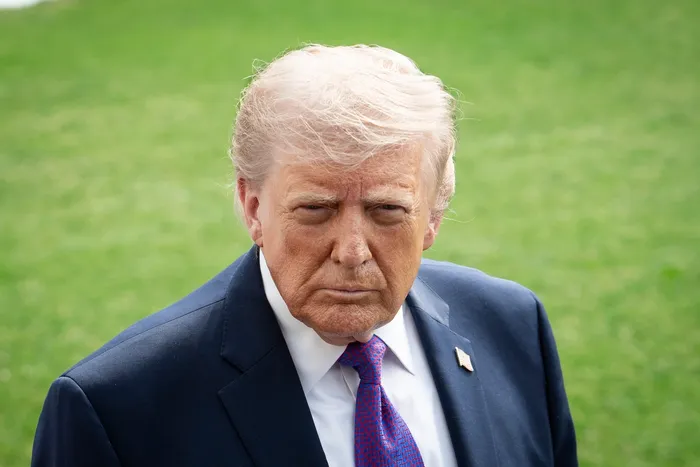
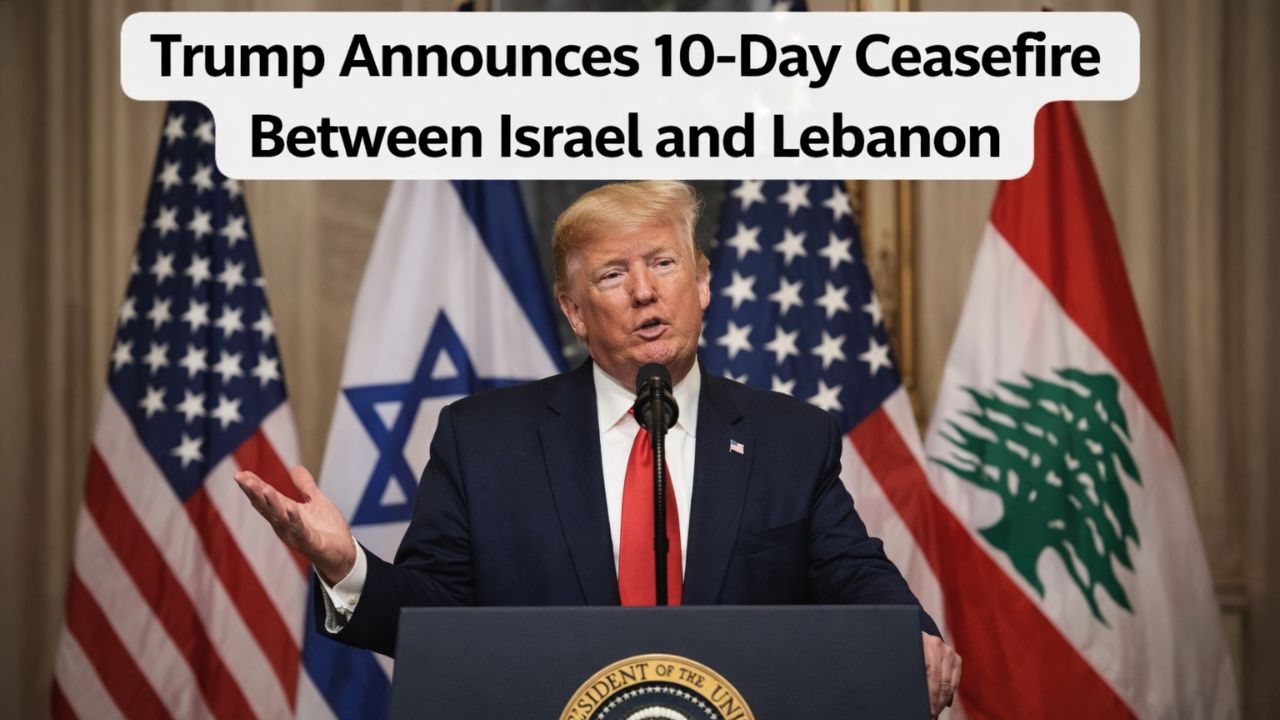
On a Tuesday that felt like every other Tuesday, the announcement flickered across smartphone screens in dusty cafes and reinforced bunkers. President Donald Trump, operating from a position of chaotic leverage that has become his hallmark, declared a 10-day ceasefire between Israel and Lebanon.
Ten days.
In the grand arc of Middle Eastern history, ten days is a heartbeat. It is the blink of an eye. But for a mother in Tyre trying to find clean water, or a family in northern Israel wondering if they can finally sleep in their own beds instead of a communal bomb shelter, ten days is an eternity. It is 240 hours of not dying.
The Geography of Anxiety
The border between Israel and Lebanon is not just a line on a map; it is a jagged wound. To understand the stakes of this pause, you have to understand the geography of displacement. Imagine you are forced to leave your home with twenty minutes' notice. You grab your passport, your laptop, and your child’s favorite stuffed animal. You drive south or north, away from the smoke, and you end up in a school gymnasium or a cramped apartment with twelve relatives.
That has been the reality for over 100,000 Israelis and nearly a million Lebanese.
The "Blue Line," the UN-recognized boundary, has been less of a border and more of a launchpad. Hezbollah rockets arc one way; Israeli airstrikes thunder the other. The diplomacy that led to this 10-day window was not born of sudden altruism. It was born of exhaustion and a specific brand of American transactionalism.
Trump’s approach to the region has always been less about the fine print of international law and more about the "grand deal." By securing this 10-day window, he isn't just stopping the bleeding; he is testing the waters. He is asking the world: Can these two sides remember what it feels like not to fight?
The Ghost in the Machine
The conflict isn't just between two nations. It is a three-dimensional chess match involving Iran, the Lebanese government, and the internal politics of the Israeli Knesset. Hezbollah, the Shiite militant group and political party, operates as a state within a state. When the ceasefire was announced, the world waited to see if the chain of command would hold.
Think of Hezbollah’s arsenal as a loaded spring. It is easy to trigger, but incredibly difficult to ease back into a neutral position once the tension has been set. The Israeli Defense Forces (IDF) are similarly coiled. For them, a ceasefire isn't necessarily peace; it’s a logistical window to refuel, rearm, and re-evaluate intelligence.
The human cost of this strategic maneuvering is often buried under the "cold facts" of military briefings. Consider a hypothetical shopkeeper in Nabatieh. For him, the ceasefire means he can open his shutters without checking the wind for the scent of cordite. He can sweep the glass from his doorstep. He can look at his neighbors and, for a fleeting moment, speak about the price of bread instead of the trajectory of missiles.
But the shopkeeper knows the truth. Ten days is a stay of execution, not a pardon.
The Architecture of a Pause
How does one build a ceasefire in a week? It requires more than just a signature on a piece of paper in Washington. It requires a complete cessation of movement that could be interpreted as hostile.
- The Silence of the Batteries: Iron Dome interceptors must remain idle.
- The Grounding of the Wings: Drones and fighter jets must retreat from the immediate airspace of the border.
- The Communication Channels: "Hotlines" between intermediaries—often through the UN or third-party nations like France or Qatar—must buzz with activity to ensure a single stray bullet doesn't reignite the fire.
The complexity is staggering. If a rogue militant fires a single mortar, does the entire 10-day promise evaporate? This is the fragility of the moment. We are watching a high-stakes experiment in trust between two parties that have spent decades eroding it.
The American Shadow
The timing of the announcement is as much about domestic optics as it is about foreign policy. By inserting himself as the primary architect of this pause, Trump is signaling a shift away from the protracted, multi-lateral negotiations of the past. He prefers the lightning strike—the sudden, high-profile breakthrough that disrupts the status quo.
Critics argue that a 10-day ceasefire is a "Band-Aid on a bullet wound." They claim it provides no long-term roadmap for the disarmament of Hezbollah or the security of Israel's northern communities. They aren't wrong.
However, the counter-argument is found in the eyes of the people on the ground. When you are drowning, you don't ask for a map of the ocean; you ask for a breath of air. This ceasefire is that breath.
It is a period of intense, frantic diplomacy. Behind the scenes, envoys are scurrying through the halls of power in Beirut and Jerusalem, trying to stretch ten days into twenty, and twenty into a month. They are looking for the "off-ramp"—that elusive diplomatic exit that allows both sides to claim victory without further bloodshed.
The Invisible Stakes
While the headlines focus on the leaders, the invisible stakes are being tallied in hospitals and schools. In Lebanon, the medical system is buckled. A 10-day reprieve allows for the delivery of trauma kits, antibiotics, and fuel for generators. It allows doctors who have been working 20-hour shifts to sleep for a full night.
In Israel, the stakes are psychological. The "internal refugees" from the north have been living in hotels for months, their lives in stasis. Their children are going to makeshift schools. Their businesses are shuttered. For them, the ceasefire is a test of whether "home" is still a place that exists, or if it has become a memory.
There is a profound vulnerability in admitting that we don't know what happens on day eleven. The uncertainty is a weight of its own. Is this the beginning of the end of the war, or is it merely the "intermission" before a more violent second act?
History suggests caution. The soil of the Levant is fertilized with broken treaties and expired truces. Yet, there is something different about this moment. The sheer exhaustion on both sides of the border is palpable. Even the most hardened partisans are starting to look at the rubble and wonder what is left to win.
The Sound of Day Ten
The true test won't happen during the televised press conferences or the flurry of social media posts. It will happen in the final hours of the tenth day.
Imagine the sun setting over the Mediterranean. In the Galilee, the shadows lengthen over the vineyards. In Beirut, the evening traffic begins to hum. The world will hold its breath. Every radar screen will be watched with agonizing intensity.
If the drones don't return to the sky, if the rockets remain in their tubes, and if the silence continues for one more hour, then another, the 10-day ceasefire will have achieved something more important than a military objective. It will have proven that the cycle of violence is not an inevitability. It is a choice.
We are currently living in the "during." We are in the middle of the story, where the protagonist has reached a temporary clearing in the woods. The path ahead is still dark, and the predators are still circling, but for the first time in a long time, the fire is keeping the cold at bay.
The world waits to see if we have the courage to keep the fire burning. Or if, like so many times before, we will let the 10 days expire and return to the familiar, devastating comfort of the dark.
Peace is not the absence of war. It is the presence of a future. For ten days, a few million people have been given their future back, one hour at a time.
The clock is ticking.