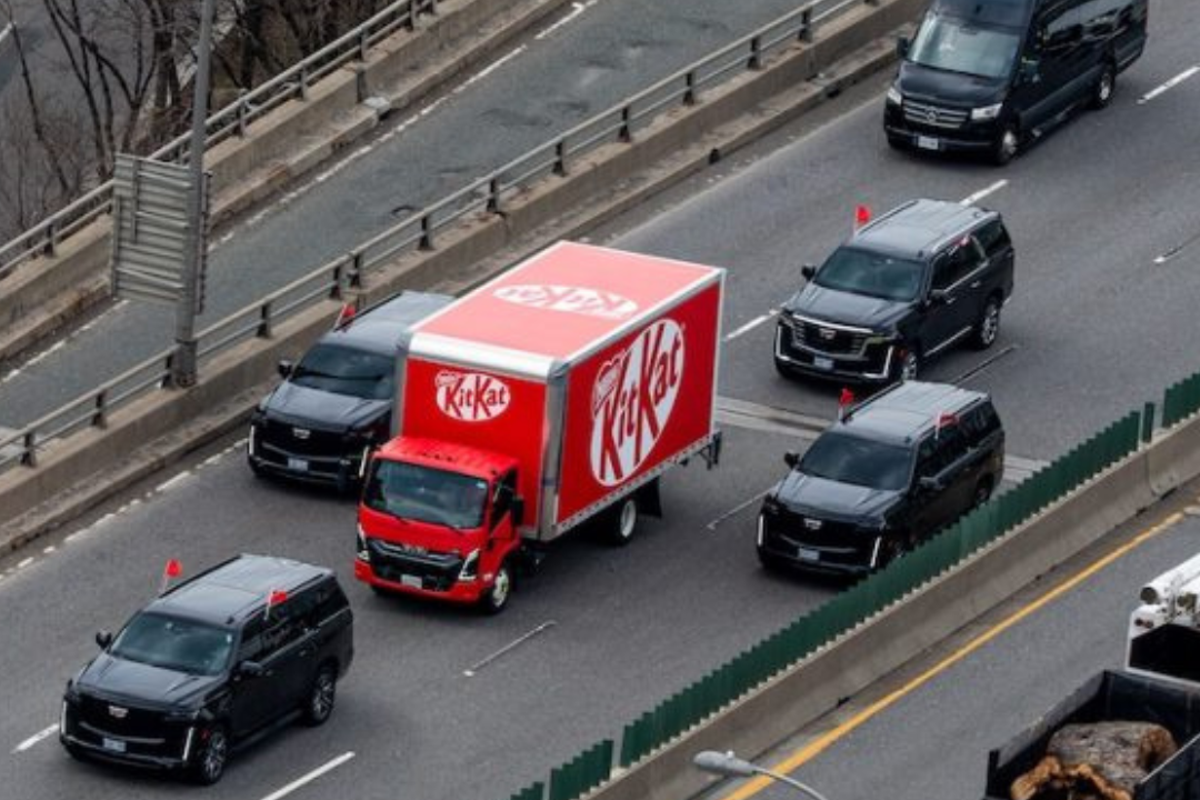
The asphalt of the European highway system doesn’t usually feel like a battlefield. It’s a grey ribbon of efficiency, a circulatory system pumping everything from lithium batteries to frozen peas across borders while the rest of us sleep. But for one specific driver hauling twelve tonnes of KitKats, the road suddenly became a high-stakes gauntlet.
He wasn't carrying gold bullion. He wasn't transporting rare earth minerals or classified documents. He was carrying wafer fingers cloaked in milk chocolate. And yet, there they were: a private security detail, flanking the trailer like it was a head of state.
This isn't a scene from a low-budget action flick. It is the reality of the "Great Chocolate Heist" fallout, a moment where the mundane world of snacks collided with the shadowy world of organized cargo crime.
The Night the Sugar Vanished
Imagine a warehouse in the dead of night. It’s quiet, save for the hum of refrigeration units. A logistics firm expects a routine pickup. The paperwork looks legitimate. The driver has the right credentials. The truck pulls away, its suspension dipping under the weight of thousands of individual bars.
Then, the silence returns.
Days later, the realization hits like a physical blow to the stomach. The chocolate never arrived. The driver wasn't who he said he was. The company he claimed to represent has no record of the trip. Twelve tonnes of KitKats—roughly the weight of two large elephants—have evaporated into the European black market.
To the casual observer, it sounds almost comical. Who steals that much chocolate? What do you even do with it? But for the logistics industry, this wasn't a joke. It was a surgical strike.
Why Chocolate is the New Digital Gold
We often think of high-value theft in terms of electronics or designer handbags. But those items are tracked. They have serial numbers. They can be bricked remotely or flagged on resale sites.
Chocolate is different.
Chocolate is anonymous. It is a "fast-moving consumer good," a term that sounds boring until you realize it means the product is designed to disappear. Once a thief breaks down those twelve tonnes into individual boxes and sells them to unscrupulous independent convenience stores or small-scale wholesalers, the trail goes cold. You can't GPS-track a snack bar once the wrapper is torn. It is consumed, the evidence literally melting away.
The sheer scale of this theft—valued at significant sums but carrying a much higher "street value" when sold piecemeal—points to a level of planning that should unsettle anyone involved in global trade. This wasn't a crime of passion or a hungry hitchhiker. This was a logistical operation. It required a "fence" to move the goods, a storage facility to hide them, and a distribution network to turn sugar into untraceable cash.
The Psychology of the Convoy
When the news broke that subsequent shipments were being moved under armed or heavy security escort, the public reaction was a mix of amusement and bewilderment. We are conditioned to see security details around politicians or celebrities. Seeing them around a truck filled with "Have a Break" slogans feels like a glitch in the matrix.
But look closer at the stakes.
For the manufacturer, the loss of twelve tonnes is a rounding error on a balance sheet. The real cost is the breach of trust. In the world of global logistics, your brand is only as good as your ability to fulfill an order. If a criminal organization can simply walk into a facility and "social engineer" their way into a twelve-tonne haul, every link in the supply chain is compromised.
The convoy was a signal. It was a visual manifesto intended to tell the criminal underworld that the "easy" days were over.
Think about the driver of that follow-car. His job is usually protecting high-net-worth individuals or preventing the theft of pharmaceuticals. Now, he’s spent his shift staring at the red-and-white logo on the back of a refrigerated trailer. He knows that if he fails, the headlines won't talk about "tactical security lapses"—they'll talk about how he lost a battle over candy bars. The pressure is absurd. The stakes are ironically high.
The Invisible Cost of Your Snack
We live in an age where we expect goods to be everywhere, all the time. You walk into a petrol station in the middle of nowhere, and the red wrapper is there, waiting for you. We don't think about the invisible war being waged to keep those shelves stocked.
Cargo theft is a multibillion-dollar industry. It's a game of cat and mouse where the mice are getting smarter, using deepfake documents and sophisticated identity theft to bypass traditional security. When twelve tonnes of chocolate go missing, the price doesn't just disappear. It gets baked into the cost of the next shipment. It raises insurance premiums. It increases the cost of labor for those security convoys.
Eventually, the person paying for the security guards and the stolen sugar is you.
The Human Shadow in the Warehouse
Consider the "fraudulent driver" for a moment. This isn't just a guy who hopped in a cab and drove off. To pull this off, you need to understand the cadence of the warehouse. You need to know which dispatchers are tired, which systems have loopholes, and exactly how to talk the talk of a veteran long-hauler.
There is a cold, calculated brilliance in choosing KitKats. They are universally loved, easily moved, and impossible to identify once they've been shuffled through a few hands. It’s the perfect crime for a world that is increasingly obsessed with tracking every digital footprint while ignoring the physical reality of a pallet sitting in a dark lot.
The image of that truck, flanked by its protectors, is a testament to our strange times. It is a reminder that in our high-tech, hyper-connected world, we are still vulnerable to the oldest trick in the book: someone simply walking away with the goods.
As the convoy rolled toward its destination, the drivers likely didn't see themselves as heroes of the confectionery world. They were just men doing a job, guarding a cargo that represents a billion-dollar industry's refusal to be intimidated.
The chocolate eventually reached the shelves. People bought the bars, snapped them in half, and ate them without a second thought. They never saw the flashing lights of the escort vehicles or the panicked phone calls of the logistics managers. They just had their break.
But somewhere, in a warehouse or a hidden shipping container, the ghosts of twelve tonnes of stolen chocolate are still out there—a reminder that even the sweetest things have a dark side, and the road is never as safe as it looks.