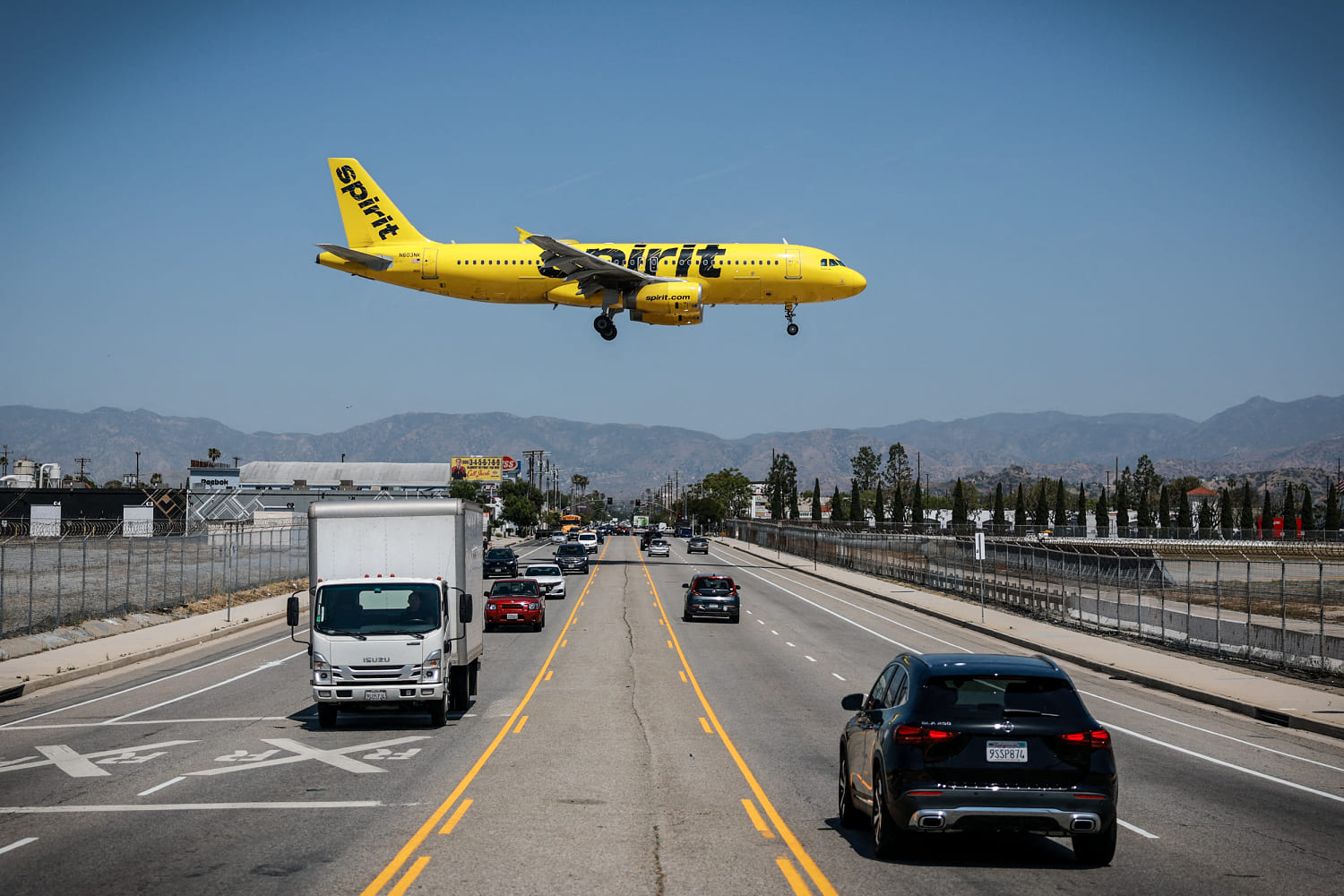
Spirit Airlines operates on a razor-thin margin profile that makes it uniquely sensitive to external shocks and debt maturity walls. The reported $500 million rescue package from the Trump administration represents more than a simple liquidity injection; it is a tactical intervention designed to prevent a systemic collapse of the ultra-low-cost carrier (ULCC) segment. To understand the mechanics of this deal, one must look past the headline figure and analyze the three distinct pressures threatening the carrier: the engine durability crisis, the failed JetBlue merger fallout, and a maturing debt stack that the private markets refused to refinance at sustainable rates.
The Capital Structure Crisis
The primary catalyst for federal intervention is not a temporary dip in passenger demand but a fundamental misalignment between the airline’s cash flow and its debt obligations. Spirit’s balance sheet has been under duress since the termination of its merger with JetBlue, which stripped away a guaranteed exit for shareholders and creditors alike.
A $500 million package functions as a bridge rather than a permanent solution. The efficacy of this capital depends on how it addresses the following variables:
- Weighted Average Cost of Capital (WACC): Spirit's cost of debt had spiraled into double digits as bondholders priced in bankruptcy risk. Federal backing serves as a credit enhancement, theoretically lowering the interest burden.
- Liquidity Runways: At its current burn rate, $500 million provides roughly six to nine months of operational cushion, assuming fuel prices remain stable and the airline can successfully redeploy capacity.
- Asset Collateralization: In many federal airline rescues, the government takes warrants or equity stakes. This dilutes existing shareholders but provides a "success fee" for taxpayers if the airline returns to profitability.
The structural problem remains that Spirit’s loyalty program and brand equity—traditional collateral in airline financing—have depreciated alongside its stock price. This makes the federal government the "lender of last resort" in a literal sense.
Operational Volatility and the Pratt & Whitney Bottleneck
The rescue deal arrives while Spirit is grappling with a catastrophic technical failure in its fleet. The Geared Turbofan (GTF) engine issues, manufactured by Pratt & Whitney, have forced the airline to ground dozens of aircraft. This creates an "Idleness Tax" where the airline pays lease costs and pilot salaries for planes that generate zero revenue.
While Spirit has received some compensation from the manufacturer, it is rarely enough to cover the "opportunity cost" of lost market share. The federal rescue package is intended to offset this specific operational drag. By providing $500 million, the administration allows Spirit to maintain its workforce and training pipelines while it waits for its fleet to return to airworthiness.
The relationship between fleet availability and fixed costs is non-linear. When 20% of a fleet is grounded, the overhead costs (corporate staff, hangar leases, IT systems) are distributed over a smaller number of flying hours. This drives up the "Cost per Available Seat Mile" (CASM), making it impossible for Spirit to offer the $19 or $29 fares that define its business model. The $500 million acts as a subsidy for these inflated unit costs.
The Geopolitical and Regulatory Calculus
Government intervention in a private airline is rarely a purely economic decision. There are two strategic reasons the Trump administration would prioritize this specific rescue:
Preservation of Price Floors
Spirit Airlines acts as a "price disciplinarian" in the domestic market. When Spirit enters a route, legacy carriers like Delta or American are often forced to lower their fares or introduce "Basic Economy" tiers to compete. If Spirit were to liquidate, the sudden removal of millions of low-cost seats would lead to a sharp spike in average domestic airfares. For an administration focused on "America First" economics and curbing inflation, preventing a 20-30% jump in travel costs for the working class is a high-priority political objective.
Labor Market Stabilization
Spirit employs thousands of pilots, flight attendants, and mechanics. In a tightening labor market, the sudden insolvency of a major carrier creates a localized economic shock. The rescue package is likely tied to strict payroll protections, ensuring that the $500 million goes toward maintaining operations rather than executive bonuses or debt buybacks.
The Failure of the "Big Three" Hegemony
The consolidation of the US airline industry has created an environment where the four largest carriers control the vast majority of gate access and slots. Spirit’s struggle highlights the difficulty of the ULCC model in an era of rising labor costs and infrastructure constraints.
For the rescue package to be successful, Spirit must execute a pivot in its commercial strategy. The traditional "unbundled" model—where every item from water to carry-on bags is a separate fee—is seeing diminishing returns as legacy carriers successfully mimic the strategy. The $500 million buys Spirit the time to move toward a "high-value" ULCC model, potentially introducing premium seating or improved reliability metrics to capture a more stable customer base.
Risk Factors and Implementation Gaps
There are significant risks that could render this $500 million rescue ineffective:
- Execution Risk: If Spirit uses the funds merely to delay a Chapter 11 filing without restructuring its underlying lease agreements, the capital is wasted.
- Fuel Price Sensitivity: Airlines are essentially sophisticated fuel-hedging operations that happen to fly planes. A $10-per-barrel increase in oil prices could evaporate $500 million in liquidity within months.
- Regulatory Scrutiny: The terms of the deal will likely face challenges from competitors or fiscal hawks who argue that the government should not pick winners in a saturated market.
The rescue is not a grant; it is a high-stakes bet on the airline’s ability to survive a transition period. The $500 million figure is calculated to be large enough to calm the markets, yet small enough to avoid a total nationalization of the carrier.
Strategic Recommendation for Spirit Airlines Management
The infusion of $500 million in federal liquidity must be treated as a one-time opportunity to aggressively deleverage the balance sheet and rationalize the route network. Management should immediately trigger a three-phase stabilization plan:
First, use the federal credit backstop to renegotiate existing high-interest aircraft leases. Lessors would rather accept lower monthly payments now than face a total default in a bankruptcy court. Second, aggressively consolidate operations into "fortress hubs" where Spirit has a clear cost advantage, abandoning secondary markets that are being subsidized by the current cash burn. Third, finalize a long-term compensation agreement with Pratt & Whitney that includes "performance-based" credits, ensuring that future technical failures do not require another taxpayer-funded intervention.
The airline must operate under the assumption that no further federal aid is forthcoming. This $500 million is the final bridge to a post-consolidation reality. Failure to reach a cash-flow-positive state before this capital is exhausted will result in a forced liquidation, as the political appetite for a second rescue package will be non-existent. The strategic objective is no longer growth; it is the brutal optimization of the existing fleet to survive a high-cost, high-competition environment.