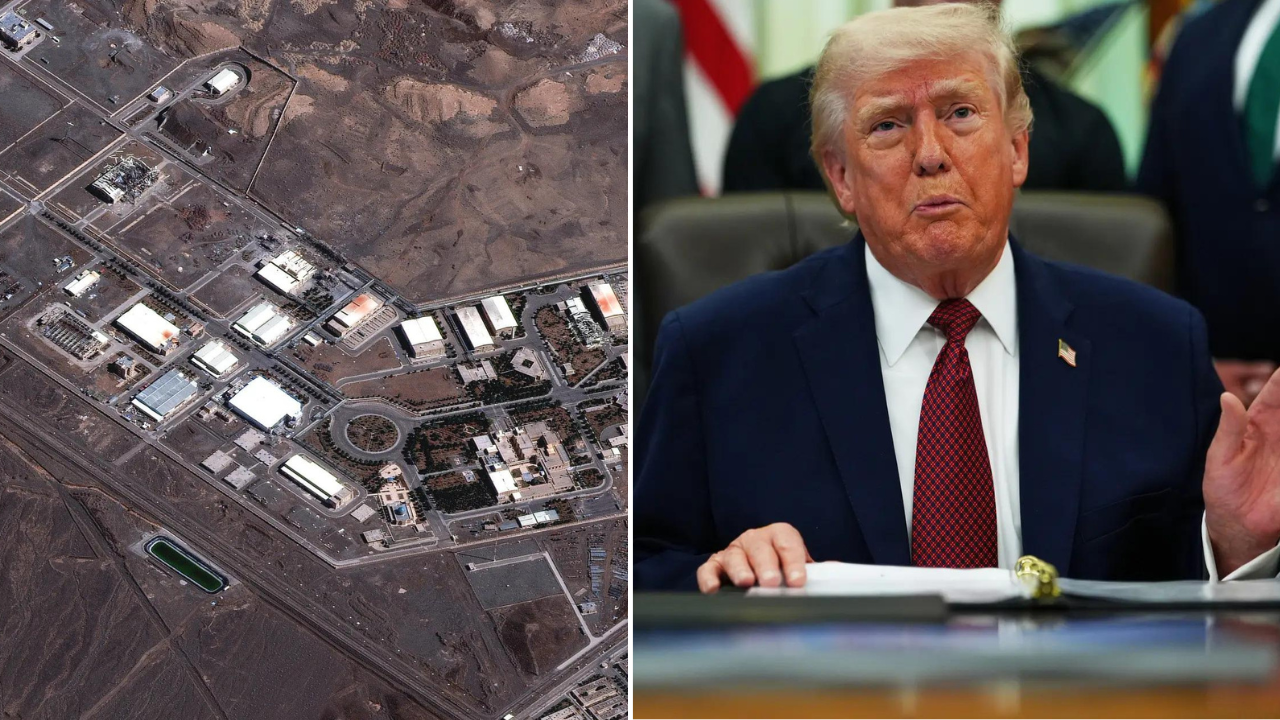
The current US-Iran nuclear standoff has transitioned from a diplomatic negotiation to a permanent state of managed escalation, governed by a rigid logic of "No War, No Deal." This equilibrium is sustained by the mismatch between Iran’s technical progress toward breakout capacity and the West’s diminishing leverage via traditional economic sanctions. The situation is no longer a temporary friction point; it is a structural deadlock where the costs of a comprehensive agreement exceed the perceived benefits for both regimes, yet the risks of a full-scale kinetic conflict remain just high enough to prevent total war.
The Breakdown of the JCPOA as a Functional Constraint
The Joint Comprehensive Plan of Action (JCPOA) failed because it was designed as a static document to address a dynamic technological progression. Since the US withdrawal in 2018 and the subsequent Iranian abandonment of enrichment limits, the technical landscape has shifted. Iran’s current enrichment to 60% U-235—a level with no credible civilian application—reduces the theoretical "breakout time" (the time required to produce enough weapons-grade uranium for one device) to a matter of weeks.
This technical reality renders the previous 2015 framework obsolete. Reverting to the old caps (3.67% enrichment) would require Iran to destroy or export a massive inventory of advanced centrifuges (IR-4s and IR-6s) and highly enriched uranium (HEU). From the Iranian perspective, this represents the loss of their only significant geopolitical leverage. From the US perspective, any deal that allows Iran to keep its advanced R&D infrastructure is a "hollow" deal that provides a facade of security while the underlying risk of a rapid breakout persists.
The Three Pillars of the Strategic Standoff
The current "Cold War" phase is maintained by three distinct operational pillars that prevent the situation from collapsing into total regional war or resolving through diplomacy.
1. The Threshold Logic of Nuclear Hedging
Iran has adopted a "hedging" strategy. This involves advancing the program to the extreme edge of weaponization—mastering the fuel cycle and miniaturization—without actually crossing the final line of assembling a warhead. This status grants Iran the deterrent benefits of a nuclear power without triggering the "red line" protocols that would necessitate a US or Israeli preemptive strike.
2. Asymmetric Deterrence via Regional Proxies
Iran’s conventional military weakness is offset by its "Axis of Resistance." This network of non-state actors in Lebanon, Yemen, Iraq, and Syria functions as a defensive perimeter. The US and Israel understand that a direct strike on Iranian nuclear facilities at Natanz or Fordow would trigger a multi-front regional war. The cost function of a kinetic strike includes not just the destruction of Iranian centrifuges, but the high probability of a prolonged, high-intensity conflict that would disrupt global energy markets and necessitate a massive US troop re-commitment to the Middle East.
3. The Sanctions Saturation Point
Economic pressure has hit a plateau of diminishing returns. Iran has spent decades building a "Resistance Economy," integrating its financial systems with non-Western powers and utilizing a "shadow fleet" for oil exports. While sanctions continue to cause internal economic distress, they have failed to achieve the primary objective: forcing a change in nuclear policy. The US has run out of high-impact targets to sanction, leading to a "sanctions fatigue" where the tool becomes a permanent feature of the relationship rather than a lever for change.
The Cost-Benefit Calculus of Kinetic Intervention
Estimating the success of a military intervention requires an analysis of the Iranian nuclear program’s physical architecture. Unlike the 1981 Israeli strike on Iraq’s Osirak reactor, Iran’s program is decentralized and hardened.
- The Fordow Constraint: This facility is buried deep within a mountain near Qom. Destroying it would require multiple hits from the GBU-57 Massive Ordnance Penetrator (MOP). Even if successful, a strike only resets the clock; it does not erase the human capital—the scientists and engineers—who can rebuild the infrastructure elsewhere.
- The Proliferation of Knowledge: Once a nation masters the enrichment cycle and the physics of a weapon, that knowledge cannot be bombed away. A military strike would likely drive the program further underground, ending all international monitoring (IAEA) and removing any remaining Iranian hesitation to go for a full-featured nuclear weapon.
The Escalation Ladder: Managed Friction
The "Cold War" is characterized by a series of controlled escalations. This includes cyberattacks (like Stuxnet or its successors), assassinations of nuclear scientists, and maritime harassment. Both sides utilize these tactics to signal resolve without crossing the threshold of formal declaration of war.
This managed friction is a high-risk equilibrium. The primary danger is not a planned war, but a miscalculation during one of these "gray zone" operations. If an Iranian-backed militia kills a significant number of US personnel, or if an Israeli strike causes massive civilian casualties in Tehran, the domestic political pressure on both sides to escalate to a full-on war becomes nearly irresistible.
The Shift Toward a Multipolar Nuclear Reality
The standoff is increasingly influenced by the broader shift in global power dynamics. Iran’s deepening relationship with Russia and China provides it with a diplomatic shield at the UN Security Council and a technological safety valve.
- The Russian Factor: In exchange for drone and missile technology used in Ukraine, Russia may provide Iran with advanced air defense systems (like the S-400) or fighter jets (Su-35). This improves Iran’s ability to defend its nuclear sites, making the "military option" more costly and less certain for the US and Israel.
- The Chinese Energy Lifeline: China remains the largest buyer of Iranian oil. This revenue stream ensures the Iranian regime can survive indefinitely under Western sanctions, undermining the core "Maximum Pressure" strategy.
Structural Obstacles to a Grand Bargain
A comprehensive resolution is inhibited by a fundamental lack of trust and diverging internal political incentives. For the Iranian leadership, the nuclear program is viewed as the ultimate guarantee of regime survival, citing the examples of Muammar Gaddafi (who gave up his program and was later deposed) versus the Kim dynasty in North Korea (which kept its program and remains in power).
Conversely, no US administration can offer Iran the permanent, legally binding guarantees it seeks. In the US constitutional system, an executive agreement can be overturned by a successor, as demonstrated in 2018. Without a treaty ratified by the Senate—which is politically impossible given the current composition of the US government—any deal is perceived by Tehran as a temporary truce, not a lasting peace.
Operational Risks of the Status Quo
While the current deadlock is stable in the short term, it faces several long-term stressors:
- IAEA Blindness: As Iran restricts access to inspectors, the international community loses the ability to verify that enriched material hasn't been diverted to a secret "sneak out" site.
- Regional Proliferation: If Iran is perceived as a threshold nuclear state, regional rivals—specifically Saudi Arabia—may feel compelled to acquire their own nuclear capabilities, ending the era of Middle Eastern non-proliferation.
- Domestic Instability: Severe economic pressure could lead to internal unrest in Iran. While some see this as a path to regime change, it also creates a high-risk environment where a cornered leadership might use the nuclear program as a nationalist rallying point or an ultimate survival tool.
Technical Bottlenecks in Weaponization
Enrichment is only part of the equation. To field a credible nuclear deterrent, Iran must also master:
- Weaponization: Designing a package that can withstand the vibrations and heat of reentry.
- Delivery Systems: While Iran has the largest ballistic missile arsenal in the region, mating a warhead to a missile requires precision engineering that remains an area of intelligence debate.
- Testing: A nuclear test would be impossible to hide and would almost certainly trigger an immediate, massive military response from the West.
The Strategic Recommendation for Regional Actors
Stakeholders must move away from the binary of "Deal" or "War" and instead focus on Containment 2.0. This strategy accepts that Iran will remain a threshold nuclear state for the foreseeable future and shifts focus toward:
- Strengthening Integrated Air and Missile Defense (IAMD): Building a regional architecture among US allies to neutralize the threat of Iran’s proxy and missile capabilities.
- Formalizing Red Lines: Communicating through backchannels the specific technical milestones (e.g., enrichment to 90% or the expulsion of all IAEA inspectors) that would trigger an automatic and overwhelming kinetic response.
- Economic Decoupling: Continuing to isolate the Iranian financial system while providing "humanitarian carves" to mitigate domestic collapse, thereby maintaining the status quo without providing the resources for a surge in nuclear activity.
The US-Iran nuclear standoff is no longer a problem to be "solved" through traditional diplomacy. It is a permanent feature of the 21st-century geopolitical landscape that must be managed through a rigorous, data-driven application of deterrence, technical monitoring, and strategic patience. The goal is not a final treaty, but the maintenance of a threshold that prevents the transition from a cold war to a catastrophic regional conflagration.