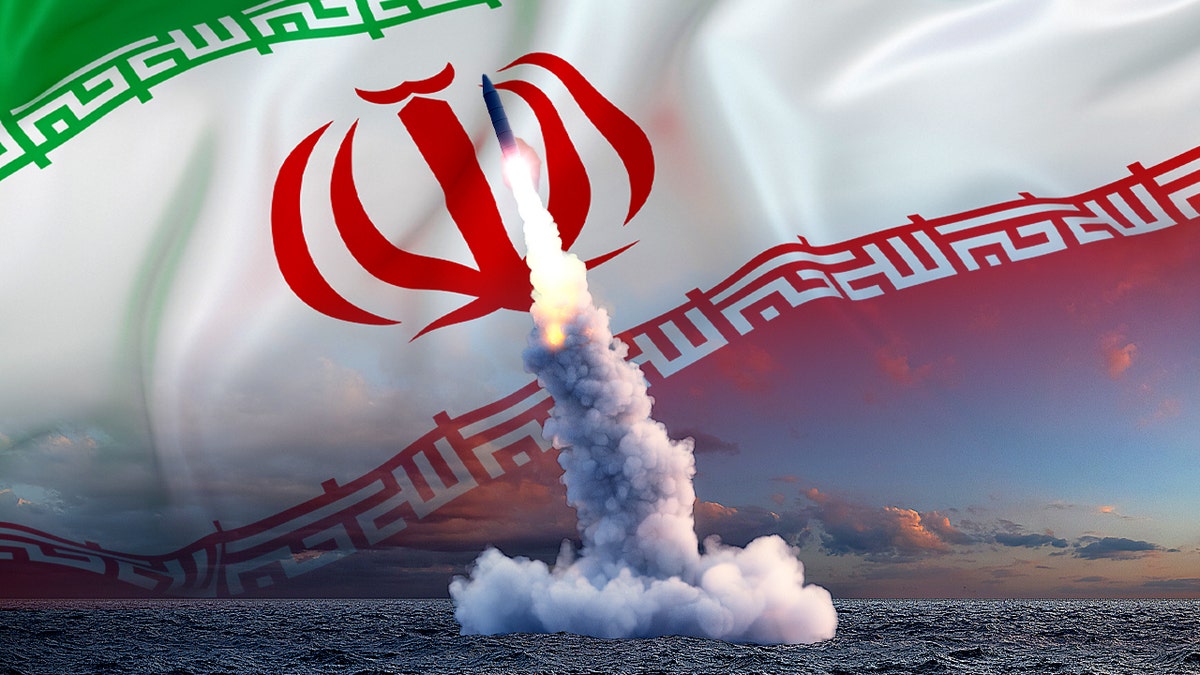
The refusal of Ali Larijani, a senior advisor to Iran's Supreme Leader, to engage in negotiations with the United States is not a mere rhetorical posture; it is a calculated structural defense of the Islamic Republic’s internal political economy and regional security doctrine. To interpret this stance as simple stubbornness misses the underlying cost-benefit analysis governing Tehran’s decision-making. Non-negotiation serves as a stabilizer for the Iranian domestic power structure, ensuring that the friction between the "Resistance Economy" and global financial systems remains a controlled variable rather than a chaotic disruption.
The Triple-Lock Mechanism of Iranian Sovereignty
Tehran’s rejection of bilateral talks rests on three distinct analytical pillars that form a "Triple-Lock" on their foreign policy. This framework ensures that any shift toward diplomacy requires a simultaneous unlocking of all three conditions, which currently remains mathematically improbable under the existing U.S. sanctions regime.
- The Sovereignty Risk Premium: Iranian leadership views the Joint Comprehensive Plan of Action (JCPOA) experience as proof that the "negotiation delta"—the difference between promised benefits and actual realized economic gain—is too high. The risk of domestic destabilization resulting from a "deal" that fails to deliver immediate, liquid capital outweighs the risks of continued isolation.
- Strategic Depth Preservation: Negotiation often demands the curtailment of regional proxies (the "Axis of Resistance"). For Tehran, these proxies are an outsourced defense layer that provides a conventional military deterrent. Trading this strategic depth for temporary sanctions relief is viewed as a net loss in long-term survivability.
- Ideological Cohesion as a Macro-Economic Asset: The "Resistance Economy" is a codified strategy to decouple the Iranian Rial from the USD-denominated global trade system. By maintaining a state of non-negotiation, the leadership forces domestic industries to localize production, thereby reducing the "Import Leakage" that previously drained foreign currency reserves.
The Cost Function of U.S. Diplomacy
When Ali Larijani asserts that the United States is "not a reliable partner," he is applying a game theory lens to the concept of Time Inconsistency. In international relations, this occurs when a government’s preferences change over time, rendering past promises void. From the Iranian perspective, the U.S. political system lacks the "binding mechanisms" necessary to guarantee a deal across different administrations.
The cost of entering a negotiation includes:
- Political Capital Burn: The Supreme Leader must spend significant internal influence to suppress hardline factions who view diplomacy as a surrender.
- Operational Stasis: During negotiations, regional military operations often face "pause requirements" to avoid poisoning the atmosphere, which allows competitors (Israel, Saudi Arabia) to gain tactical ground.
- Intelligence Exposure: The verification protocols inherent in any nuclear or security deal provide the West with "structural visibility" into Iranian facilities, which Tehran categorizes as a primary security vulnerability.
Analyzing the "Larijani Doctrine" vs. Reformist Pragmatism
There is a persistent analytical error in Western media that divides Iranian politics into "Hardliners" and "Reformists." A more accurate categorization is between System Preservers and Economic Integrationists. Larijani, despite being seen as a "moderate" in some Western circles due to his past role as a nuclear negotiator, functions as a System Preserver.
The System Preserver logic dictates that the Iranian state can survive indefinitely at a 2%–3% GDP growth rate under a "Grey Market" economy (trading oil via illicit tankers and utilizing Chinese financial intermediaries) rather than risking the 6%–8% growth that might come with Western integration, which would require dismantling the IRGC’s grip on the domestic market.
This creates a Stagnation Equilibrium. As long as the pain of sanctions does not lead to a total collapse of the social contract, the leadership views the status quo as superior to the volatility of a new deal. The current Iranian strategy is to wait for a multipolar shift where China and Russia provide enough of a financial safety net to render U.S. "Maximum Pressure" obsolete.
The Bottleneck of Sanctions Snapback
The primary technical hurdle in any potential negotiation is the "Snapback Mechanism." Under previous agreements, any party could unilaterally trigger the return of UN sanctions. For Iran, this represents an unacceptable Asymmetric Risk.
To overcome this, Tehran has moved toward a "Nuclear Hedging" strategy. By increasing uranium enrichment levels to 60%, they are not necessarily building a bomb today, but they are building "Negotiation Equity." This equity is used to offset the Snapback Risk. If the U.S. threatens more sanctions, Iran threatens higher enrichment. This is a classic "Tit-for-Tat" strategy in repeated games, designed to reach a Nash Equilibrium where neither side moves, but the conflict remains managed.
Geopolitical Friction Points and the Energy Variable
The global energy market acts as a "buffer" for Iranian non-negotiation. Despite sanctions, the global demand for crude oil—specifically from independent Chinese refineries (teapots)—creates a floor for Iranian revenue.
- The Chinese Floor: China’s willingness to purchase Iranian crude at a discount provides the hard currency necessary to fund essential imports.
- The Eurasian Corridor: Investments in the International North-South Transport Corridor (INSTC) aim to bypass the Suez Canal and Western-controlled maritime routes, linking Iran directly to Russian and Central Asian markets.
These structural shifts mean that the "Isolate and Negotiate" strategy used by the West in 2013 is less effective in 2026. The world has developed alternative financial plumbing (CIPS vs. SWIFT) that reduces the coercive power of the U.S. Treasury.
The Final Strategic Calculation
The United States must recognize that Ali Larijani’s statements represent a unified institutional consensus, not a rogue opinion. The Iranian state has performed a stress test on its own systems and concluded that it can endure the current level of pressure.
The strategic play for any entity interacting with Iran is to move away from the expectation of a "Grand Bargain" and toward a series of Tactical De-escalations. This involves:
- Technical-Level Agreements: Focusing on specific, non-political issues like water rights, maritime safety in the Strait of Hormuz, or environmental cooperation.
- Verification without Integration: Accepting that Iran will remain outside the Western financial system while maintaining strict IAEA monitoring.
- Regional Conflict Management: Engaging with Iran’s proxies as distinct local actors rather than purely Iranian appendages.
Future stability in the Middle East will not be achieved through a signed document in Geneva, but through the management of this "No-War, No-Peace" status quo. Any actor betting on a sudden Iranian pivot toward Western-style diplomacy is ignoring the decade-long hardening of Tehran's domestic and economic infrastructure. The goal is no longer to "solve" the Iran problem, but to price its defiance into the global security model.