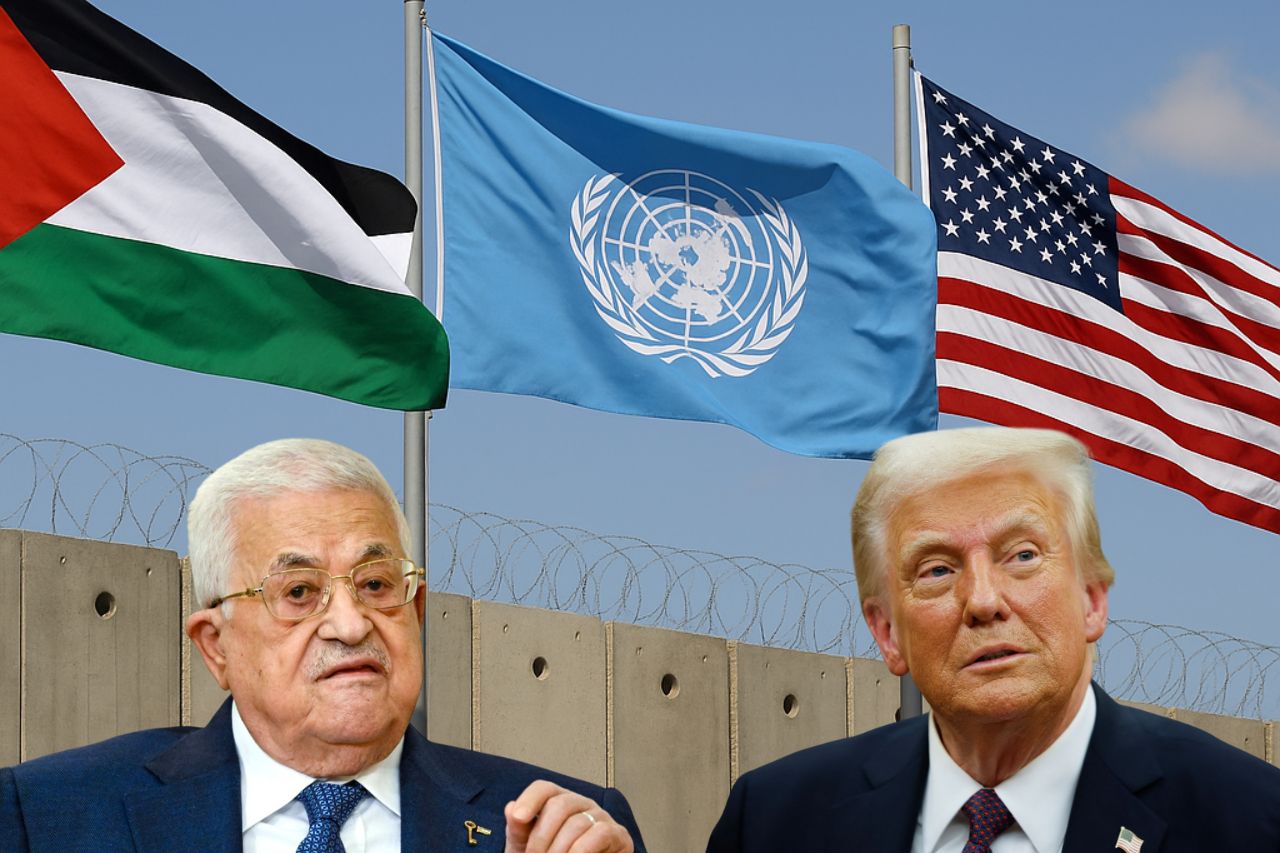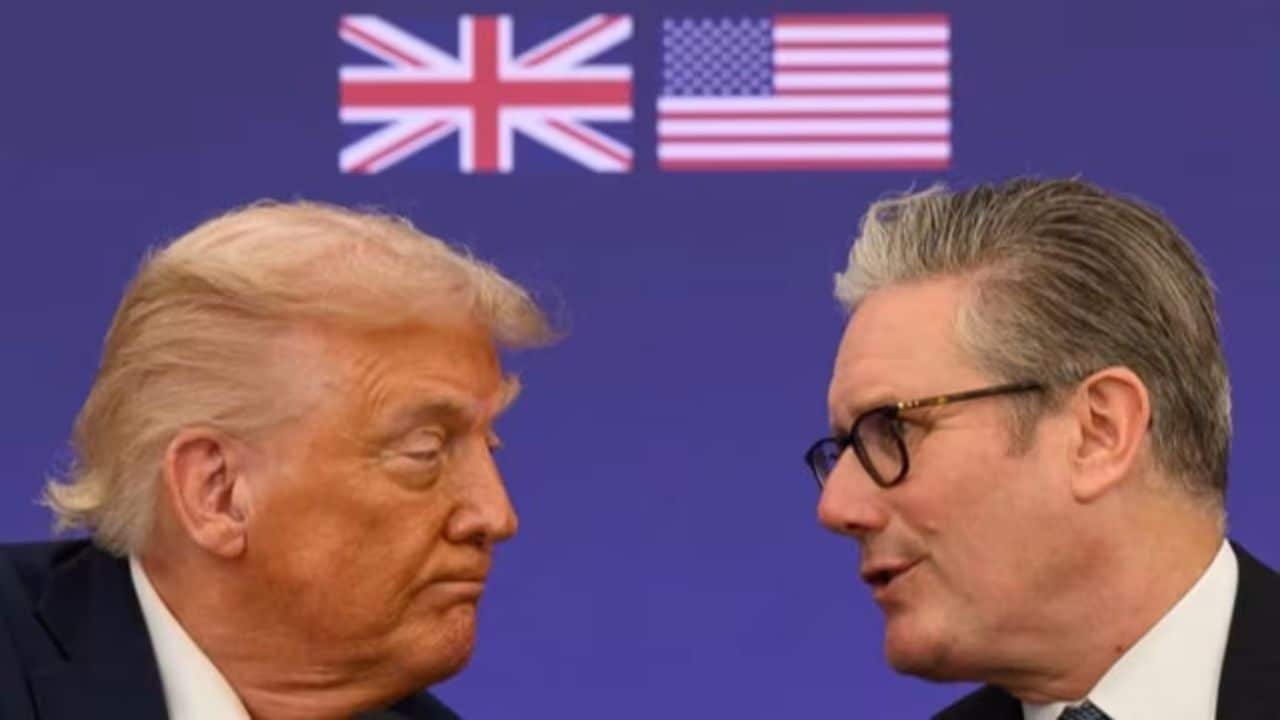
Keir Starmer and Donald Trump are playing a high-stakes game of naval chess with a board that doesn't exist anymore. The recent chatter regarding "military options" for the Strait of Hormuz isn't a sign of strength; it’s a confession of historical illiteracy. While the headlines scream about "securing global energy," the reality is that the West is preparing to fight a 1980s Tanker War in an era of $50,000 loitering munitions and asymmetric economic shifts that have already rendered the British and American blueprints obsolete.
The Myth of the Essential Chokepoint
The establishment loves the "chokepoint" narrative because it justifies massive carrier group budgets. They tell you that if Iran breathes too hard on the Strait, the global economy collapses. This is the first lie.
In 2024 and 2025, the flow of oil has fundamentally decoupled from the Atlanticist grip. China is the primary destination for the crude moving through that 21-mile-wide neck of water. When Starmer and Trump discuss "options," they are effectively offering to spend British and American taxpayer money to act as a free security guard for Beijing’s energy supply.
Why are we even in the room?
If the Strait closes, the pain isn't felt in London or New York first; it’s felt in the manufacturing hubs of Ningbo and Shenzhen. By posturing militarily, the UK and US are assuming all the kinetic risk for a region that increasingly trades in Yuan and Rupees. We are clinging to a "policeman of the world" badge that the rest of the neighborhood stopped respecting a decade ago.
The Math of Asymmetric Ruin
Let’s talk about the actual hardware. The Royal Navy and the US Navy are obsessed with "freedom of navigation" exercises. They send a Type 45 destroyer or an Arleigh Burke-class ship—vessels costing upwards of $1 billion to $2 billion—into a confined waterway to stare down a swarm of fast-attack craft and shore-based missiles.
This is a mathematical disaster.
- The Cost Ratio: A single Sea Viper or SM-2 interceptor missile costs between $2 million and $5 million.
- The Threat: A swarm of Shahed-style drones or modified ballistic missiles costs about as much as a used Honda Civic.
I have watched defense contractors pitch these "integrated shield" systems for years. They always omit the exhaustion factor. You cannot win a war of attrition when your "solution" costs 1,000 times more than the threat it’s neutralizing. In a sustained conflict in the Strait, the West runs out of high-end interceptors long before Iran runs out of cheap, explosive plastic.
The "military options" being discussed are built on the hubris that high-tech always wins. In reality, the Strait of Hormuz is a geographic kill zone where traditional naval superiority is a liability, not an asset. Large ships are just large targets in a bathtub.
The Energy Independence Delusion
"We must protect the oil to keep prices low at the pump."
This is the "lazy consensus" that politicians use to scare voters into supporting another Middle Eastern entanglement. Here is the nuance they missed: the global oil market is a giant, interconnected pool, but the US is now a net exporter of crude. The UK’s North Sea might be dwindling, but its energy future is supposedly "Green."
If the Strait closes, prices spike globally due to speculation, not because the West is literally running out of oil. The military cannot shoot down a price hike on the commodities exchange. Even if you "clear" the Strait, the insurance premiums for tankers will skyrocket to the point where the oil becomes economically unviable anyway.
The military solution is a placebo. It’s a way for Starmer to look "statesmanlike" and for Trump to look "tough," while neither addresses the fact that the physical protection of the water is a secondary concern to the financial volatility of the market.
The China Question No One Asks
If the Strait of Hormuz is truly the jugular of the global economy, why isn't the People's Liberation Army Navy (PLAN) leading the charge?
The answer is simple: they are smarter than us.
China knows that as long as the US and UK are willing to burn their own readiness and budgets to "stabilize" the region, China can sit back and reap the rewards of stable prices without firing a shot. We are providing a global public good at our own expense to our primary geopolitical rival.
Any discussion between Starmer and Trump that doesn't involve "How do we make China pay for the security of their own energy?" is a failure of British and American interests.
Why "Escalation Management" is a Fairytale
Military strategists love the term "escalation management." They believe they can dial the tension up to an 8, achieve their goal, and then dial it back to a 3.
Imagine a scenario where a stray British missile hits a commercial pier, or an Iranian drone successfully strikes a carrier deck. There is no "management" after that. The Strait is so narrow that any kinetic event immediately shuts down all commercial traffic.
You cannot "safely" fight a war in a corridor that is essentially a crowded hallway. The moment the first shot is fired, the mission—protecting trade—has already failed. The trade stops. The tankers turn around. The insurance companies cancel all policies.
The only "military option" that actually works is one that is never used. But once you start discussing specific "options" in bilateral meetings, you have already signaled that you are willing to destroy the very thing you claim to be protecting.
The Real Power Play: Strategic Apathy
Instead of more destroyers and more rhetoric, the West should be practicing what I call Strategic Apathy.
The moment we stop acting like the Strait of Hormuz is our problem, the burden shifts to the people who actually need the oil. If the UK and US pulled back, Saudi Arabia, the UAE, and China would be forced to create a regional security framework that doesn't rely on Western subsidies.
We are currently the enablers of a dysfunctional regional dynamic. By promising to intervene, we give regional players the "moral hazard" to act recklessly, knowing the West will swoop in to keep the lanes open.
The Actionable Pivot
Stop looking at the Strait as a naval problem. It is a supply chain problem.
- Accelerate the Bypass: Invest in the pipelines that circumvent the Strait through Saudi Arabia and Oman. It’s cheaper than a carrier group.
- Tax the Transit: If the West is to provide security, there should be a "Security Levy" on every barrel of oil heading to non-allied nations. If they won't pay, we shouldn't play.
- Admit the Vulnerability: Stop pretending our ships are invincible. Acknowledge that the Strait is a "no-go" zone for billion-dollar assets in a hot conflict.
The Starmer-Trump dialogue is a relic of a bygone era. They are discussing how to polish the brass on a sinking ship. The future of global energy isn't going to be decided by who has the most sailors in the Gulf; it’s going to be decided by who is smart enough to leave the Gulf to those who can't survive without it.
If you want to "secure" the Strait, the best way to do it is to make it clear that you no longer care if it stays open. Only then do the actual stakeholders start behaving like adults.
The West needs to stop being the world’s most expensive, and least appreciated, security guard. It’s time to hand over the keys and see how the rest of the world handles the bill.