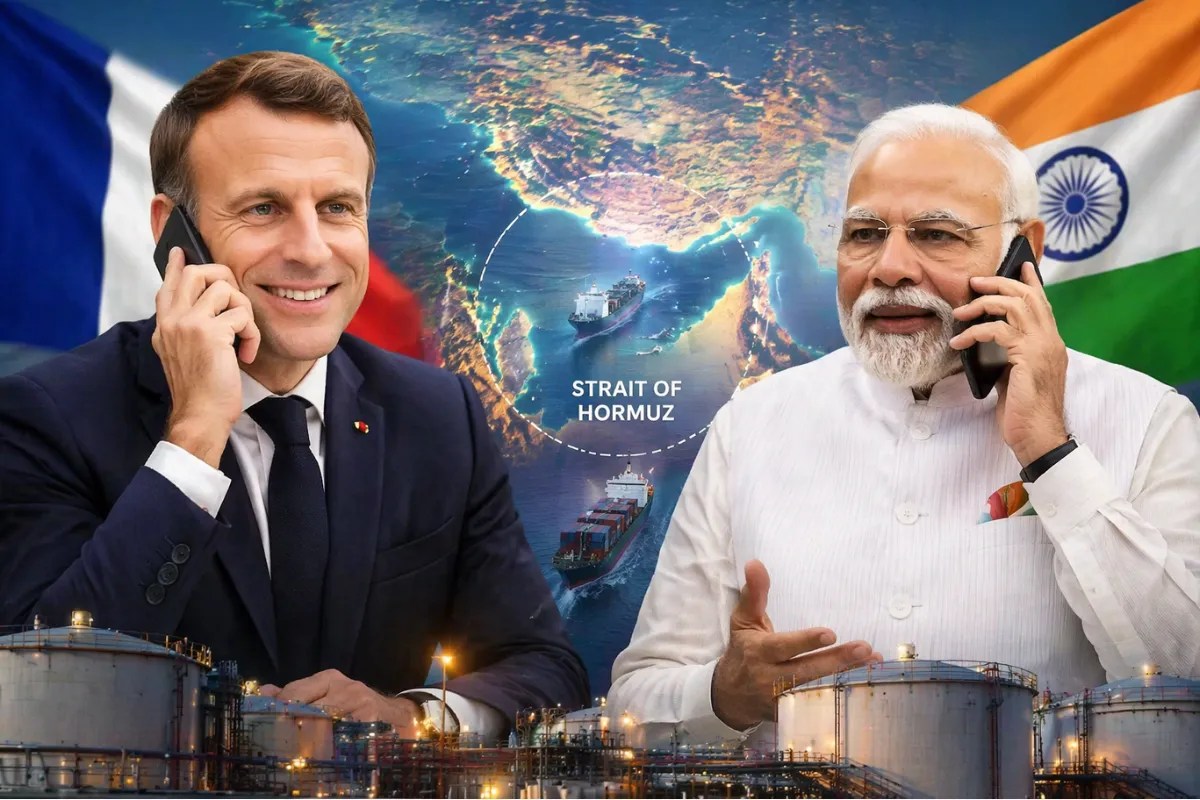
The recent diplomatic surge between Indian Prime Minister Narendra Modi and French President Emmanuel Macron centers on a single, volatile geography—the Strait of Hormuz. While public statements focus on "restoring security," the underlying reality is a desperate scramble to protect a maritime artery that carries one-fifth of the world’s daily oil consumption. For India, this isn't about general international cooperation. It is a survival tactic. New Delhi knows that any prolonged blockage in these waters would trigger an immediate domestic energy crisis and shatter its economic growth projections.
The partnership with France is strategic rather than merely symbolic. France maintains a permanent military presence in the United Arab Emirates and has long acted as a self-appointed guardian of European interests in the Persian Gulf. By aligning with Paris, India gains a partner that possesses both the naval reach and the historical intelligence networks to monitor Iranian and proxy movements in the region. This is about real-time maritime domain awareness in a zone where a single drone strike or a stray sea mine can send global insurance premiums into a vertical spike.
The Chokepoint Math
Global energy markets are currently hyper-sensitive. The Strait of Hormuz is a narrow passage, only 21 miles wide at its narrowest point, separating Iran from Oman. Through this gap flows roughly 20 million barrels of oil every day. India imports over 80 percent of its crude oil, and a significant portion of that volume originates from the Gulf states.
If the Strait closes, the impact on India's fiscal deficit would be catastrophic. The government’s budget is built on specific oil price assumptions. When Brent crude climbs due to regional instability, the Indian Rupee weakens, inflation rises, and the central bank is forced to hike interest rates. This chain reaction kills consumer spending. Modi’s conversation with Macron acknowledges that the Indian Navy cannot police these waters alone. It needs the logistical support and the satellite eyes of a Western power that isn't the United States, allowing India to maintain its "strategic autonomy" while still benefiting from a high-tech security umbrella.
Why France is the Chosen Partner
India has plenty of options, yet it repeatedly turns to Paris. Why? The answer lies in the lack of baggage. Unlike Washington, France does not demand that India take a hardline stance against Tehran. Paris understands the nuances of "multi-alignment." France is also a primary defense supplier to India, specifically with the Rafale jets and Scorpene-class submarines.
Integrating Indian naval operations with French assets in the Indian Ocean creates a formidable deterrent. The French "Alindien" command—the Admiral in charge of the maritime zone of the Indian Ocean—regularly shares data with the Indian Navy’s Information Fusion Centre. This cooperation is designed to prevent "grey zone" warfare, where non-state actors or "ghost tankers" disrupt trade without a formal declaration of war. By securing the Strait of Hormuz, France secures its energy routes to Europe, and India secures its path to becoming a 5 trillion-dollar economy.
The Iranian Variable
One cannot discuss Hormuz without addressing the elephant in the room. Iran holds the keys to the Strait. New Delhi has historically maintained a delicate balancing act with Tehran, especially regarding the Chabahar Port project. However, the rise of regional proxies and the increasing frequency of tanker seizures have made the status quo untenable.
The India-France dialogue serves as a quiet warning. It signals that if the maritime commons are not respected, India will move closer to Western security architectures. This puts pressure on regional players to keep the lanes open. India is effectively telling the world that its patience with maritime lawlessness has limits. The focus on "restoring security" is code for preventing the weaponization of trade routes.
Logistics and the High Cost of Risk
Shipping companies are already redirecting vessels or paying "war risk" premiums that add millions to the cost of a single voyage. These costs are never absorbed by the shipping giants; they are passed directly to the Indian consumer at the petrol pump.
The Financial Ripple Effect
- Insurance Premiums: Lloyd’s of London and other underwriters have designated parts of the Gulf as high-risk zones.
- Freight Rates: Increased demand for security escorts or longer routes around the Cape of Good Hope (if the situation worsens) triples shipping times.
- Refinery Margins: Indian refineries depend on a steady, predictable flow of specific crude grades from the Middle East. Any disruption forces them to buy expensive "spot" cargoes from elsewhere.
Moving Beyond Statements
The real test of the Modi-Macron agreement will be seen in the frequency of joint patrols and the deployment of advanced surveillance assets. We are looking for the permanent stationing of liaison officers and the expansion of the "Varuna" naval exercises to include specific "Hormuz-style" crisis simulations.
India is also looking to diversify. The talks likely touched on the India-Middle East-Europe Economic Corridor (IMEC), which seeks to create a land bridge that partially bypasses volatile maritime chokepoints. While IMEC is a long-term project, the immediate need is to ensure that the ships currently in the water reach their destination. The alliance with France provides a tactical bridge between today’s instability and tomorrow’s infrastructure.
Tactical Reality over Diplomatic Nicety
Diplomacy often hides the grit of military necessity. Behind the handshakes and the press releases is a cold calculation regarding naval tonnage and missile defense. India is rapidly expanding its blue-water navy, but it still lacks the global "string of pearls" that China or the West possesses. France fills that gap.
The security of the Strait of Hormuz is the single biggest external variable for the Indian economy. If the Strait is the world's jugular vein, India is the patient most at risk of a stroke. New Delhi is no longer content to sit and hope for the best. It is actively picking sides in the fight for maritime stability, betting that a partnership with France offers the best protection against a volatile Middle Eastern future. The mission is clear: keep the oil moving, or watch the domestic agenda crumble.