The narrative currently being spoon-fed to the British public is one of helpless victimhood. According to the mainstream media and the National Farmers’ Union (NFU), UK farmers are the collateral damage of a geopolitical storm they didn’t start. They point to the war in Ukraine, the explosion in natural gas prices, and the skyrocketing cost of ammonium nitrate. They tell us that without massive state intervention and a "protectionist" mindset, the British dinner plate will soon be empty.
It is a comforting story. It is also a lie.
The "crisis" in UK agriculture isn't a result of the war. The war was merely the stress test that exposed a fragile, antiquated, and fundamentally inefficient business model. We aren’t seeing a temporary dip in a healthy industry; we are watching the slow-motion collapse of a sector that has been insulated from reality for fifty years by subsidies and a refusal to embrace industrial-scale logic.
The Fertilizer Fallacy
The loudest complaint involves the cost of fertilizer. Nitrogen-based fertilizers are produced via the Haber-Bosch process, which uses natural gas to convert atmospheric nitrogen into ammonia.
$$N_2 + 3H_2 \rightleftharpoons 2NH_3$$
When natural gas prices spiked because of the disruption in Russian supply, the cost of $NH_3$ production went vertical. The "lazy consensus" says this is a tragedy. The reality is that it’s a necessary market correction. For decades, UK farmers have over-applied synthetic nitrogen because it was artificially cheap. They treated soil like a sterile sponge to be pumped full of chemicals rather than a living asset.
We’ve seen this before. I’ve watched industries from steel to semiconductors ignore rising input costs until they hit a wall. The farmers who are failing now are the ones who refused to diversify their nutrient sources when the signals were already there. If your business model depends on cheap gas from a dictator, you don’t have a business; you have a gamble.
The disruption in Ukraine didn't create the problem. It just ended the era of cheap, lazy chemistry.
The Myth of the Small Family Farm
Every time a policy shift is suggested, politicians hide behind the "small family farm." It’s a powerful image: the sturdy yeoman tending to a few hundred acres, feeding the village. In reality, this sentimentality is killing British food security.
Agriculture is a game of margins and scale. The "tough choices" being discussed in boardrooms—or over kitchen tables in Norfolk—are only tough because the scale is too small. A 200-acre arable farm in the UK is an economic ghost. It cannot afford the $500,000 autonomous tractors, the real-time soil sensors, or the vertical integration required to compete with global markets.
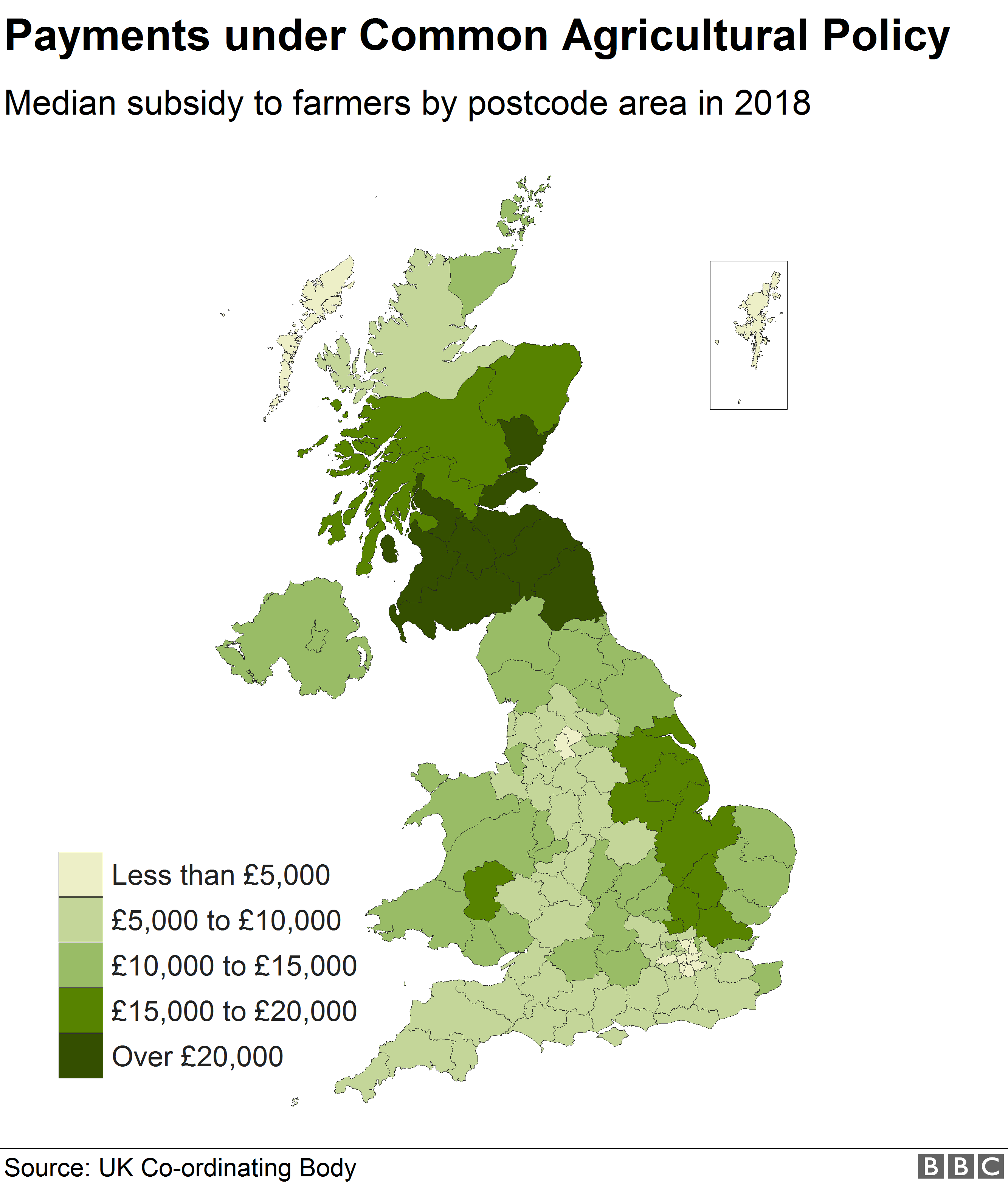
If we want food security, we need fewer farms, not more. We need massive, hyper-efficient agricultural hubs that utilize every square centimeter of land via precision data. The current system keeps thousands of sub-optimal businesses on life support. By subsidizing the "family farm," we are subsidizing inefficiency. We are paying people to stay small, stay poor, and stay vulnerable to the next energy spike.
Why We Should Stop Fixing the Price
"People Also Ask" online if the government should cap fertilizer prices or provide direct energy rebates to farmers. The answer is a hard no.
Price signals are the only way a market communicates reality. If fertilizer is expensive, you should use less of it. You should plant legumes to fix nitrogen naturally. You should invest in precision application tech that puts the chemical exactly where the root is, rather than blanketing a whole field.
By shielding farmers from these costs, the government removes the incentive to innovate. If you pay for their gas, they will keep burning it. I’ve seen this in the tech sector: when capital is free, companies hire 10,000 people they don't need. When the interest rates rise, they finally learn how to code. UK farming needs its "interest rate" moment. It needs to hurt so that it can heal.
The Counter-Intuitive Truth About Food Security
The competitor article argues that rising costs threaten food security. They want you to believe that if a UK farmer stops growing wheat, you won't eat.
This is a fundamental misunderstanding of global trade. Food security isn't about growing everything within twenty miles of London. It’s about having a diverse, resilient supply chain and a high-value domestic economy that can afford to buy from whoever is producing most efficiently.
Imagine a scenario where we stop trying to grow low-yield grain in wet, sub-optimal British soil. Instead, we rewild that land or use it for high-value carbon sequestration, while our agricultural sector focuses exclusively on high-margin, high-tech produce—biotech, indoor vertical farming, and specialized seed stock.
The current "tough choice" isn't about whether to plant wheat or barley. It's about whether to remain a 19th-century peasant industry or become a 21st-century tech powerhouse.
The Downside Nobody Wants to Admit
Is my approach cold? Yes. Will it lead to the bankruptcy of multi-generational farms? Absolutely.
That is the trade-off. You cannot have a globalized, efficient, secure food system while also trying to preserve a nostalgic, inefficient way of life. We are currently trying to do both, and we are failing at both. The "tough choices" aren't about the war in Ukraine. They are about whether the UK is brave enough to let the weak players exit the market so the strong ones can consolidate and modernize.
The NFU will tell you this is a "crisis of costs." I’m telling you it’s a crisis of competence.
If a farmer can’t survive without the government paying for their fertilizer, they aren't a farmer—they’re a hobbyist on the public teat. It’s time to stop the payments, let the market do its work, and build an industry that doesn't collapse every time a pipeline in Eastern Europe gets shut off.
The era of the "struggling farmer" needs to end. Not through more help, but through the brutal, necessary logic of the market. Adapt, scale, or get out of the way for someone who can.