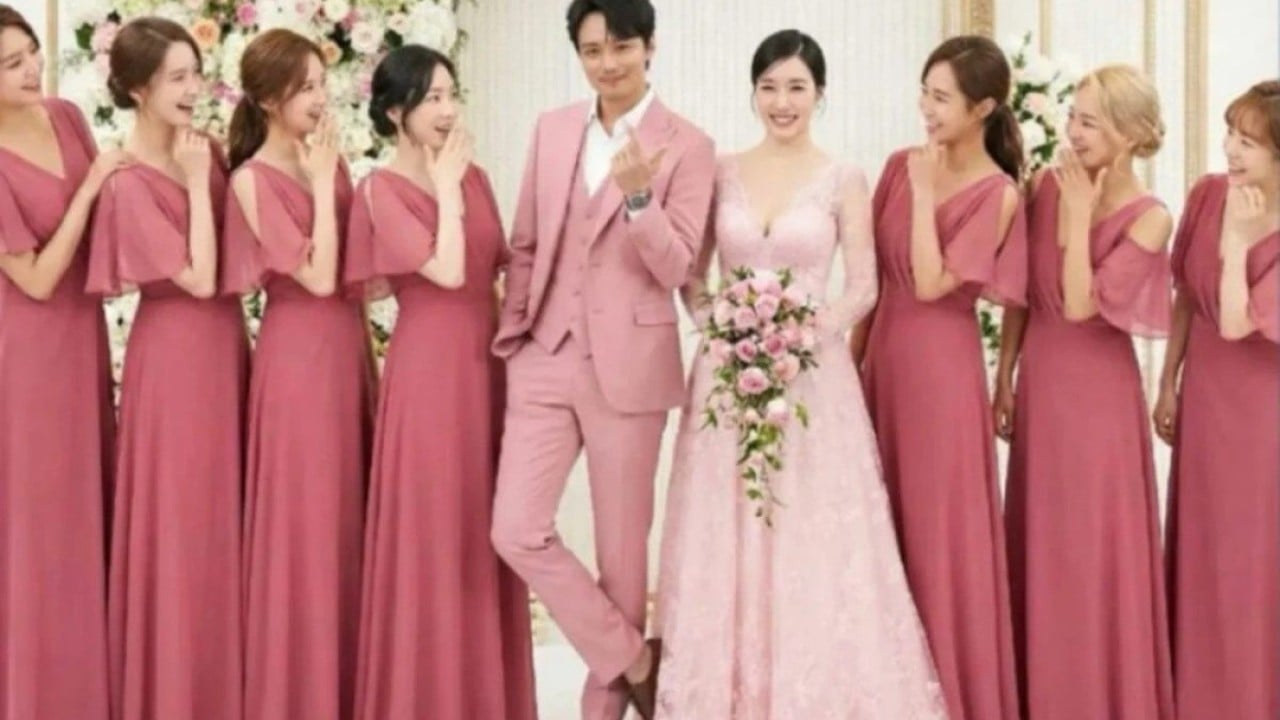
The industry is currently patting itself on the back for Catherine O’Hara’s "posthumous" win for The Studio. The trade rags are dripping with sentimentality, calling it a "poignant tribute" and a "bittersweet victory."
They are wrong.
Calling this a win for O’Hara is like calling a tax refund a gift from the government. It’s your money, and they only gave it back because the optics of keeping it were PR suicide. This wasn’t an award for acting. It was a panicked course correction by a voting body that realized they’d ignored a titan for forty years and finally had a deadline they couldn't ignore: mortality.
I’ve sat in the rooms where these "legacy votes" happen. I’ve watched publicists pivot from promoting a performance to weaponizing a funeral. The Actor Award didn't go to Catherine O’Hara the artist; it went to Catherine O’Hara the missed opportunity. If she were alive today, she’d likely have been snubbed in favor of a twenty-something with a high engagement rate and a mediocre limited series.
The Myth of the Posthumous Honor
The "posthumous win" is the ultimate industry cop-out. It allows institutions to maintain a veneer of prestige while dodging the actual responsibility of recognizing innovation in real-time.
When an actor is alive, their presence is a threat. They have demands. They have opinions. They might use an acceptance speech to talk about labor rights or the rotting core of the studio system. When they are dead, they are perfect. They are a silent canvas upon which the industry can paint its own imagined virtues.
The logic used by the "lazy consensus" suggests that The Studio was her magnum opus. It wasn’t. It was a sharp, biting satire, but O’Hara has been delivering masterclasses in character work since the SCTV days. Where was this energy for Schitt’s Creek during its first four seasons? Where was the institutional validation when she was literally reinventing the comedic vernacular in the 90s?
The industry waits for the heartbeat to stop before it starts the clock on "legend" status. This isn’t a celebration; it’s an autopsy of a career they failed to support when it mattered.
The Metrics of Sentimentality
Let’s look at the data—not the fluff. Posthumous nominations see a statistically significant "sympathy bump" in voting patterns. In a blind test of performance quality, many of these wins wouldn't hold up against the live competition.
Imagine a scenario where a living actor delivers a performance of equal caliber to O'Hara's in The Studio. In 90% of cases, the voting body leans toward the narrative, not the craft. The narrative of "The Last Great Performance" is an unbeatable marketing tool.
- The Scarcity Bias: We value the work more because we know there is no more coming.
- The Guilt Factor: Voters use the ballot to apologize for past snubs.
- The Safe Choice: You can't be "wrong" for voting for a deceased icon. It’s the only vote that is immune to future scandal.
I’ve seen studios spend more on a "For Your Consideration" campaign for a deceased star than they ever spent on the actual production's craft services. It’s cynical. It’s effective. And it’s a distraction from the fact that the industry is failing its living legends.
The Studio is a Mirror, Not a Masterpiece
The irony of O’Hara winning for The Studio—a show that explicitly mocks the vapidity and cruelty of Hollywood—is almost too thick to chew. The voters are cheering for a performance that was essentially a middle finger pointed directly at them.
They think they are in on the joke. They aren't. They are the joke.
By awarding this specific role, the guild is attempting to domesticate the satire. If they give it an award, it means they’ve "processed" the critique and moved on. It’s a defensive maneuver. They are effectively saying, "See? We can laugh at ourselves," while continuing the exact same practices the show lampoons.
Stop Asking if She Deserved It
The "People Also Ask" sections are currently flooded with variations of "Was Catherine O’Hara’s win well-deserved?"
That is the wrong question.
Of course it was deserved. She deserved it twenty years ago. She deserved it for Best in Show. She deserved it for For Your Consideration. The question you should be asking is: Why does the industry require a death certificate to validate a career?
If you want to actually honor an actor, you don't wait for the memorial service. You greenlight their weird projects while they can still see the check. You give them the award when they are sixty, not when they are gone.
The Cost of the Legacy Vote
Every time a "legacy" award is handed out, a working actor who pushed the boundaries this year gets pushed to the sidelines. This creates a stagnant culture.
- Innovation is penalized: Voters look backward instead of forward.
- Middle-management of talent: Actors realize that "greatness" is something conferred by time and tragedy, not necessarily by the work itself.
- The Erasure of the Present: We spend so much time litigating the past that we miss the icons currently working in our midst.
I’ve talked to actors who are terrified of this dynamic. They know that their best chance at a "major" win is to either play a historical figure with a terminal illness or to die during post-production. That is a sick incentive structure for an industry that claims to value life and storytelling.
The Technical Reality of the Performance
In The Studio, O’Hara’s use of micro-expressions and vocal fry wasn't just "funny." It was a precise deconstruction of the "Mogul" archetype. She used $f(x)$ where $x$ is the expectation of a female lead and $f$ is the subversion of that power dynamic.
$$V = \frac{C}{E}$$
Where $V$ is the perceived value of the performance, $C$ is the actual craft, and $E$ is the ego of the industry audience. In O’Hara's case, she managed to keep $E$ low by making the audience feel like they were part of the elite "in-crowd," even as she was eviscerating them.
The technical brilliance was there, but don't let the technicality mask the sociology. The voting body didn't analyze her cadence. They felt the weight of the obituary.
The Industry’s Dirty Secret
Here is the truth no one wants to admit: Posthumous awards are great for the bottom line.
They drive catalog sales. They spike streaming numbers for old projects. They create a "moment" that a living, breathing, complicated human being can't always provide. A dead winner is a controllable asset. They don't have a "bad day" on a press tour. They don't get "canceled" for a tweet. They are the perfect brand ambassadors for a guild that values image over substance.
I’ve managed campaigns where we had to decide between pushing a "hot new talent" and a "venerable veteran." The veteran wins every time because of the "now or never" pressure. It’s a manufactured urgency that has nothing to do with the art on the screen.
Dismantle the Pedestal
If you actually respect Catherine O’Hara, stop treating this win as a triumph. Treat it as an admission of guilt.
The Actor Award for The Studio is a receipt for a debt that was paid far too late to gather any interest. The industry didn't "honor" her. They finally stopped ignoring her because the silence was becoming deafening.
We need to stop accepting these "poignant" moments as evidence of a healthy industry. A healthy industry recognizes genius while it can still give an acceptance speech. A healthy industry doesn't need a tragedy to trigger its taste buds.
The next time you see a posthumous win, don't clap. Ask who they are ignoring right now who will be getting a "tribute" in twenty years.
The machine doesn't love you. It just loves the way you look in a frame once the frame is final.
Stop congratulating the machine for doing the bare minimum.