Thierry Breton’s whining about "unfairness" in the energy market is the death rattle of a bureaucratic mindset that doesn't understand how risk actually works. When the former EU Commissioner laments that some member states are pocketing billions while others bleed out, he isn't defending the European consumer. He is defending a failed, rigid policy framework that punished foresight and rewarded dependency.
The "energy crunch" wasn't a natural disaster. It was a stress test. And in every stress test, some players fail while others profit. Calling the windfall of a well-positioned country "unfair" is like a gambler calling the house "unfair" because they actually calculated the odds.
The Myth of the Level Playing Field
The European Union loves to talk about solidarity until the bill arrives. The current narrative suggests that because we share a single market, we should share the pain of high gas prices equally. This is a fairy tale.
Energy sovereignty is a result of decades of capital expenditure, political risk-taking, and infrastructure investment. If Norway or certain EU member states invested in LNG terminals, nuclear life extensions, or diverse supply chains while others outsourced their entire industrial base to cheap Russian pipeline gas, the resulting profit isn't "luck." It’s a dividend on intelligence.
I have watched boards of directors across Europe ignore energy security for twenty years because the "spot price" was low. They chased short-term margins and ignored the massive tail risk staring them in the face. Now that the risk has materialized, they want a refund from the people who actually prepared.
Windfall Taxes Are a Tax on Competence
Breton and his ilk keep banging the drum for massive windfall taxes to "redistribute" these gains. This is a classic economic trap.
When you tax the "excess" profits of energy companies or sovereign states during a crisis, you are effectively telling the market: "Invest in safety, and we will take your reward. Invest in fragility, and we will bail you out."
Imagine a scenario where a utility company spends $5 billion on a 10-year project to harden its grid and diversify its sources. For nine years, its returns are lower than its competitors who did nothing. In the tenth year, a crisis hits. The competitors go bust or require subsidies, while the prepared company finally sees a surge in value. A windfall tax at that moment doesn't just take the money; it destroys the incentive for anyone to ever build a resilient system again.
Why the "Energy Solidarity" Argument is Flawed
The premise of the "unfairness" argument rests on a misunderstanding of market signals. Prices are not just numbers on a screen; they are information. High prices in one region tell the world: "Bring more energy here, right now."
By trying to suppress these profits or flatten them across the Eurozone, politicians are muffled the very signal that would solve the shortage. If every country is forced to subsidize the prices of its neighbor, no one has a reason to reduce consumption or pivot to new technologies.
The High Cost of Cheap Energy
The real "unfairness" isn't that some countries are making money. It’s that European leadership allowed the continent to become a collection of energy-poor states pretending to be an industrial powerhouse.
For years, the "lazy consensus" was that energy was a commodity that would always be cheap and always be available. This led to:
- The premature decommissioning of nuclear plants in Germany.
- A refusal to explore domestic shale gas opportunities due to NIMBYism.
- A reliance on "just-in-time" energy delivery without "just-in-case" storage.
The countries currently "profiting" are often those that didn't drink the Kool-Aid. They are the ones who maintained coal backups, invested in regasification, or kept their reactors running. Calling their success "unfair" is a pathetic attempt to deflect from the catastrophic policy errors made in Brussels, Berlin, and Paris.
The Brutal Truth About Price Caps
People often ask: "Shouldn't we just cap the price of gas to protect the poor?"
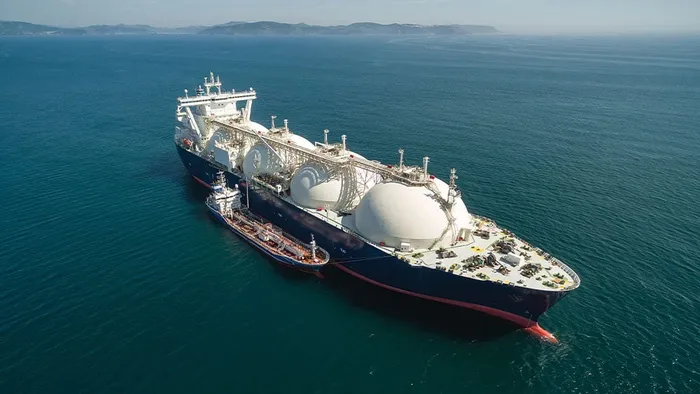
The answer is a hard no. A price cap is a shortage guarantee. If the cost of bringing a cargo of LNG to Europe is higher than the price cap set by the EU, that cargo goes to Asia. It is that simple. You cannot legislate away the laws of supply and demand. You can't tweet a tanker into a port.
Breton’s rhetoric suggests that there is a pool of money that can be moved around to fix the problem. There isn't. There is only energy, and there is a global auction for it. If you don't like the price, you shouldn't have sold your power plants.
The Real Winners Aren't Who You Think
While the media focuses on state-owned energy giants, the real winners are the nimble traders and infrastructure owners who saw the volatility coming. They didn't win by "exploiting" a crisis; they won by providing liquidity when everyone else was panicking.
In my time advising hedge funds and energy desks, the most successful players were never the ones betting on high prices. They were the ones betting on volatility. They knew the European energy architecture was a house of cards. They positioned themselves to be the ones holding the glue when it started to collapse.
The Dangerous Path of State Intervention
Every time a politician like Breton calls for market intervention, they add a "political risk premium" to the cost of doing business in Europe.
If I am an international energy investor, why would I put capital into a European project if the rules of the game can be changed the moment I start making a profit? I will take my money to the US, the Middle East, or Southeast Asia where the contract is actually worth the paper it’s printed on.
The EU is currently cannibalizing its own future to survive a political news cycle. By attacking the "excessive" profits of its neighbors and its own companies, it is ensuring that the next energy transition will be funded by someone else, somewhere else.
Stop Trying to Fix the Market
The market isn't broken. It is working perfectly. It is exposing the weakness of the European energy strategy.
Instead of demanding "fairness," the EU should be demanding efficiency.
- Deregulate immediately. Make it easier to build anything—wind, nuclear, gas, or solar. The current permitting process is a suicide pact.
- End the blame game. Norway isn't "profiting" from the war; they are providing the gas that keeps the lights on in London and Berlin. Pay them and say thank you.
- Accept the volatility. Energy will never be cheap and stable again until we have a massive oversupply. We won't get that oversupply by taxing the people who produce it.
The "unfairness" narrative is a comfort blanket for failed leaders. It allows them to pretend they are victims of greedy neighbors rather than the architects of their own energy poverty. If you want to stop paying "unfair" prices, stop being an easy mark for every geopolitical actor with a pipeline.
Build your own. Drill your own. Burn your own. Or shut up and pay the invoice.