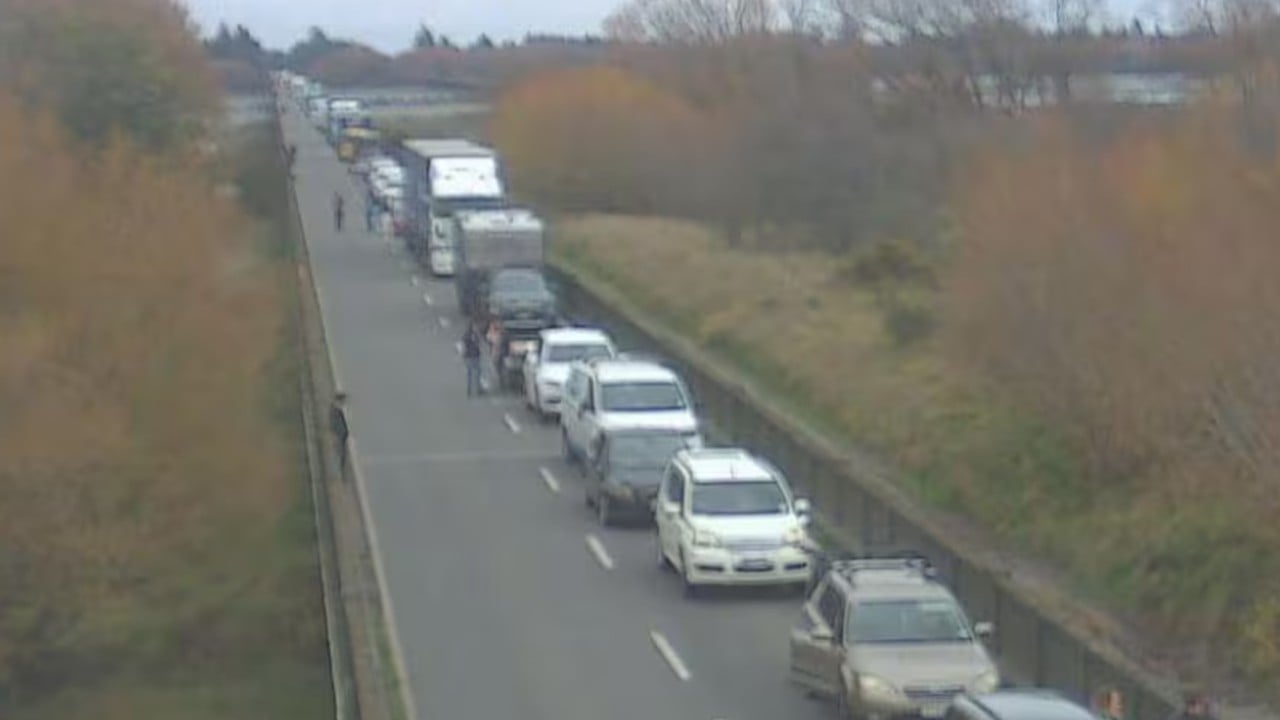
The standard media response to a fatal tourist car crash is completely predictable. Two Hong Kong tourists die on State Highway 1 near Rakaia, and the press immediately pivots to safe, sanitized talking points. They interview shocked diplomats, highlight the "dangerous" intersection, and detail the government's latest localized safety campaign. It is a lazy consensus that prioritizes institutional hand-wringing over hard truth.
The road did not kill those tourists. The systemic failure of the international rental car pipeline did. Read more on a connected issue: this related article.
Every year, thousands of travelers land in New Zealand after exhausting 12-hour flights, walk straight to a rental kiosk, grab the keys to a two-ton vehicle, and attempt to navigate narrow, high-speed, left-hand-drive roads while effectively intoxicated by sleep deprivation. Yet the industry continues to treat these tragedies as random, localized accidents rather than predictable outcomes of a broken business model.
The Fatigue Denial Industry
I have watched global tourism boards and rental conglomerates gloss over this issue for over a decade. They throw a few translated safety brochures on a counter or stream a mandatory three-minute video on an inbound flight and call it due diligence. It is corporate liability covering, not safety. Further reporting by Travel + Leisure delves into related views on this issue.
The biology of jet lag and sleep debt is absolute. A person who has been awake for 18 hours suffers cognitive impairments equivalent to a blood alcohol concentration of 0.05%. Push that to 24 hours, and you are looking at 0.10%—well over the legal driving limit in almost every developed nation.
Yet, if a tourist walked into an airport rental kiosk visibly drunk, the agent would refuse the keys. If that same tourist walks in with bloodshot eyes, slurred speech from timezone confusion, and a total lack of spatial awareness regarding local road typography, they are handed a map and a key fob.
Look at the mechanics of the recent Selwyn District crash. A single-vehicle accident, mid-afternoon, on a major state highway. This is not the hallmark of an inherently flawed road; it is the classic signature of micro-sleep and spatial disorientation. In a similar case in the Otago region, a fatigued driver crossed the center line within hours of landing, causing catastrophic injuries because he simply could not stay awake.
The industry shifts the blame to the infrastructure because fixing infrastructure is someone else's problem. Acknowledging that their primary customer base is fundamentally unfit to operate machinery the day they arrive would require disrupting a highly lucrative, friction-free booking funnel.
The Myth of Universal Driving Competency
The core misconception perpetuated by global tourism infrastructure is that a driver's license is a universally transferable certificate of skill. It is not.
Driving in a hyper-dense, urban environment like Hong Kong, where traffic moves at a crawl, signage is omnipresent, and navigation is dictated by concrete barriers and GPS-guided lanes, does not prepare a driver for rural open-road dynamics.
- Open Road Geometry: Rural highways require active, high-speed lane discipline on undivided roads with 100 km/h limits.
- The Gravel Vector: Unsealed shoulders require completely different steering reflexes when a wheel drops off the asphalt.
- The Left-Side Default: Under sudden stress or fatigue, the human brain defaults to its deepest conditioning. For drivers accustomed to the right side of the road, that default reflex is fatal. Even for Hong Kong residents who drive on the left, the sheer absence of urban visual cues creates a hypnotic effect that induces rapid fatigue.
The current system assumes that if you can park a hatchback in a Kowloon garage, you can safely navigate a heavy SUV past a rural logging truck on a two-lane bridge. It is an absurd premise that costs lives.
Dismantling the PAA Fallacies
Public forums and search trends are filled with the wrong questions surrounding these events. The collective focus is entirely misplaced.
Is State Highway 1 inherently dangerous for international visitors?
No. The highway itself is a standard two-lane transit corridor. The danger is the delta between the driver’s cognitive state and the demands of the environment. Labeling a stretch of asphalt as "treacherous" removes the agency from the operator and the corporation that rented them the vehicle.
Should the government lower speed limits on tourist routes?
This is a cosmetic fix that fails to address the underlying pathology. A driver experiencing micro-sleep or severe spatial confusion will crash at 80 km/h just as definitively as they will at 100 km/h. Lowering the limit across entire networks penalizes local commerce while failing to stop the core issue: impaired operators.
Will better signage prevent single-vehicle tourist crashes?
You cannot signpost a driver out of a biological shutdown. When fatigue sets in, the human eye narrows its field of vision, ignoring peripheral stimuli and road signs entirely. More paint and metal on the roadside will not fix a brain that is actively trying to sleep.
The Unpopular, Actionable Remedy
If the travel and rental car industries actually wanted to stop these fatalities, they would stop printing brochures and start enforcing structural friction. The solution requires hurting the bottom line to preserve human life.
The 24-Hour Mandatory Quarantine on Keys
Rental car companies should be legally barred from issuing a vehicle to any international arrival who has traveled across more than three time zones within the past 24 hours.
Imagine a scenario where your flight data is linked to your booking. If you landed at Christchurch or Auckland airport on an international flight, your rental contract cannot validate until 24 hours after your customs clearance stamp. This forces a mandatory overnight stay near the transport hub, ensuring the driver has experienced at least one full sleep cycle before taking the wheel.
The downside to this approach is obvious: it adds friction. It hurts airport hotel capacity, disrupts the "seamless" travel experience, and costs rental companies initial day revenue. Travelers will complain about the loss of autonomy. But autonomy without cognitive competence is just a hazard.
Mandatory Simulation Screening
For drivers coming from urban centers to rural destinations, a short, high-fidelity simulator test at the kiosk should be mandatory. Five minutes on a digital rig to test reaction times, left-side compliance under stress, and basic handling mechanics. If you fail the simulator, your booking is downgraded to a mandatory bus or rail pass.
This shifts the liability back to the operator and the provider. It forces an honest assessment of capability before the vehicle ever leaves the lot.
The travel industry wants you to believe that safety is a shared responsibility achieved through education and awareness. That is a comforting lie designed to keep the revenue flowing. Safety is achieved through structural barriers that prevent incompetent or impaired people from putting themselves and others in harm's way. Until the rental industry is forced to take the keys out of the hands of exhausted travelers, the body count on rural highways will continue to rise. No amount of signage will change that.