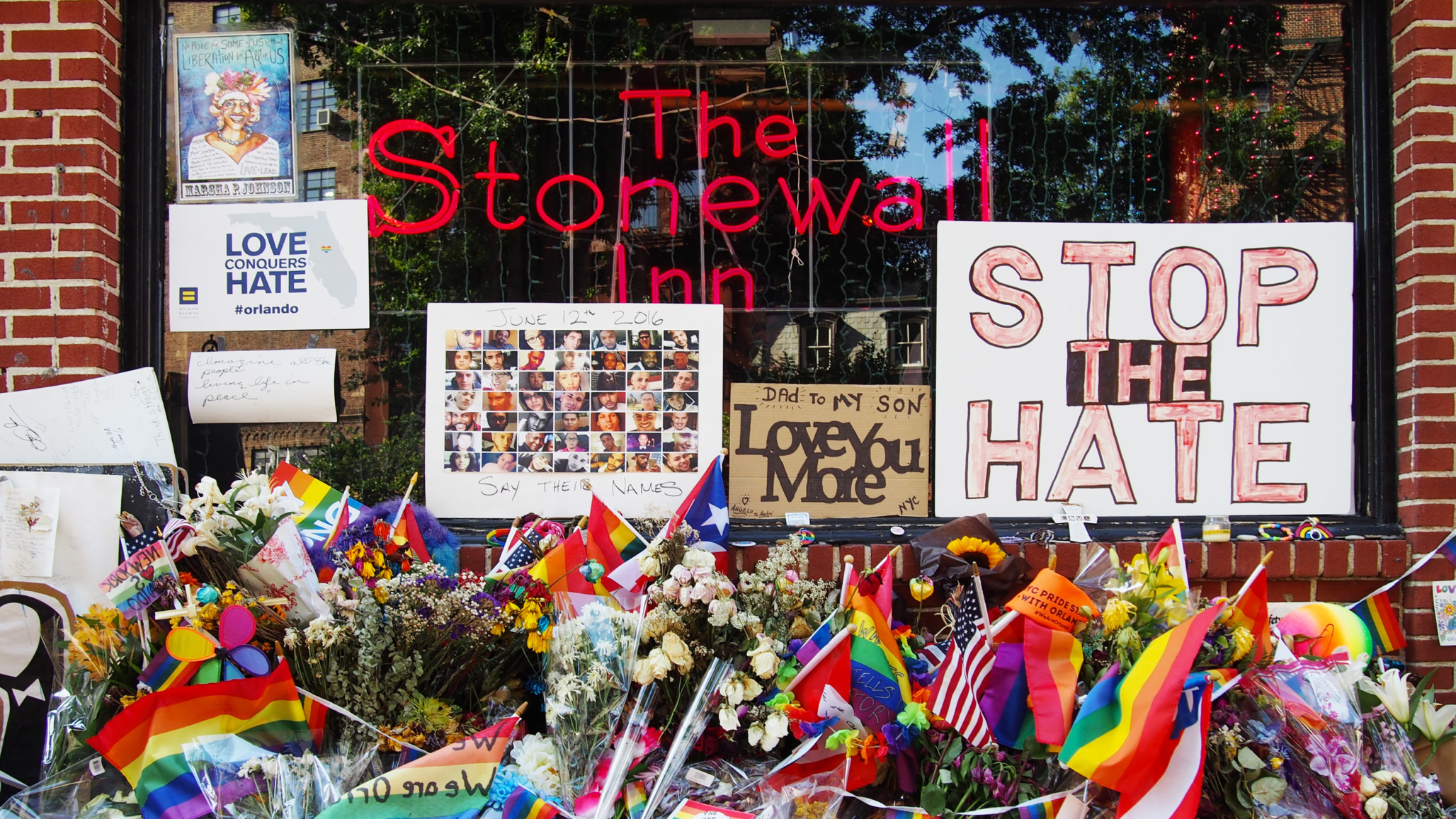
The Pride flag belongs at Stonewall. It’s that simple. For years, a strange bureaucratic knot kept the iconic rainbow banner from flying on actual federal land at the Stonewall National Monument in Manhattan. That's finally changing. The U.S. government just cleared the path to return the rainbow pride flag to the monument, ending a long-standing frustration for activists and locals who felt the site’s soul was being managed by technicalities rather than its history.
If you’ve visited Christopher Park recently, you’ve seen flags. But there’s a catch most people don't realize. The flags you see are usually on the perimeter, often on city-managed land or fences, not the specific federal soil overseen by the National Park Service (NPS). This wasn't an accident. It was the result of a messy overlap of city, state, and federal jurisdictions that made flying a "non-official" flag a legal headache. Now, the Department of the Interior has stepped in to fix the map. For an alternative view, consider: this related article.
Why the flag disappeared in the first place
You'd think a monument dedicated to LGBTQ+ history would naturally fly the most recognizable symbol of that movement. It doesn't always work that way with the feds. When President Barack Obama designated the Stonewall National Monument in 2016, he created the first national monument dedicated to LGBTQ+ rights. It was a massive win. But the moment the ink dried, the lawyers moved in.
The National Park Service has strict rules about what flags can fly on federal poles. Usually, it's the Stars and Stripes and nothing else. Back in 2017, there was a brief moment where a Pride flag was raised on a federal flagpole at the site. It was hailed as a historic first. Then, almost immediately, the Trump administration’s Interior Department backtracked. They claimed the flagpole wasn't actually on federal land, but on city property. They handed over the maintenance of that specific pole to the city to avoid the "precedent" of flying a Pride flag on federal grounds. Further analysis on this matter has been shared by The Washington Post.
It felt like a slap in the face to many. The community saw it as a tactical retreat to avoid showing official government support for the movement at its most sacred site. Since then, the flag has flown, but it's been technically "off-property" or handled by the New York City Department of Parks and Recreation. It was a compromise that satisfied nobody.
Fixing the boundary lines
The recent breakthrough isn't just about a piece of fabric. It’s about land. The federal government is basically redrawing the lines to ensure the area where the flagpole sits is officially part of the National Monument’s federal footprint. By doing this, they're taking responsibility for the flag. It means the United States government, as an institution, is choosing to fly the rainbow.
This matters because symbols reflect values. When you stand in front of the Stonewall Inn, you’re standing at the site of a 1969 uprising that changed the world. It’s where trans women of color, drag queens, and street kids decided they’d had enough of police harassment. To have the federal government say, "We’ll host the monument, but we won't fly your flag on our dirt," felt hollow. Correcting the boundary is the government finally catching up to the reality of the streets.
The struggle for permanent recognition
Stonewall isn't a typical national park. It's not a vast wilderness like Yellowstone. It's a tiny patch of green in a crowded neighborhood, surrounded by bars, apartments, and history. Managing it requires a level of cooperation between the NPS and the City of New York that most parks don't deal with.
For years, the Pride flag stayed up because of a "partnership." The city kept the pole, and the feds kept the grass. But that arrangement was fragile. It depended on who was in the Mayor’s office and who was in the White House. By bringing the flagpole into the federal fold permanently, the Biden-Harris administration is trying to "bulletproof" the flag’s presence. They want it to be much harder for a future administration to just tear it down because of a policy shift.
What this means for visitors
If you’re planning a trip to Greenwich Village, the experience will feel more cohesive. You won't need a map of property lines to know where the monument starts and ends. The flag will be there, official and authorized.
- The Location: Christopher Park, specifically the area across from the Stonewall Inn.
- The Symbolism: This is the first time a Pride flag will be permanently flown on land owned and managed by the National Park Service.
- The Impact: It sets a precedent for other sites, like the Pulse Nightclub memorial or future LGBTQ+ landmarks.
Some critics argue that the government shouldn't be in the business of flying "special interest" flags. They're wrong. The National Park Service exists to tell the American story. You can't tell the story of Stonewall without the rainbow flag any more than you can tell the story of the Alamo without a Texan flag. It’s about historical accuracy and respect for the people who fought the battles that made the monument necessary.
The bigger picture of LGBTQ+ landmarks
We're seeing a shift in how the U.S. commemorates its difficult history. For a long time, national monuments were about "great men" or natural wonders. Now, we're acknowledging the sites of civil unrest and social revolution. Stonewall led the way, but it's not the only one.
The flag’s return is part of a broader effort to diversify the National Park System. People often forget that the NPS also manages sites like the César E. Chávez National Monument or the Belmont-Paul Women’s Equality National Monument. These places aren't just parks; they're active political statements. They say that these struggles were central to the American experience.
What happens now
The paperwork is moving. The boundary revisions are being finalized. You’ll see the official flag-raising soon, and it’ll likely be a massive event for the community. It’s a chance to celebrate a victory that was honestly overdue.
If you want to support these efforts, don't just look at the flag. Visit the monument. Take the walking tours offered by the NPS rangers. Understand that the 1969 riots weren't a polite protest—they were a messy, violent, and necessary reaction to oppression. The flag is the celebration, but the monument is the reminder of the cost of that celebration.
Keep an eye on the Federal Register for the official land transfer notices. It’s boring legal reading, but it’s the engine of change. Support local groups like the Greenwich Village Society for Historic Preservation, who keep the pressure on both the city and the feds to keep these stories alive. The flag is going back up because people refused to let the issue drop. That's exactly the spirit of Stonewall.