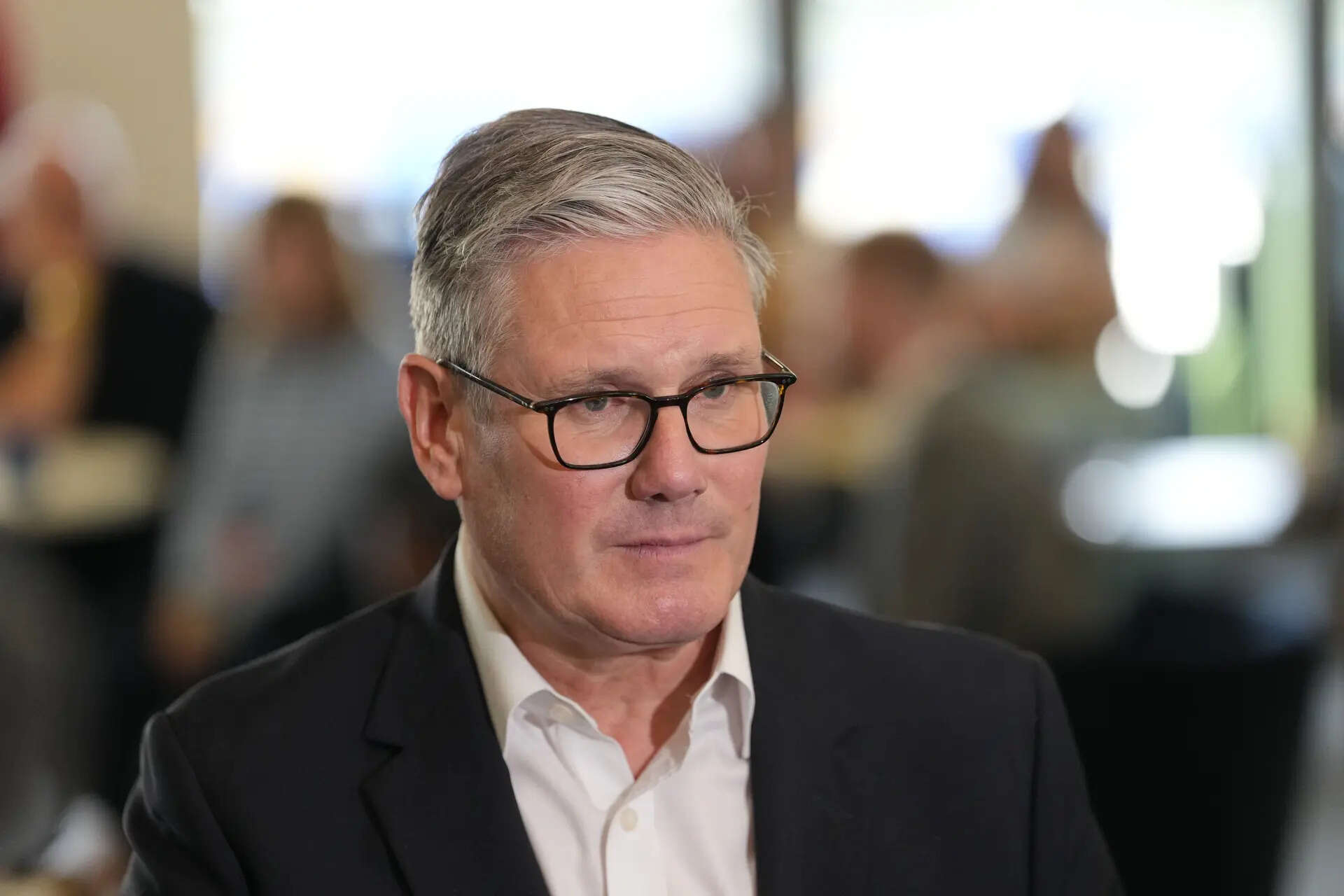
Keir Starmer is backed into a corner, and he’s reaching for the one lever he promised he wouldn't pull quite this hard: the European Union. After a bruising set of local election results that saw Labour’s red wall crumble in places nobody expected, the Prime Minister is suddenly "full-throated" about getting closer to Brussels. It's a massive gamble. For a leader who spent years terrified of the "B-word," this sudden pivot to placing Britain at the "heart of Europe" smells like a last-ditch effort to find a spark for a stagnant economy.
The timing isn't accidental. Over 60 of his own MPs are reportedly whispering—or shouting—about leadership challenges. Four government aides have already walked out the door. The message from the voters was blunt: "Where is the change we were promised?" Starmer’s answer is a "bold" reset with the EU, but he’s still trying to dance around his own red lines. He wants the benefits of the club without paying the membership fees, and it’s unclear if anyone in Brussels or Britain is buying it anymore.
The Youth Experience Scheme and the End of Isolation
Starmer’s headline act is the Youth Experience Scheme. He’s framing this as a way to give back the opportunities "snatched away" from young people after Brexit. Basically, it would allow 18-to-30-year-olds to live and work across the EU, with reciprocal rights for Europeans coming here. On paper, it’s a win. Businesses are desperate for staff, and young voters are the most disillusioned with the current status quo.
But there’s a catch. The EU doesn't do "half measures" well. They’ve already signaled that if Starmer wants this mobility, he might have to look at university tuition fees. Brussels wants EU students to pay the same rates as Brits. That’s a massive fiscal hole for UK universities that have become addicted to high international fees. Starmer says he’s being "bolder," but if he can’t settle the bill, this flagship policy might end up as another bit of "mood music" that never actually plays.
Trading Cows for Cooperation
While the youth scheme grabs the headlines, the real work is happening in the unglamorous world of agriculture. We’re looking at a potential deal worth up to £5.1 billion for the British economy. The goal is to slash the mountain of red tape that’s been strangling UK farmers since we left the single market.
There’s been a minor breakthrough here. Brussels seems willing to let the UK keep its ban on live animal exports, even if we align with other EU food standards. This is a rare concession. Usually, the EU insists on "dynamic alignment"—meaning if they change a rule, we have to change ours too. Starmer is trying to sell this as a "Swiss-style" arrangement. You pick and choose where you align to get better market access.
It sounds great in a speech. In practice, it means the UK loses its "independent" trade policy piece by piece. For the Reform UK crowd and the hard-line Brexiteers, this is a betrayal. For the pro-EU lobby, it’s a pathetic half-step. Starmer is trying to occupy a middle ground that's rapidly disappearing.
The AI Risk and the Regulation Trap
There's a hidden danger in this "reset" that the tech sector is already screaming about. Britain has carved out a decent niche in AI by being less restrictive than the EU. Our current approach is seen as "pro-innovation," while the EU’s AI Act is a beast of a regulation.
If Starmer pushes for "closer ties" and regulatory alignment to help the manufacturing or chemicals sectors, the tech industry fears they’ll be collateral damage. You can't be "at the heart of Europe" while moving in the opposite direction on the most important technology of the century. If we align with EU regulations to make it easier to export cheese, we might accidentally throttle our most promising AI startups. It’s a trade-off Starmer hasn’t addressed, and his critics are starting to notice.
The Leadership Crisis Under the Surface
Let’s be honest: this isn't just about trade. It's about survival. The local election losses were a disaster. When aides to Wes Streeting and Angela Rayner start resigning and calling for "new leadership," the writing is on the wall. Starmer’s "Europe reset" is an attempt to change the narrative. He’s trying to move the conversation from "why did we lose those council seats?" to "look at this multi-billion pound deal I’m negotiating."
But he’s stuck in a paradox:
- To fix the economy, he needs the Single Market.
- To join the Single Market, he needs to bring back Free Movement.
- If he brings back Free Movement, he loses the next general election.
So he talks about being "at the heart of Europe" while promising he won't join the single market or the customs union. It’s a linguistic gymnastic feat that would make a circus performer blush. Even the European Movement UK, which should be his biggest cheerleader, is calling him out. They’re saying you can’t be at the "heart" of something if you’re standing outside the door.
What Happens Next
The summer summit with the EU is the "make or break" moment. If Starmer comes back with a signed deal on agriculture and the youth scheme, he might buy himself some time. It would be a tangible "win" he can point to. If the talks stall over tuition fees or "dynamic alignment," the calls for him to step down will become a roar.
You should watch the "red lines" closely. If the government starts softening its stance on "free movement" by calling it "enhanced mobility" or something equally vague, you’ll know the pivot is real.
If you’re a business owner or a young professional, don't wait for the grand "reset" to solve your problems. The implementation of any mobility scheme isn't expected until 2027 at the earliest. For now, the best move is to keep an eye on the specific sector deals—like the emissions trading and electricity agreements—which have more immediate impact on costs than the grand political posturing. Starmer is fighting for his life, and he’s using the EU as his shield. Whether that shield holds or shatters is the only story that matters in Westminster right now.