Stop treating St David’s Day like a quaint excuse to pin a leek to your lapel and eat a Welsh cake.
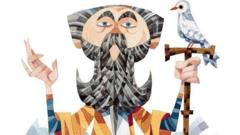
The sanitized, postcard version of Dewi Sant—the gentle monk who made a hill rise under his feet so people could hear him preach—is a total fabrication designed to make a radical ascetic digestible for the modern masses. If David showed up to a parade in Cardiff today, he wouldn't be smiling for selfies. He’d be screaming at you to throw away your beer, burn your silk tie, and stop eating meat.
The "Ten Things to Know" lists floating around the internet are fluff. They focus on the yellow daffodils and the red dragons. They ignore the brutal, bone-dry reality of a man who was essentially the first hardcore environmentalist of the British Isles.
The Myth of the Gentle Monk
Mainstream history loves to paint patron saints as grandfatherly figures. It’s a lie. David was a "Waterman"—a Aquaticus. While his contemporaries were busy fermenting ale and enjoying the relative comforts of monastic life, David was enforcing a regime that would make a modern Navy SEAL weep.
The rule of David wasn’t about "community spirit." It was about total sensory deprivation. He banned the use of animals in farming. Think about that for a second. In the 6th century, refusing to use an ox to plow your field wasn’t a "lifestyle choice." It was a death wish. It meant the monks had to pull the plows themselves.
He didn't do this because he was "nice" to animals. He did it because he believed human labor was the only way to achieve spiritual purity. He was an extremist. He stayed awake while others slept, stood in ice-cold water to recite scripture, and lived on a diet of bread, salt, and herbs. No wine. No cider. No comfort.
If you want to truly celebrate St David, put down the lamb cawl. St David would have considered your Sunday roast an abomination.
The Leek Is a Combat Badge Not a Garnish
We’ve turned the leek into a joke. We wear plastic versions of it or bake it into quiches.
The legend says David told Welsh soldiers to wear leeks in their hats to distinguish themselves from the Saxons in battle. Whether that specific skirmish happened is historically murky, but the symbolism is what matters—and we've lost it. The leek wasn't a symbol of "Welshness" in a vague, warm-fuzzy way. It was a battlefield identifier. It was about visual clarity in the middle of a bloodbath.
By turning it into a cute accessory, we strip the grit out of the history. David wasn't interested in cultural branding. He was interested in survival and distinction. He wanted his people to be recognizable by their discipline and their refusal to blend in. Modern Wales uses the leek as a greeting card; David used it as a tactical advantage.
The "Hwyll" Delusion
People love to talk about hwyll—that uniquely Welsh fervour or spiritual longing—especially on March 1st. They frame it as this magical, effortless emotion.
I’ve spent years studying the geography of early Celtic Christendom, and I can tell you: there was nothing "effortless" about what David built. He founded twelve monasteries in an era where "travel" meant potentially being slaughtered by marauding tribes or dying of exposure in the Cambrian Mountains.
The "lazy consensus" is that David was a popular, beloved figure who effortlessly drew crowds. The reality? He was a disruptor. He was likely a nightmare to deal with if you were a local chieftain or a monk who wanted a glass of mead after a long day of tilling the soil. He demanded total submission to a vision of austerity.
The Miracle of Llanddewi Brefi Was a PR Masterstroke
The most famous story about David is the ground rising up at the Synod of Brefi. The standard take is: "He was so holy the earth moved for him."
The contrarian take? David was a master of optics.
At a time when the Pelagian heresy—the "dangerous" idea that humans could achieve salvation without divine grace—was threatening the established church, the Synod was a power struggle. David didn't just "show up." He was summoned because the other bishops couldn't shout loud enough.
Whether the hill actually rose or he just had the best acoustic positioning in the valley is irrelevant. The event was a consolidation of power. It established the Welsh church as a distinct, formidable entity that didn't need to bow to external pressures. He wasn't just a preacher; he was a politician who knew how to command a landscape.
Why Your Celebrations Are Hollow
Every year, companies "leverage" (to use their corporate speak) St David’s Day to sell themed merchandise. They talk about "Welsh values."
If we actually followed David’s values, the Welsh economy would collapse tomorrow. We are a society built on consumption, convenience, and global trade. David’s entire philosophy was built on localization, extreme self-denial, and physical hardship.
- You want to honor the Waterman? Stop buying bottled water and start protecting the local watersheds.
- You want to honor the monk? Delete your delivery apps and cook something that didn't require an industrial slaughterhouse.
- You want to honor the leader? Stop looking for consensus and stand for something that makes people uncomfortable.
The downside to this approach is obvious: it’s miserable. It’s hard. It’s why we prefer the version of David that appears on tea towels. But don't pretend you're celebrating the man when you're actually just celebrating a caricature.
The Forgotten Radicalism of "Do the Little Things"
"Be joyful, keep the faith, and do the little things" (Gwnewch y pethau bychain).
This is the most misquoted, misunderstood line in Welsh history. We treat it like a "Live, Laugh, Love" poster. We think it means "be nice" or "tidy your room."
In the context of 6th-century monasticism, "doing the little things" was an order for obsessive, rigorous attention to detail. It was about the minutiae of the Rule. It was about how you held your tools, how you recited every syllable of a psalm, and how you treated every second of your day as a battle against sloth.
It wasn't a suggestion for a quiet life. It was a manifesto for a disciplined one.
David knew that grand gestures are easy. Anyone can march in a parade once a year. The "little things" are the daily, grueling habits that actually shape a culture. We’ve flipped his message on its head. We do the grand, loud, performative thing on March 1st and ignore the "little things"—the integrity, the discipline, the environmental stewardship—the other 364 days of the year.
The real David is gone, buried under layers of Victorian romanticism and modern tourism board spin. We don’t want the real David. He’s too demanding. He’s too cold. He’s too different from us.
But if you’re going to invoke his name, at least have the decency to admit that he would probably hate everything your celebration stands for. He didn't want a parade. He wanted a revolution of the self.
Go eat your leeks. Just don't call it a tribute.