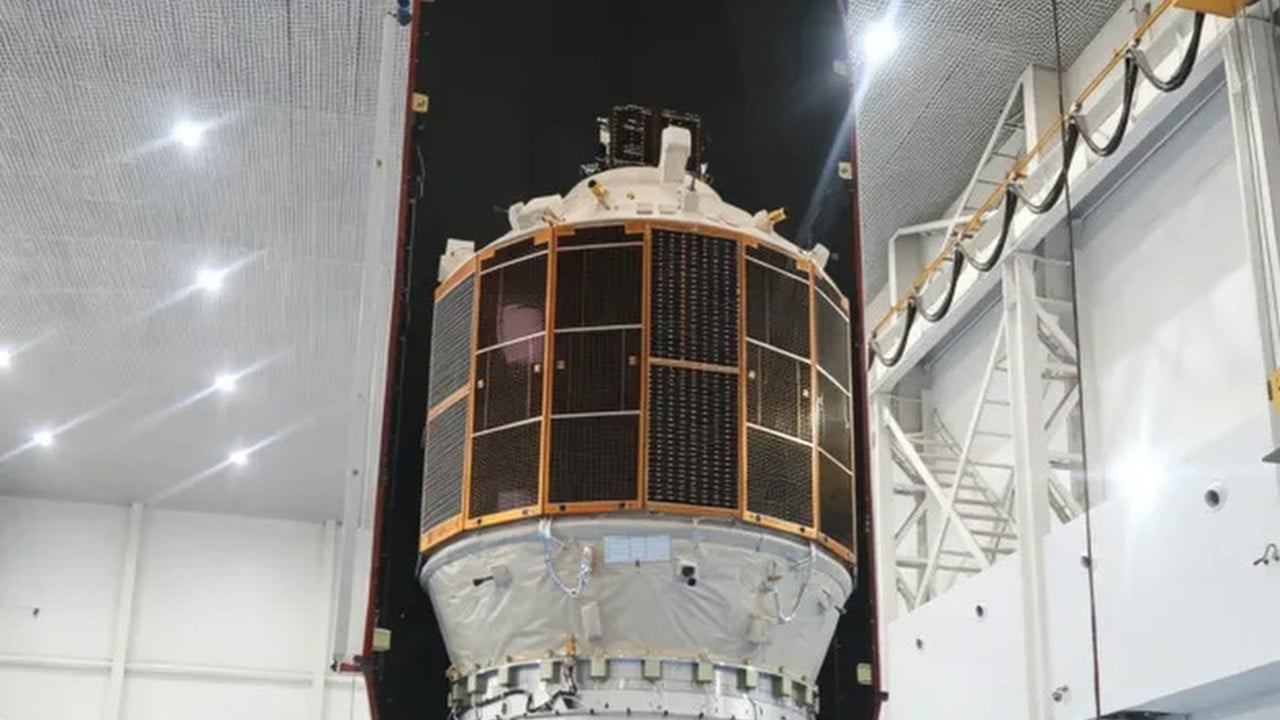
China just flexed its orbital muscles with the Qingzhou robotic craft. The mainstream press is busy applauding it as a "green" initiative for the stars. They are falling for the oldest trick in the book. This isn’t a janitorial mission. It’s a dry run for orbital dominance.
While the breathless reporting focuses on "sustainability" and "cleaning up our cosmic backyard," anyone who understands orbital mechanics and dual-use technology sees the Qingzhou for what it actually is: a sophisticated kinetic interceptor masquerading as a garbage truck. Meanwhile, you can explore similar developments here: The Shahed Quality Myth and the Brutal Logic of Disposable Attrition.
The Myth of the Orbital Janitor
The prevailing narrative suggests that space debris is a localized problem we can solve with a few clever nets and harpoons. It’s a comforting thought. It’s also wrong.
Space is big. Really big. Tracking a piece of junk the size of a marble moving at $7.8 \text{ km/s}$ is hard enough. Catching it without creating ten thousand more pieces of debris is almost impossible. The Qingzhou craft utilizes a combination of robotic arms and proximity maneuvers that the media describes as "delicate." To explore the full picture, we recommend the detailed analysis by Wired.
In the world of defense, we don’t call it "delicate maneuvering." We call it Rendezvous and Proximity Operations (RPO).
If you can pull up alongside a dead satellite to "clean it up," you can pull up alongside a live, billion-dollar GPS or communications satellite and disable it. You don’t even need a laser or a missile. A gentle nudge is enough to de-orbit a target or fry its sensitive sensors. China isn't building a sanitation department; they are perfecting the art of the approach.
The Physics of the Perfect Weapon
Let’s talk about the energy involved. Kinetic energy is defined as:
$$E_k = \frac{1}{2}mv^2$$
In Low Earth Orbit (LEO), objects are moving at speeds where even a small mass carries the punch of a freight train. The Qingzhou mission claims to "capture" debris. To do this, the craft must match the orbital plane, inclination, and velocity of the target with extreme precision.
The technical hurdles are immense. You aren't just "grabbing" something; you are performing a high-stakes dance where a fraction of a degree in error results in a collision. By funding these "cleanup" missions, the CNSA (China National Space Administration) is getting the international community to subsidize their research and development into anti-satellite (ASAT) maneuvers.
I’ve watched aerospace firms burn through hundreds of millions trying to solve the docking problem. It is the hardest nut to crack in spaceflight. When a nation-state claims they’ve solved it for the sake of "environmentalism," your skepticism should be at an all-time high.
Why Removal is a Strategic Lie
The "Lazy Consensus" dictates that we must remove old rocket bodies to prevent the Kessler Syndrome—a runaway chain reaction of collisions.
Here is the truth: Active Debris Removal (ADR) is the least efficient way to manage orbital traffic. It is expensive, risky, and technically exhausting. If we were serious about the debris problem, we would focus on Just-in-Time Collision Avoidance (JITCA)—using ground-based lasers to nudge debris paths slightly via photon pressure—rather than sending up massive, expensive robotic arms.
So why choose the robotic arm?
- Tactical Versatility: A laser can push. A robotic arm can inspect, dismantle, or redirect.
- Plausible Deniability: If a "cleanup" craft accidentally bumps into a US reconnaissance satellite, it’s a "technical glitch" during a peaceful mission. If a missile hits it, it’s an act of war.
- Dual-Use Testing: You get to test your AI-driven targeting systems in a live environment without violating international treaties against the weaponization of space.
The Transparency Trap
The Qingzhou mission is often touted for its "test" results and shared data. Don't be fooled. In the space industry, transparency is a curated performance.
China is notoriously opaque about its military-civil fusion. The Shijian-21 mission already demonstrated the ability to grab a dead satellite and tow it into a "graveyard orbit." The Qingzhou is simply the next iteration—smaller, more agile, and harder to track.
When the US Space Force tracks these movements, they don't see a trash collector. They see a "stalker satellite." If you think this is unique to China, you're naive. The US and Russia are playing the same game. The difference is that China has become masterful at wrapping its military advancements in the soft, palatable language of "Global Public Goods."
The Economic Absurdity of Space Cleanup
If you want to understand the true intent, look at the balance sheet.
Launching a mission to capture a single piece of debris costs tens of millions of dollars. The scrap value of that debris? Zero. The environmental impact of one less rocket body in a sea of millions of fragments? Negligible.
The math never adds up for a commercial venture. It only adds up for a military one.
Imagine a scenario where a fleet of these "cleaners" is stationed in LEO. On a Tuesday, they are picking up old bolts. On a Wednesday, during a conflict over the Taiwan Strait, they are "repositioning" to "avoid a collision," which coincidentally puts them within striking distance of the West’s eyes and ears in the sky.
Stop Asking if it Works; Ask Who it Threatens
The "People Also Ask" sections of the internet are filled with questions like "How does the Qingzhou capture debris?" or "Is space debris a threat to Earth?"
These are the wrong questions. They focus on the how and the what while ignoring the who.
The question you should be asking is: "Why is the world’s leading producer of new space debris suddenly so interested in cleaning it up?"
In 2007, China conducted a kinetic ASAT test that created one of the largest debris clouds in history. They haven't suddenly developed a conscience. They’ve developed a strategy. They realized that a cluttered orbit hurts everyone, but the capability to navigate that clutter and manipulate objects within it provides a definitive edge.
The Actionable Reality
We need to stop treating these missions as scientific breakthroughs and start treating them as intelligence events.
For the policy-makers and industry leaders:
- Stop providing the "Peaceful Cleanup" cover. Demand that ADR missions be monitored by international third-party observers with "all-aspect" camera access.
- Invest in JITCA. If the goal is actually safety, ground-based or space-based laser nudging is more scalable and less prone to being used as a weapon.
- Assume Malign Intent. In orbital mechanics, there is no difference between a hug and a chokehold.
The Qingzhou isn't a sign of a cleaner future. It's a sign that the high ground is being occupied by those who are willing to disguise their weapons as brooms.
Space isn't getting cleaner. It's getting more dangerous, and the Qingzhou is leading the charge under the banner of "safety." If you’re still cheering for the robot arm, you’re not watching the game; you’re watching the distraction.
The debris isn't the problem. The "janitor" is.