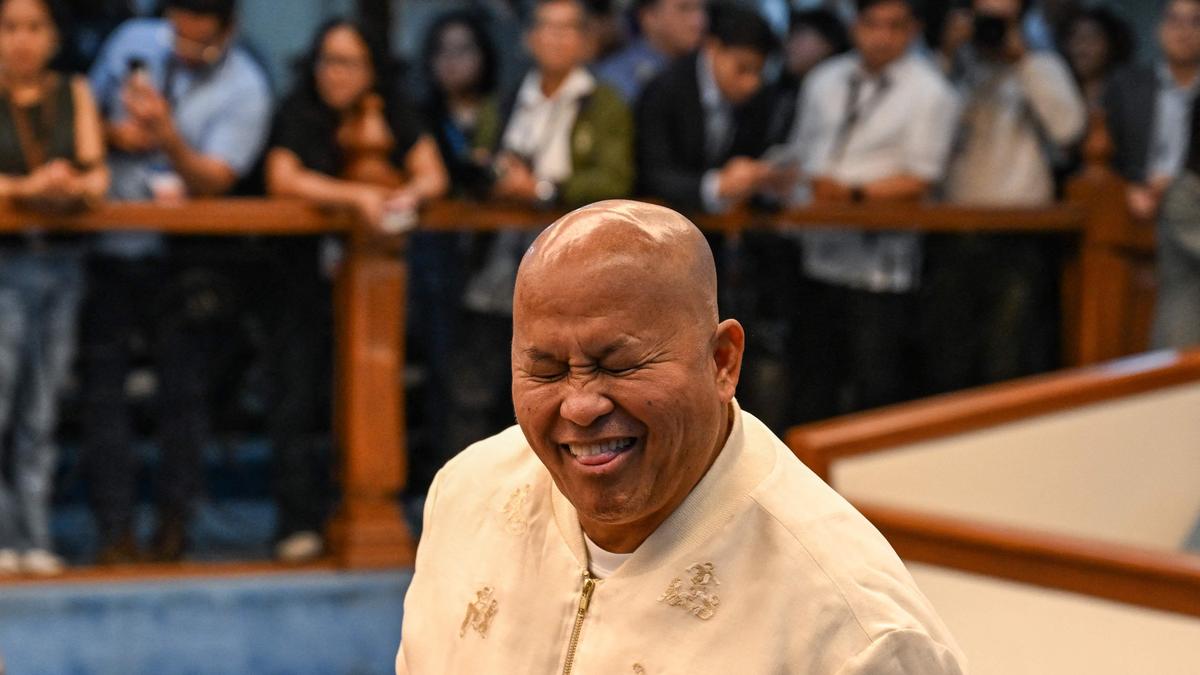
The recent departure of a high-profile senator from the Philippine Senate premises, while facing the shadow of an International Criminal Court (ICC) investigation, marks a significant fracture in the country’s judicial and legislative history. This is not merely a story about one politician avoiding a process. It is a fundamental challenge to the ICC’s reach and the Philippine government’s willingness to shield its own from international scrutiny. By exiting the legislative halls under the cover of parliamentary privilege, the lawmaker has turned a legal dispute into a high-stakes game of political survival.
At the heart of the matter lies the ICC’s investigation into alleged human rights violations committed during the previous administration’s internal security operations. While the current administration has maintained a distance from the Hague-based court, the physical flight of a sitting legislator suggests that the pressure of international warrants is becoming tangible. The move signals a desperate pivot from legal defense to political evasion, highlighting the growing tension between national sovereignty and global accountability.
The Architecture of Evasion
Parliamentary immunity was designed to protect legislators from frivolous lawsuits and political harassment so they could perform their duties without fear. It was never intended to serve as a fortress against allegations of crimes against humanity. Yet, the recent events in Manila show exactly how easily those democratic safeguards can be repurposed into tools for personal preservation. When a senator uses the sanctity of the Senate floor to launch a final defense and then vanishes before the gavel falls on their status, the institution itself suffers a blow to its credibility.
The logistics of such a departure are rarely accidental. Moving a high-profile figure past security and out of a heavily monitored government building requires coordination, timing, and a deep understanding of the blind spots in the system. This indicates that the senator’s allies are not just supporting them ideologically; they are providing the practical infrastructure needed to circumvent the law.
The ICC Shadow Over Manila
The International Criminal Court operates on the principle of complementarity. It only steps in when a national judicial system is unable or unwilling to prosecute the most serious crimes. The Philippine government argues that its courts are functioning perfectly, rendering ICC intervention unnecessary. However, the spectacle of a lawmaker fleeing the very building where laws are made provides a powerful counter-argument for the prosecutors in the Hague. It suggests a domestic environment where political power still outweighs judicial process.
The investigation focuses on specific periods and specific actors, but the implications cover the entire political class. If one senator falls, the precedent is set. This creates a collective incentive for those in power to obstruct the ICC at every turn. The flight from the Senate is a physical manifestation of that obstruction.
The Cost of the Standoff
Beyond the immediate political drama, this incident creates a dangerous precedent for the rule of law. When a member of the elite can bypass the standard legal procedures that apply to every other citizen, the social contract begins to fray. The message sent to the public is clear: accountability is for the powerless, while the powerful have exits and backdoors.
This strategy of avoidance also carries a heavy diplomatic price. The Philippines is currently trying to position itself as a reliable partner in regional security and global trade. Engaging in a prolonged, visible battle with an international court—and allowing its officials to flee legal scrutiny—undermines the image of a stable, rules-based democracy. Foreign investors and diplomatic allies watch these spectacles and see a legal system that is still subject to the whims of influential personalities.
Internal Power Dynamics
The departure also exposes cracks within the Senate itself. Not every legislator is comfortable with the chamber being used as a sanctuary. There is a quiet, brewing resentment among members who believe the institution’s reputation is being sacrificed to protect an individual. The leadership faces an impossible choice: uphold the tradition of protecting their own or cooperate with legal mandates and risk a political civil war within the coalition.
We are seeing a shift in how political battles are fought in the Philippines. It is no longer just about winning elections or passing bills; it is about staying out of reach of an international warrant. This shift changes the nature of legislative work, turning policy discussions into defensive maneuvers.
The Geopolitical Ripple Effect
The ICC is often criticized for focusing heavily on developing nations, and the Philippine government has leaned into this narrative of "judicial colonialism." By framing the investigation as an attack on Filipino sovereignty, the embatched senator and their supporters are attempting to wrap a personal legal problem in the national flag. It is a classic populist tactic: transform a criminal allegation into a patriotic struggle.
However, the international community's patience is not infinite. The Rome Statute, which the Philippines was once a party to, still carries weight in the eyes of many global powers. Even though the country officially withdrew from the treaty, the court maintains jurisdiction over crimes committed while the country was still a member. The physical flight of the senator does not erase the legal record; it merely adds a chapter of perceived guilt to the narrative.
The Role of Law Enforcement
Where does this leave the national police and the Bureau of Immigration? Their position is increasingly precarious. They are caught between their duty to enforce laws and the political reality of who currently holds the levers of power. If a warrant is issued, and the individual has already vanished, the blame often falls on the frontline agencies rather than the political masters who facilitated the escape.
This creates a vacuum of authority. When the public sees that the police are unable or unwilling to track down a prominent fugitive, confidence in the entire justice system evaporates. The "flight from the Senate" becomes a symbol of systemic failure, a visual proof that the law stops at the door of the elite.
Tracking the Path Forward
The senator's location may be unknown for now, but the paper trail and the political consequences remain. In an age of digital footprints and global surveillance, staying hidden indefinitely is an exhausting and expensive endeavor. It requires a constant flow of resources and a network of loyalists willing to risk their own legal standing to provide shelter.
The government’s next move will define the remainder of the current term. If they continue to shield the senator and ignore international inquiries, they risk further isolation and potential sanctions. If they move to cooperate, they face a backlash from a powerful political faction that still commands significant public support. There is no middle ground left.
The flight from the Senate was not just a departure; it was a declaration. It declared that for some, the halls of power are not a place of service, but a fortress of last resort. As the international community watches and the domestic tension rises, the question is no longer whether the senator will return, but whether the Philippine justice system can survive the damage done by their exit.
The immediate task for the Senate leadership is to conduct a full internal audit of how a member was able to slip away during a period of high alert. This isn't about the individual anymore; it’s about the integrity of the building itself. If the Senate cannot secure its own chambers, it cannot claim to be the guardian of the nation's laws. The focus must shift from the person who left to the system that allowed it to happen.