Stop Staring at the Sand
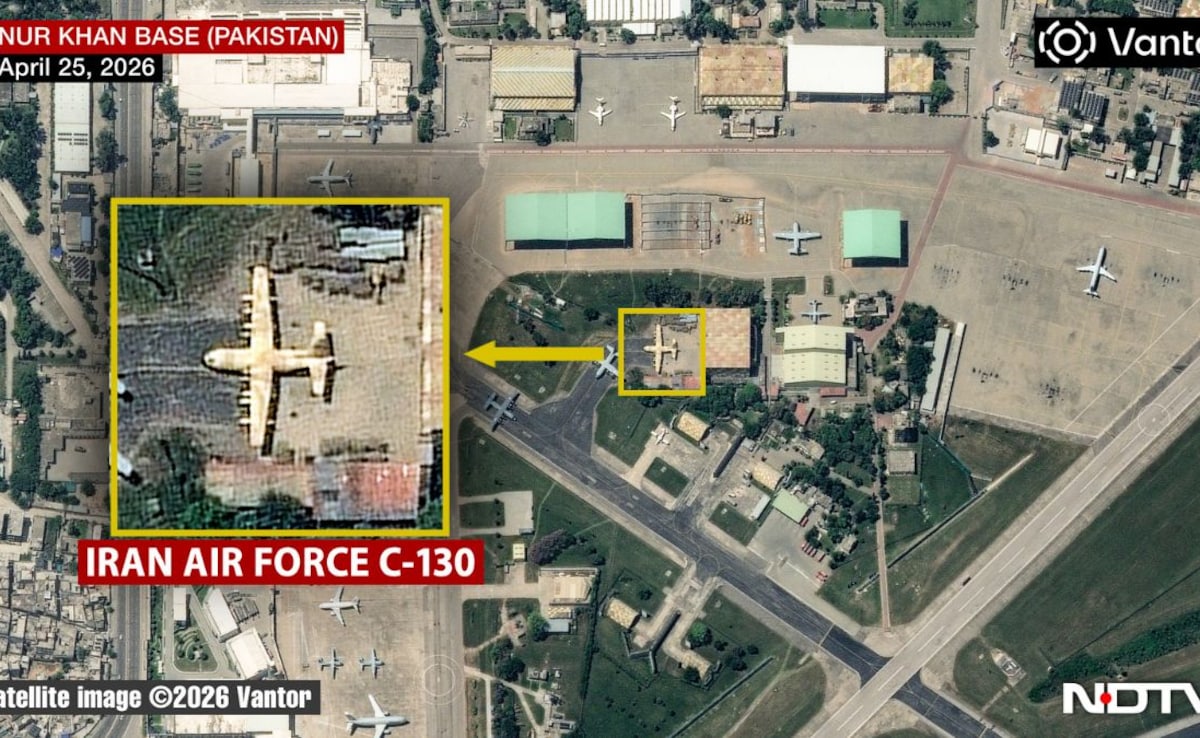
Western intelligence hobbyists and open-source analysts are obsessed with a grainy shadow in the Pakistani desert. They see a blurred wingtip on a runway near the Iranian border and scream "collaboration." They point to satellite imagery as the smoking gun of a secret regional alliance.
They are wrong.
Actually, they are worse than wrong; they are being played. If you think Pakistan is risking its fragile relationship with Washington to act as a literal hangar for Tehran’s aging air force, you don't understand how geopolitical leverage works. You are looking at a 10-cent solution to a billion-dollar distraction.
The prevailing narrative suggests that Pakistan is "shielding" Iranian military assets from potential Israeli or American strikes. This theory ignores the fundamental laws of survival in the Middle East. Why would Islamabad—currently begging the IMF for scraps and trying to maintain its F-16 fleet with American support—hand the Pentagon a reason to cut them off?
They wouldn’t. The "stealth" you think you see is actually a masterclass in atmospheric theater.
The Resolution Trap
DigitalGlobe and Planet Labs provide incredible views of the world, but they have birthed a generation of armchair generals who cannot distinguish a decoy from a deployment.
In the intelligence world, we call this the Resolution Trap.
Just because you can see a shape doesn't mean you understand the intent. Pakistan has spent decades perfecting the art of "Strategic Ambiguity." They want India to think they are closer to China. They want the U.S. to think they are essential for Iranian back-channeling. They want Iran to think they are a brotherly Islamic shield.
But look at the hardware.
Iran’s domestic jet program, like the Qaher-F313, has been a rolling punchline for a decade. It’s a fiberglass shell that looks great on a parade float but has the radar signature of a barn door and the flight characteristics of a brick. If Pakistan is "hiding" these, they aren't hiding weapons. They are hiding a liability.
The Logistics of a Lie
Let’s talk about the physical reality of moving military hardware across one of the most monitored borders on the planet.
- Fuel Chemistry: Iranian jets run on specific grades of kerosene-based fuels. Pakistan’s infrastructure is built around Western and Chinese standards. You don’t just land an F-4 Phantom or a Saeqeh in the Balochistan desert and fill it up with a garden hose.
- Maintenance Chains: Military aircraft require constant, specialized ground support. To "shield" a fleet, you need hundreds of technicians, specific diagnostic computers, and a mountain of spare parts.
- Signatures: We live in an era of MASINT (Measurement and Signature Intelligence). We aren't just looking at pictures. We are looking at heat signatures, radio frequency emissions, and even the chemical composition of the exhaust trails.
If Iran were truly staging aircraft in Pakistan, the electronic noise would be deafening. Instead, what we have is silence. A very specific, curated silence.
Why the "Shielding" Narrative Persists
The media loves a "Secret Alliance" story because it simplifies a messy reality. It creates a clear villainous bloc. But the reality is that Pakistan and Iran have a relationship defined by deep, simmering distrust.
They have traded border fire for years. They back opposing factions in proxy wars. The idea that Islamabad would provide sovereign sanctuary for Tehran’s most sensitive assets is a fantasy fueled by a lack of historical context.
Pakistan isn't shielding Iran. Pakistan is leveraging Iran.
By allowing these rumors to persist—and perhaps even parking a few decommissioned frames or high-fidelity decoys under some camouflage netting where a Maxar satellite is guaranteed to pass—Islamabad gains a seat at every table. It tells the West: "Keep the aid flowing, or we might actually start helping these guys."
The Decoy Economy
I’ve seen the same play in Eastern Europe and the South China Sea. You build a "base" out of plywood and painted canvas. You move it six inches every three days to keep the analysts busy. While the "experts" are writing 4,000-word substack posts about the shadow of a wing, you’re actually moving the real assets 500 miles in the opposite direction, or more likely, conducting a trade deal that actually matters.
The "military aircraft" spotted in recent imagery lack the support footprint of active squadrons. There are no fuel bladders. There are no security perimeters consistent with high-value air assets. There is just sand and a few shapes that happen to look like planes from 300 miles up.
Dismantling the "People Also Ask" Garbage
Q: Is Pakistan helping Iran evade sanctions?
A: Pakistan can barely keep its own lights on. Helping Iran evade sanctions involves sophisticated financial "laundering" that Pakistan’s banking system—currently under extreme scrutiny—cannot handle. If they are helping, it's in small-time border smuggling of diesel, not the high-stakes shielding of a tactical air wing.
Q: Could these be Chinese-made jets sold to Iran?
A: China doesn't need a middleman. If Beijing wants to give Iran hardware, they’ll fly it over the Caspian or ship it through Bandar Abbas. They don't need to involve a third-party nation that leaks like a sieve.
Q: Why would the satellites confirm this then?
A: Satellites don't "confirm" anything. They provide data points. Humans provide the confirmation, and humans are notoriously prone to confirmation bias. If you go looking for a secret Iranian base, you will find one in every rectangular shadow in the desert.
The Real Threat Is Your Own Boredom
The danger here isn't a secret Iranian-Pakistani air force. The danger is that Western intelligence consumers have become addicted to low-effort "Open Source Intelligence" (OSINT) that prioritizes speed over technical depth.
We are ignoring the real shifts in the region—the drone manufacturing pipelines, the cyber-security handshakes, and the soft-power debt traps—because we’d rather look at "exclusive" pictures of planes that probably don't have engines.
Stop looking for the ghost in the machine. Pakistan is playing a game of geopolitical poker with a hand full of low cards, and the West is folding because they’re scared of the shadows on the table.
If you want to see where the real war is being prepared, turn off the satellite feed and look at the trade manifests in the ports. Look at the fiber-optic cable landings. Look at the currency swaps.
The planes are a distraction. The "shield" is a mirror. And you are staring directly into it.