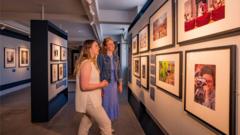
The British Royal Family has always understood that the camera is not merely a tool for documentation but a potent instrument of statecraft. As the touring exhibition Life Through a Royal Lens makes its rounds across the United Kingdom throughout 2026, visitors are invited to view over 100 images spanning from the Victorian era to the present. On the surface, this is a celebration of the evolving aesthetic of monarchy. Behind the glass, however, lies a highly engineered narrative designed to transform the human vulnerability of the royals into the untouchable aura of the institution.
Exhibitions like these are rarely objective. They are curated experiences, often produced in partnership with heritage organizations that have a vested interest in the perception of the Crown. When you walk through the halls of a venue like Blenheim Palace, you are not just looking at photographs; you are absorbing a deliberate campaign of soft power.
The Illusion of Intimacy
The primary draw for these collections is always the "behind-the-scenes" portrait. The exhibition features candid, off-duty shots intended to bridge the gap between the public and the palace. These images are specifically selected to make the subjects seem relatable. We see the family in comfortable clothing, perhaps laughing in a garden or playing with pets.
Yet, there is a distinct difference between being seen and being vulnerable. Professional photographers, even those commissioned for private sessions, work within strict boundaries set by the palace press office. These candid shots are effectively authorized leaks. They provide a controlled dose of humanity, just enough to generate warmth and affection without ever exposing the raw friction of real life. It is a calculated trade-off. You get the image of a doting parent, but you never see the logistical machinery required to maintain the image of that parent.
The Evolution of the Controlled Image
The exhibition tracks a fascinating shift in how the monarchy handles the gaze of the public. In the Victorian era, photography was stiff and formal. It served to project stability and religious duty. By the mid-20th century, the challenge shifted. The rise of tabloid media meant that the royals could no longer simply pose; they had to perform.
Think of it as a defensive strategy. When the press is constantly looking for a flaw, the institution must provide its own, safer versions of the truth. If you supply the media with high-quality, professional portraits that appear spontaneous, you effectively crowd out the intrusive paparazzi shots that might actually cause damage. The modern era of royal photography is less about art and more about managing the supply chain of perception. When contemporary photographers like Josh Shinner are commissioned, the resulting images are scrutinized by teams of advisors to ensure they align with the current brand objectives of the King and Queen.
The Curator as Gatekeeper
One aspect often overlooked is the role of the museum curators themselves. These individuals are rarely independent journalists. They work within institutions that rely on royal patronage or government grants for their survival. Consequently, the interpretation of these images is filtered through a respectful lens.
Rarely will an exhibition confront the tension between the reality of the people pictured and the myth they must uphold. For instance, the transition from the late Queen Elizabeth II to the current reign is a major theme in 2026. Exhibits frame this transition as a seamless evolution of duty. They omit the messy, internal debates about the relevance of the monarchy in a modern, cost-conscious society. By focusing on the artistic merit of the photographs, these venues avoid the harder questions about the monarchy's role in the 21st century.
A Product, Not a History Lesson
If you are planning to attend one of these stops on the tour, approach the display with a healthy dose of skepticism. The photography is undeniably beautiful. It represents the pinnacle of technical skill in portraiture, from the early pioneers to modern masters. However, remember that you are viewing a curated selection of a vast archive.
For every photo of a smiling royal on display, there are thousands of discarded frames. Those discarded images likely contained the frustration, the exhaustion, and the genuine, unpolished human moments that would have been more honest than the final, polished product. The exhibition is an invitation to consume a brand. It is an effective one, too.
The strategy relies on the audience’s desire for connection. We want to believe that the individuals behind the titles are just like us, only living in grander houses. By highlighting the photographic history, the institution reinforces the idea that the monarchy has always been a part of the national family album. It is a masterclass in marketing disguised as cultural education. If you want to understand the British monarchy, do not look at their portraits. Look at the immense effort they expend to ensure you only ever see the version of them they want you to see. The image is the institution.