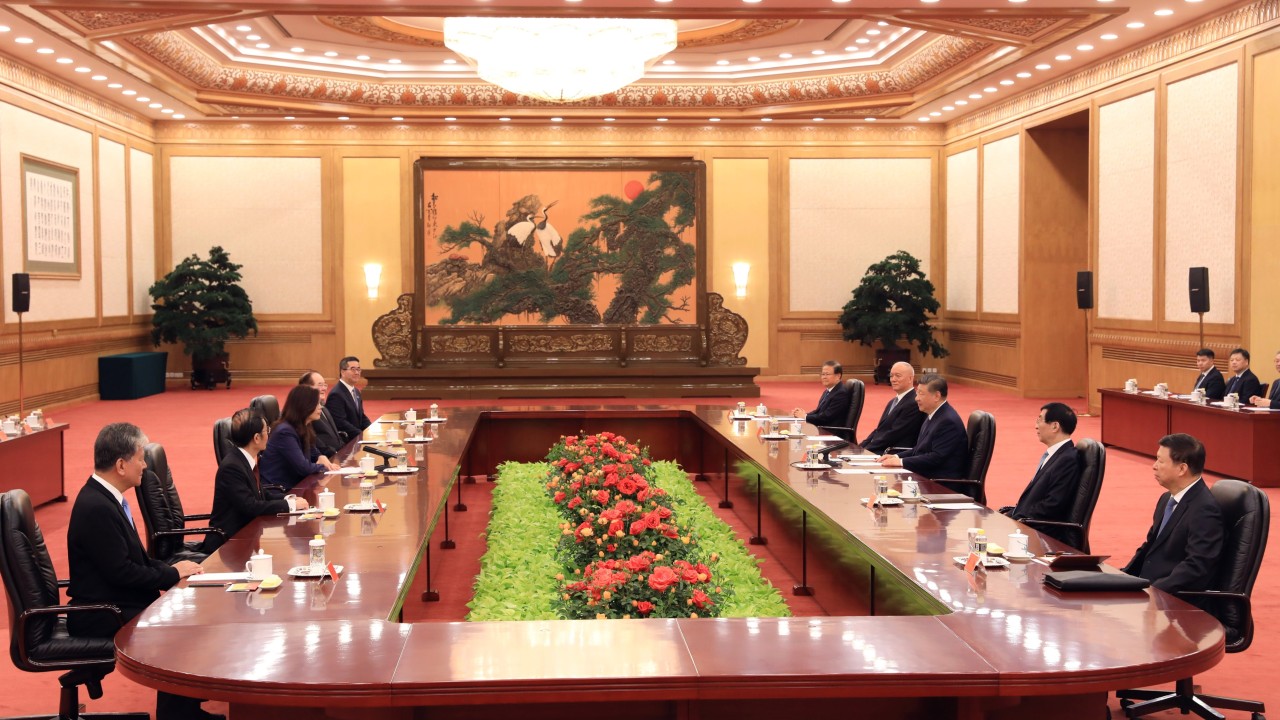
The image of a handshake in the Great Hall of the People is never just about the two people in the frame. When Chinese President Xi Jinping welcomed Kuomintang (KMT) Chairwoman Cheng Li-wun in Beijing on April 10, 2026, it marked the first such high-level contact in a decade. While the public rhetoric focused on "peaceful development" and "shared heritage," the subtext was a calculated strike at the current power structure in Taipei. Xi isn’t just talking to an opposition leader; he is auditioning a partner for a post-conflict future that Beijing views as a historical certainty.
This meeting serves as a deliberate bypass of President Lai Ching-te’s administration. By hosting Cheng with the pomp usually reserved for heads of state, Beijing is signaling to the Taiwanese electorate—and the world—that the path to stability does not run through the Democratic Progressive Party (DPP). The "why" is simple: Beijing has run out of patience with official channels that demand sovereignty as a prerequisite. Instead, they are building a shadow diplomatic track with a KMT leadership that is increasingly willing to trade military posture for economic "reconciliation."
The Strategy of Forced Irrelevance
Beijing’s strategy is to make the sitting Taiwanese government look like the only obstacle to a peaceful life. During her tour through Nanjing and Shanghai, Cheng was treated to displays of China’s technological reach, from drone deliveries at Meituan to the assembly lines of the C919 jet. The message to the Taiwanese business community was loud: prosperity is waiting, provided you have the right gatekeepers.
By engaging Cheng, Xi is effectively "ghosting" the DPP. This isn’t a sign of softening; it is a tactical isolation. If the KMT can demonstrate that it alone can lower the temperature in the Taiwan Strait, the DPP’s platform of "resilience through armament" starts to look, to a weary public, like a liability rather than a shield.
The Military Price of Admission
One of the most jarring developments from the Beijing summit was Cheng’s suggestion that she would slow Taiwan’s military buildup if the KMT returns to power in 2028. This is the "how" of the new cross-strait bargain.
- The Taiwan Dome Deficit: The KMT is currently blocking special budgets for the "Taiwan Dome," an interception system modeled after Israel's Iron Dome.
- The Deterrence Dilemma: Cheng frames this as "deterrence through dialogue." Critics call it unilateral disarmament.
- The Shift in Tone: For decades, the KMT balanced "One China" with a "Republic of China" identity. In Nanjing, Cheng mentioned the "Republic of China" once, but her Beijing remarks were heavily seasoned with Communist Party terminology like the "great rejuvenation of the Chinese nation."
This shift suggests that the price for a seat at the table in Beijing is no longer just acknowledging a vague 1992 Consensus. It now requires an active alignment with Xi’s domestic narrative.
A Chessboard With Three Players
It is impossible to view this meeting without looking at the calendar. Xi is scheduled to meet with U.S. President Donald Trump in the coming weeks. By securing a public commitment to "anti-independence" from Taiwan's largest opposition party now, Xi enters those talks with a powerful argument. He can tell Washington that the "Taiwan problem" is an internal Chinese matter that the Taiwanese themselves—at least the "sensible" ones—want to solve without American "meddling."
The timing is a masterstroke of geopolitical optics. Xi is using Cheng to present a "peaceful" alternative to the U.S. narrative of a pending invasion. If the opposition in Taiwan is willing to talk, the U.S. looks like the aggressor for continuing to ship Harpoon missiles and MQ-9 drones to the island.
The Grassroots Gamble
However, Cheng’s gambit is a high-stakes internal risk. While she was being feted in Beijing, protesters back in Taipei were calling the trip "subservient." The KMT’s own grassroots members are divided. Local elections are looming later this year, and the party’s historical "pro-China" label has been a toxic asset in the voting booth for nearly a decade.
Cheng is betting that the fear of war will eventually outweigh the fear of Beijing. She is gambling that by 2028, a public exhausted by military drills and soaring defense spending will choose the "systemic solutions" she promised Xi.
The Sovereignty Trap
The Mainland Affairs Council in Taipei was quick to point out the fundamental flaw in Cheng's "one family" rhetoric. By framing the dispute as an internal disagreement between relatives, she strips Taiwan of its status as a self-governing entity in the eyes of international law. This is exactly what Beijing wants. Once the conflict is "domesticated," the threshold for international intervention rises significantly.
The "peace" being offered in the Great Hall of the People isn't a peace of equals. It is a peace predicated on the slow erosion of the very institutions that allowed Cheng to be elected chairwoman in the first place.
The Hard Truth of the Handshake
Ultimately, the Xi-Cheng meeting didn't "temper" cross-strait ties; it weaponized them. It provided a blueprint for how Beijing intends to dismantle Taiwanese resistance from the inside out. By creating a parallel diplomatic reality where the DPP does not exist, Xi is forcing the Taiwanese people into a binary choice between economic integration and military confrontation.
The handshake was a demonstration of leverage. Xi has it, and Cheng is hoping to borrow some of it to win an election two years away. Whether the Taiwanese public sees this as a lifeline or a noose will determine the fate of the island long before the first shot is ever fired. The real danger isn't that the talks failed—it's that they succeeded in creating a version of "peace" that looks remarkably like a surrender.