The ceasefire is a polite fiction. While diplomats in Islamabad trade drafts of a ten-point peace plan, the reality on the water is a total maritime strangulation that has effectively removed Iran from the global ledger. The United States didn’t just warn of fresh strikes this week; it operationalized a blockade that makes previous "maximum pressure" campaigns look like a bureaucratic slap on the wrist. By sealing the Strait of Hormuz to all traffic entering or exiting Iranian ports, Washington has pivoted from a war of attrition to a terminal economic siege.
This is not about a single nuclear facility or a rogue missile site anymore. It is about a fundamental redesign of the Persian Gulf power structure.
The Blockade Beyond The Map
Unlike traditional naval cordons, the current U.S. blockade, enforced by CENTCOM since April 13, lacks a defined geographic boundary. Pentagon officials have made it clear that interdiction can happen anywhere in international waters. This creates a "gray zone" of maritime risk that has already spiked insurance premiums to levels that effectively ban trade for any neutral vessel.
The strategy is simple: make the cost of doing business with Tehran higher than the value of the cargo itself.
- The $435 Million Drain: Analysts estimate the blockade is costing the Iranian treasury roughly $435 million every single day.
- The China Factor: Beijing, which buys over 90 percent of Iran's oil, is the silent target of this maneuver. By forcing Chinese tankers to choose between Iranian crude and access to the U.S. financial system, Washington is testing the limits of the "no-limits" partnership.
- The Grace Period Trap: While the UK Maritime Trade Operations reported a "grace period" for neutral vessels to depart, the window is closing. Any ship remaining is now a target for boarding or kinetic engagement.
The Power Vacuum In Tehran
The recent strikes of Operation Epic Fury did more than destroy 60% of Iran’s ballistic missile launchers. They eliminated the regime’s ideological anchor. With the death of the Supreme Leader on February 28, the appointment of Mojtaba Khamenei has not signaled stability, but rather a desperate consolidation.
The son is inherited a burning house.
The internal legitimacy of the regime was already fracturing during the January 2026 protests. Now, with the military’s ability to replenish its stockpiles severely degraded, the new leadership is forced to negotiate from a position of unprecedented weakness. The 10-point plan proposed by Tehran—which demands reparations and control over the Strait—is being treated in Washington as a fantasy. President Trump’s demand for "unconditional surrender" may be rhetorical flair, but the military pressure on the ground supports a total capitulation model.
The Fragility Of The Islamabad Talks
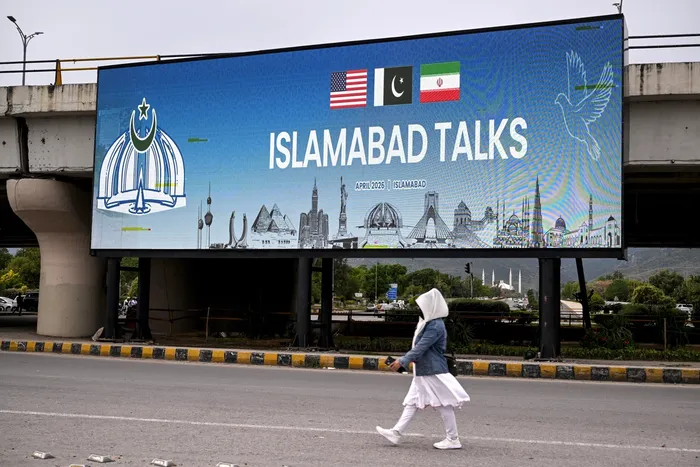
Pakistan’s role as a mediator is a logistical necessity, not a diplomatic preference. Islamabad provides a neutral ground for Vice President JD Vance’s team to deliver ultimatums without the optics of a formal summit.
The "Islamabad Illusion" is the belief that a temporary ceasefire can lead to a permanent settlement while the blockade remains in place. Iran cannot breathe with the Strait of Hormuz closed, and the U.S. will not open the Strait until the nuclear and regional proxy programs are dismantled. It is a perfect deadlock.
Current intelligence suggests the U.S. has already identified "Phase 2" targets if the April 17-19 talks fail. These are not military bunkers. They are energy hubs and domestic infrastructure—the bridges and power plants that keep the Iranian state from total internal collapse.
Global Economic Fallout
The world is feeling the squeeze. In the UK, secret government analysis under "Exercise Turnstone" has already mapped out food and CO2 shortages. Tokyo’s markets are swinging wildly on every rumor of a breakthrough.
This volatility is the price of the "new Middle East."
Washington has calculated that a short-term global energy shock is preferable to a long-term nuclear Iran. The release of 400 million barrels of oil by the International Energy Agency is a temporary cushion, but it cannot replace the million-plus barrels of Iranian crude currently trapped behind the U.S. naval line.
The Strategy Of No Return
The United States is no longer interested in returning to the status quo of 2025. The current operations are designed to ensure that even if a deal is signed, Iran emerges as a mid-tier regional power with no capacity for "extra-territorial" influence.
The military strikes were the opening act. The blockade is the main event.
If the negotiations in Pakistan fail this weekend, the next escalation will not be a series of warnings. It will be the systematic dismantling of Iran's remaining industrial capacity. The U.S. has positioned its carrier strike groups and land-based assets to pivot from blockade enforcement to total infrastructure suppression in a matter of hours.
The talks aren't hanging in the balance. They are being held at gunpoint.