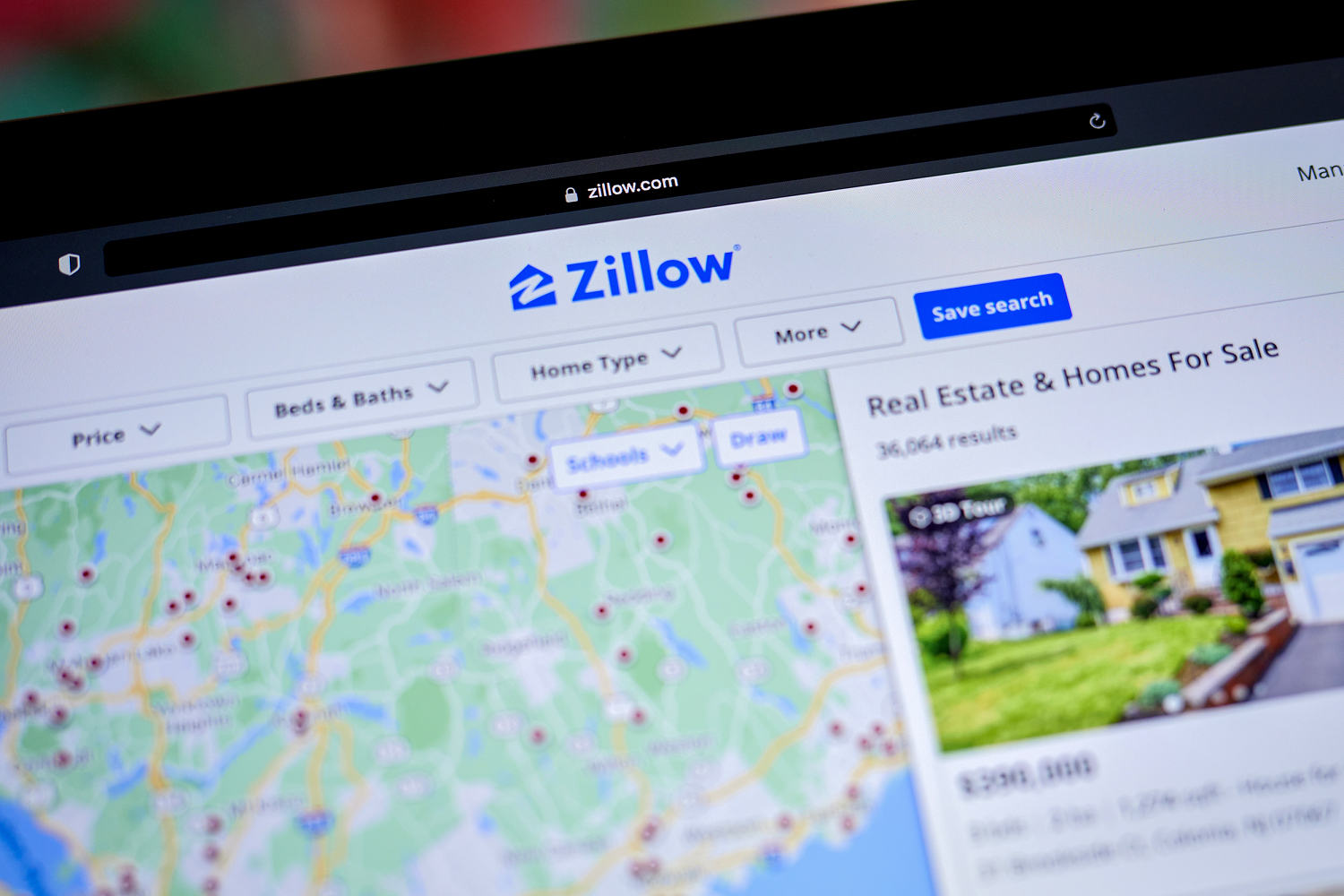
The residential real estate industry is obsessed with a ghost. For years, the narrative from Seattle to Wall Street has been the "seamless transaction"—a digital utopia where buying a home is as easy as ordering a latte on your phone. Jeremy Wacksman and the leadership at Zillow are betting the farm on this "Super App" vision. They want to integrate search, financing, touring, and closing into one tidy ecosystem.
It sounds logical. It sounds modern. It is fundamentally wrong. Don't forget to check out our previous coverage on this related article.
Real estate is not a commodity. It is a high-friction, emotionally volatile, illiquid asset class defined by scarcity and local gatekeepers. Trying to "Uber-ize" the home purchase ignores the reality of how humans actually make the largest financial decision of their lives. The more Zillow tries to digitize the soul out of the transaction, the more they distance themselves from the actual point of sale.
The Myth of the One-Stop Shop
The "Super App" strategy rests on a flawed premise: that consumers want a monogamous relationship with a single platform. In reality, home buyers are professional flirts. They use Zillow for the UI, Redfin for the data speed, Realtor.com for the accuracy of local listings, and then they hire a cousin’s friend to actually negotiate the deal. If you want more about the context here, Reuters Business provides an excellent summary.
Wacksman’s vision assumes that by owning the top of the funnel (search), Zillow can gravity-feed those users into their mortgage and title services. This is "funnel math" practiced by people who have never sat across a kitchen table from a panicked seller at 9:00 PM on a Sunday.
Integration doesn't solve for trust. It solves for convenience. But when you are dropping $500,000, convenience is a distant fourth on your priority list behind price, certainty, and protection.
Why Vertical Integration Fails in a Fragmented Market
Look at the wreckage of the iBuying experiment. Zillow Offers was supposed to be the ultimate expression of the tech-enabled transaction. It failed because algorithms cannot price the nuance of a cracked foundation in a specific zip code better than a local specialist.
Now, the pivot is to "software-enabling" the transaction. But real estate remains a localized, artisanal business. Every state has different laws. Every municipality has different quirks. By trying to build a national "seamless" layer, tech giants create a "middle-management" tax that adds cost without necessarily stripping away the headaches.
- The Mortgage Problem: Despite having a massive audience, Zillow's mortgage capture remains a fraction of their total traffic. Why? Because when it comes to debt, people shop for rates and reliability, not "integration."
- The Agent Problem: Zillow is caught in a classic innovator’s dilemma. They need agents to pay for leads, yet their long-term vision effectively marginalizes those same agents. You cannot disrupt a partner you are simultaneously trying to tax into oblivion.
The Illusion of the Seamless Transaction
We’ve been promised a "one-click" closing for a decade. It’s not happening. Not because the technology doesn't exist, but because the friction is the point.
The legal and financial hurdles of a real estate transfer—notaries, title searches, escrow, inspections—exist as safeguards. When you remove friction from a high-stakes environment, you increase risk. The "next revolution" isn't about making the process faster; it should be about making it more transparent and less predatory.
Zillow’s current trajectory optimizes for the platform's take-rate, not the consumer’s equity. By bundling services, they are essentially recreating the "walled gardens" of the old-school brokerage models, just with better CSS and a mobile app.
The Data Trap
The industry treats the "Zestimate" like a holy relic, but it’s really just a marketing tool. Data is not a strategy; it is a commodity. As AI makes data processing cheaper and more accessible, the value of having a big database of houses drops toward zero.
The real value in the next decade won't be in who has the best search filters. It will be in who controls the inventory.
If you don't own the dirt, you're just a glorified advertising agency. Zillow is a media company that desperately wants to be a fintech company, yet it refuses to acknowledge that the power in real estate still resides with the person who holds the keys and the person who brings the capital.
The Counter-Intuitive Truth
The most successful real estate companies of the next decade won't be the ones that try to do everything. They will be the ones that do one thing with surgical precision.
Imagine a scenario where a company ignores the "Super App" bloat and focuses entirely on solving the liquidity crisis—making it possible for people to trade homes without the six-month lag. That doesn't require a lifestyle app; it requires a new financial instrument.
Wacksman and his peers are building a better digital brochure. They are perfecting the "look" of real estate while the actual mechanics of the industry—commissions, inventory shortages, and interest rate sensitivity—remain largely untouched by their "revolution."
The Death of the Generalist Platform
We are entering the era of the specialist. Buyers are getting smarter. They know that "bundled services" usually means "hidden fees."
The "lazy consensus" says that convenience wins every time. But real estate is the one industry where that rule breaks. You don't want a "convenient" brain surgeon, and you don't want a "convenient" $1 million debt obligation. You want the best. And "the best" is rarely found in a generic, all-in-one ecosystem designed by committee in a tech hub.
The disruption won't come from an app that puts a "Buy Now" button on a house. It will come from whoever figures out how to lower the cost of entry for the next generation of buyers who are currently locked out by the very systems Zillow seeks to "optimize."
Stop waiting for a "revolution" from the companies that profit most from the status quo. The more they talk about "seamlessness," the more they are trying to distract you from the fact that the actual cost of buying a home has never been higher, and their tools haven't done a single thing to lower it.
The "Super App" isn't a solution for the consumer. It's a retention strategy for shareholders.
Real estate is messy. It's loud. It's local. It's human. Any tech executive who tells you they can automate that complexity into a "seamless" mobile experience is either delusional or selling you something.
Build for the friction. Don't try to hide it.