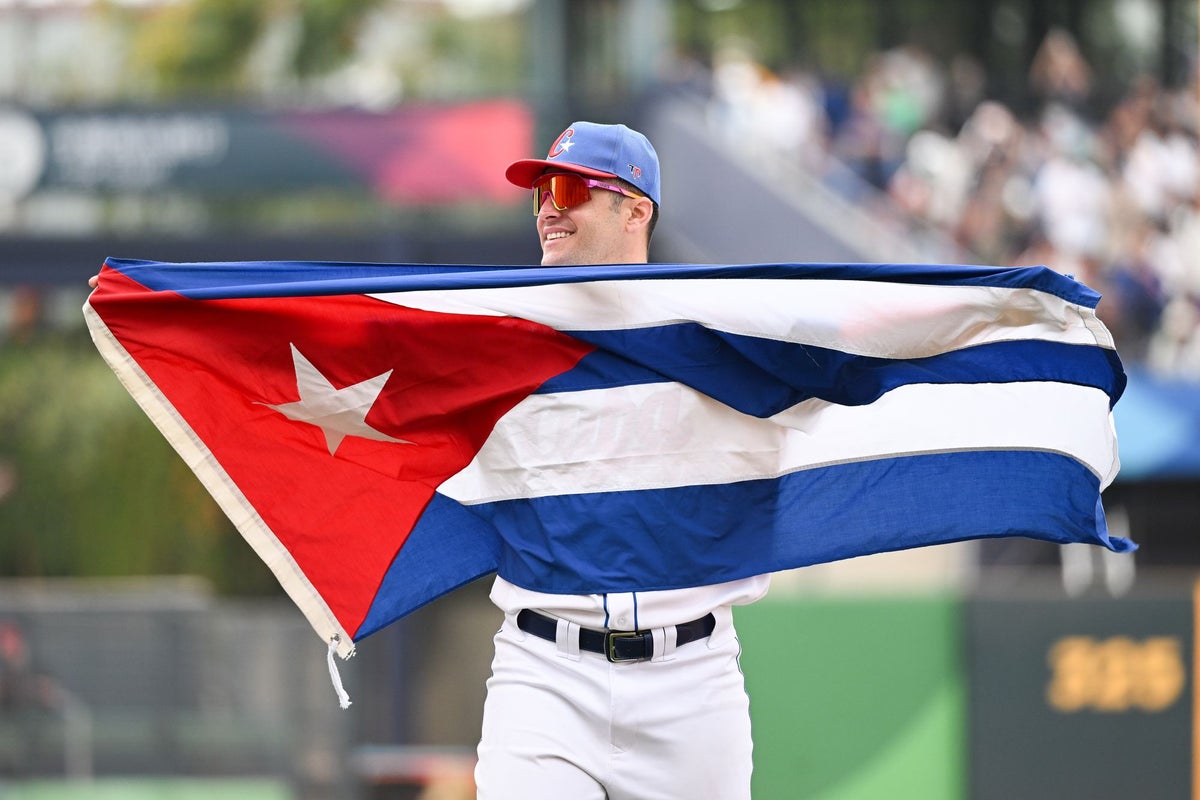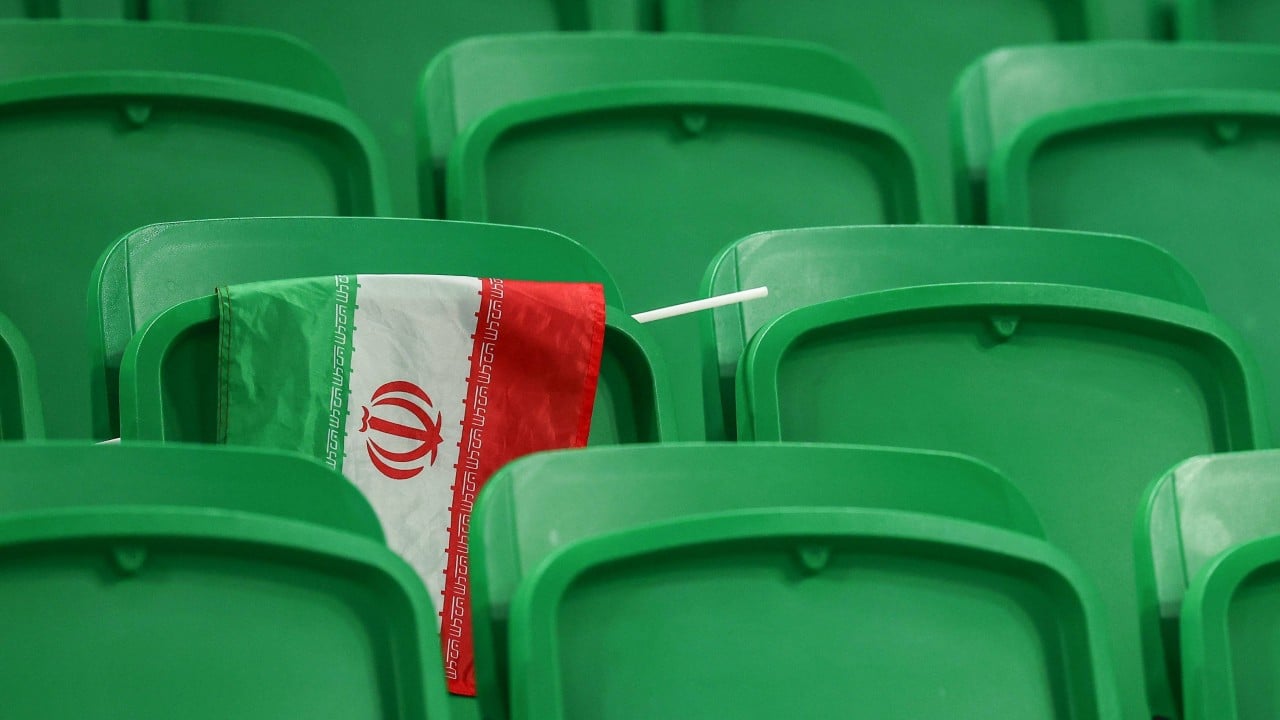
The Iranian Football Federation is currently staring at a logistical and diplomatic nightmare that could see Team Melli absent from the 2026 World Cup, even if they dominate every qualifying match on the pitch. While the tournament is technically a global celebration of sport, the reality of its primary host, the United States, presents a thicket of visa restrictions and political sanctions that Tehran is increasingly convinced it cannot navigate. Federation President Mehdi Taj has recently voiced what many in Asian football circles have whispered for months: the path to North America is blocked by more than just athletic competition.
The core of the crisis lies in the fractured diplomatic relationship between Washington and Tehran. Because the United States does not have a formal embassy in Iran, every player, coach, and staff member must travel to a third country—usually Turkey, Armenia, or the UAE—just to begin the visa application process. For a squad of fifty or more individuals, this is not just an inconvenience. It is a security and administrative gauntlet that the Iranian government views with deep suspicion.
The Visa Weapon and the FIFA Charter
FIFA likes to pretend that football exists in a vacuum, shielded from the messy realities of international relations. Their statutes explicitly forbid government interference in sport and mandate that host nations must provide entry to all qualifying teams. However, the 2026 World Cup is a unique beast. Spread across the United States, Canada, and Mexico, the tournament relies on the sovereign immigration laws of three different nations.
The U.S. Department of State maintains strict "Extreme Vetting" protocols for Iranian nationals. In the past, this has led to high-profile snubs. Members of Iran's wrestling and volleyball teams have frequently been denied entry for international competitions held on American soil, often at the eleventh hour. When a star striker is denied a visa because of a mandatory military service record tied to the Islamic Revolutionary Guard Corps (IRGC), the team's competitive integrity evaporates.
Iran's concern is that the U.S. will use administrative delays as a soft power tool. By the time a visa is "pending," the tournament is over. Taj’s recent comments are a calculated move to force FIFA’s hand. He wants guarantees that FIFA currently cannot give. FIFA cannot override federal U.S. law, and the White House is unlikely to waive security screenings for a nation it classifies as a state sponsor of terrorism, regardless of how well they can kick a ball.
Financial Paralysis and the Sanctions Trap
Even if the visas are granted, the Iranian Football Federation faces a second, more quiet death: financial strangulation. Under current U.S. primary and secondary sanctions, moving money into or out of Iran is nearly impossible through the global SWIFT banking system. This has created a bizarre situation where FIFA is sitting on millions of dollars in "development funds" and prize money owed to Iran, which it cannot legally transfer.
How does a national team compete on the world stage when it cannot pay for chartered flights, five-star hotels, or world-class training equipment?
- Frozen Assets: Iran currently has an estimated $20 million to $30 million locked in FIFA and AFC accounts.
- Sponsorship Void: Global brands like Adidas or Nike are wary of kit deals that could trigger Department of the Treasury investigations.
- Logistical Costs: Without direct flights or standard banking, every away match costs Iran three times the market rate due to the need for "middleman" agencies.
The federation is effectively bankrupt while being technically wealthy. They are forced to rely on government handouts in a domestic economy already bucking under the weight of inflation and internal unrest. This financial starvation isn't just a hurdle; it’s a systemic failure that prevents the team from preparing at an elite level.
The IRGC Shadow over the Pitch
The most significant "hidden" factor in this standoff is the mandatory military service in Iran. Almost every male athlete in the country must serve. For many, this service is conducted within the IRGC. In 2019, the U.S. designated the IRGC as a Foreign Terrorist Organization (FTO).
This creates a legal paradox for U.S. immigration officers. Under Section 212 of the Immigration and Nationality Act, anyone who has provided "material support" to a designated terrorist group—even via mandatory conscription—can be deemed inadmissible. For a 24-year-old midfielder who spent his service playing for an IRGC-affiliated club or performing clerical work in an IRGC office, the dream of playing in Los Angeles or Miami is legally dead before it begins.
The U.S. government has rarely shown an appetite for making exceptions for athletes. In 2022, a friendly match between Canada and Iran in Vancouver was canceled following intense political pressure and concerns over the Iranian government's involvement in the federation. If Canada, which generally has a more flexible immigration policy than the U.S., found the optics too toxic, the 2026 organizers face an uphill battle.
A Federation Under Internal Fire
While Mehdi Taj points the finger at Washington, he is also fighting a rearguard action at home. The Iranian Football Federation is often criticized for its lack of transparency and its proximity to the hardline elements of the state. Following the 2022 World Cup in Qatar, where players were caught between supporting domestic protests and following state orders, the national team has become a lightning rod for political tension.
Critics argue that the federation uses the "visa threat" as a convenient excuse for its own mismanagement. If the team fails to qualify or if preparations are a disaster, they can blame "Western arrogance" rather than their own inability to secure a top-tier coach or organize quality friendlies. It is a narrative that plays well with the domestic base but does nothing to help the players on the grass.
There is also the question of the fans. The Iranian diaspora in the United States and Canada is massive. A World Cup featuring Iran in cities like Los Angeles—home to "Tehrangeles"—would be a security nightmare for the Iranian government. They fear defections, mass protests in the stands, and the sight of thousands of fans wearing "Woman, Life, Freedom" shirts on a global broadcast. In a strange way, the Iranian leadership might actually find a "forced" withdrawal more politically convenient than a participation they cannot control.
The Swiss Neutrality Gambit
If there is a solution, it involves a neutral intermediary, likely Switzerland or Qatar, acting as a diplomatic and financial clearinghouse. There have been discussions about establishing a "sporting corridor" where visas are processed in a dedicated stream and funds are released via third-party escrow accounts to pay for tournament expenses directly.
However, this requires a level of cooperation between the U.S. State Department and Tehran that hasn't existed in years. FIFA President Gianni Infantino has a history of cozying up to world leaders to solve such problems, but the 2026 World Cup is too large and the U.S. legal system too rigid for a simple handshake deal.
The precedent being set here is dangerous for the future of the World Cup. If the host nation can effectively veto a participant through visa delays, the "universal" nature of the game is compromised. Yet, from the American perspective, national security and the enforcement of sanctions take precedence over a football tournament.
The Clock is Ticking
Qualifying rounds are already underway. The logistical planning for a World Cup begins years in advance. If the Iranian federation cannot secure a written guarantee of entry and a mechanism to access their funds by the end of 2025, the risk of a formal withdrawal or a FIFA-imposed suspension grows.
This isn't just about football. It is about whether a global institution like FIFA can still function in a world defined by "de-risking" and sanctions. For the players, it is a heartbreaking reality: they are among the best in Asia, but they may be sidelined by a conflict they didn't start and a bureaucracy they cannot defeat.
The Iranian federation's leadership is currently playing a high-stakes game of diplomatic chicken. They are betting that the prospect of a World Cup without one of Asia's most popular teams will embarrass FIFA enough to force a concession from the U.S. government. It is a desperate bet. Washington has shown time and again that it is perfectly comfortable with the optics of exclusion if it means maintaining the integrity of its sanctions regime.
Move the money or move the tournament. That is the unspoken demand coming out of Tehran. FIFA, caught in the middle, has no easy answers and even less leverage. The 2026 World Cup was supposed to be the moment football finally "conquered" North America, but for Team Melli, the continent remains an unreachable fortress.
Federation officials are now looking at the Asian Cup and other regional tournaments as their only guaranteed stages. The "doubt" Taj expressed isn't just a headline—it’s a recognition that the political climate has finally outpaced the sport’s ability to adapt.
Start tracking the Department of State’s public notices regarding athletic exemptions for the 2026 cycle; that is where this story will ultimately be decided.