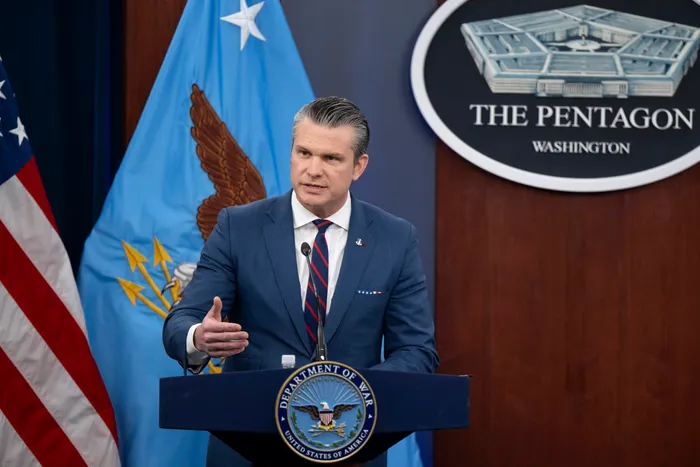
Pete Hegseth just took the culture war to Sunday school. During a recent public appearance, the prospective Secretary of Defense decided to reach for the New Testament to frame his relationship with the press. He didn't just call them biased. He didn't just call them "fake news." He compared reporters to the people who wanted Jesus dead.
It’s a bold move. It’s also a calculated one. Hegseth isn't just venting; he’s speaking a specific language to a specific audience that views the media not as a watchdog, but as a secular antagonist to traditional values. When you equate a White House correspondent with the Pharisees or the Roman authorities, you aren't arguing about facts anymore. You're arguing about good and evil.
Why the Religious Rhetoric Matters Right Now
The timing isn't an accident. Hegseth has been under a microscope. Between questions about his lack of traditional government experience and scrutiny over past personal conduct, the pressure is on. Most politicians would hire a crisis PR firm. Hegseth, instead, went for the pulpit.
By invoking the Bible, he achieves two things immediately. First, he signals to the base that he’s one of them. He’s a "believer" being "persecuted." Second, he makes any criticism of him feel like an attack on the faith itself. It’s a classic defensive crouch wrapped in a leather-bound cover.
It works because it taps into a deep-seated feeling of alienation. Many people feel the mainstream media treats religious convictions as a punchline. Hegseth knows this. He’s leaning into that resentment. He’s telling his supporters that the reporters asking about his background aren't just doing their jobs—they’re modern-day versions of the enemies of Christ.
The Problems with Biblical Parallelism
The issues here aren't just theological. They're practical. When a high-ranking official—or someone seeking a massive role like leading the Department of Defense—starts using "enemies of God" rhetoric for the domestic press, it changes the rules of engagement.
Democracy depends on a certain level of friction between the government and the people who report on it. It’s supposed to be uncomfortable. It’s not supposed to be a holy war. If every tough question from a journalist is framed as a betrayal of spiritual truth, then accountability becomes impossible. You can't fact-check a miracle, and you can't debate a man who thinks his critics are literally doing the devil's work.
Think about the implications for the military. The Secretary of Defense oversees millions of people. Some are religious. Some aren't. Some are journalists in their off-time or have family members who are. When the leader of that institution starts using language that paints a segment of the American public as inherently "the enemy" based on a biblical analogy, it risks the very cohesion the military needs.
Breaking Down the Scripture Hegseth Uses
Hegseth often leans on themes of "spiritual warfare." This isn't just a metaphor for him. In his book The War on Warriors, he argues that the military has been "feminized" and "secularized." He views himself as a crusader meant to restore a specific type of masculine, Christian dominance to the ranks.
When he compares the media to the enemies of Jesus, he's likely referencing the religious leaders of the time—the people who obsessed over the letter of the law while missing the spirit. In his mind, the media’s obsession with vetting his past or checking his credentials is just "legalism" meant to stop a righteous movement.
It’s a convenient way to sidestep tough questions. Don't want to talk about your lack of management experience? Just say the "Pharisees" in the media are trying to trip you up. Don't want to address specific allegations? Compare yourself to a figure who was famously silent before his accusers.
The Media’s Role in This Mess
Let's be real for a second. The media doesn't always help itself. If reporters approach Hegseth with an obvious bias or an air of superiority, they’re basically handing him the script for his next speech. He needs the media to be the villain.
If the press behaves like an "enemy," his biblical analogies feel more "true" to his followers. The trap is set. If the media goes too hard, they prove his point. If they go too soft, they aren't doing their jobs.
The only way out for the press is to stay laser-focused on the policy and the math. Stop getting offended by the "enemy of Jesus" talk and start asking about the budget for the F-35 or the logistics of troop movements in Eastern Europe. You can't argue with a man about his faith, but you can definitely argue with him about a multi-billion dollar defense budget.
What This Means for the Future of the Pentagon
If Hegseth is confirmed, we're looking at a Pentagon that speaks a very different language. Usually, the DoD is the land of acronyms and dry briefings. Under Hegseth, it could become a theater for the culture war.
- Internal Culture: Expect a push toward "traditional" values that might clash with current DEI (Diversity, Equity, and Inclusion) initiatives.
- Media Relations: The "enemies of Jesus" comment suggests a very hostile relationship with the press pool. We might see fewer briefings and more direct-to-camera addresses.
- Recruitment: This rhetoric appeals to a specific demographic. It might help with recruitment in some areas while alienating others.
It’s a gamble. Hegseth is betting that the American people are tired of "professional" politicians and want a "warrior" who isn't afraid to use the Bible as a shield. But the Pentagon isn't a church, and it isn't a TV studio. It’s a massive bureaucracy that requires a steady hand and a respect for the institutions—including the press—that keep it in check.
How to Watch This Move
Keep an eye on how Hegseth handles the next round of questioning. If he doubles down on the religious metaphors, it means he’s decided that his only path to power is through the base. He isn't trying to win over the middle. He isn't trying to convince the skeptics in the Senate. He’s trying to make himself "un-fireable" by tying his political fate to the religious identity of his supporters.
The press needs to stop taking the bait. Every time a headline screams about Hegseth’s "blasphemy" or "shocking" religious claims, it serves his purpose. It’s noise. The signal is his actual ability to run the largest military in the world.
Don't get distracted by the Bible verses. Look at the policy. Look at the track record. The Bible is a big book; you can find a verse to justify almost anything if you look hard enough. What you can't find is a verse that manages a global logistics chain or navigates a nuclear standoff.
Demand specific answers on military readiness. Ignore the theological grandstanding. Focus on the fact that the Secretary of Defense is a civilian role meant to provide oversight, not a religious office meant to lead a crusade. If the public and the press can't make that distinction, the next few years at the Pentagon will be less about defense and more about a sermon no one asked for.