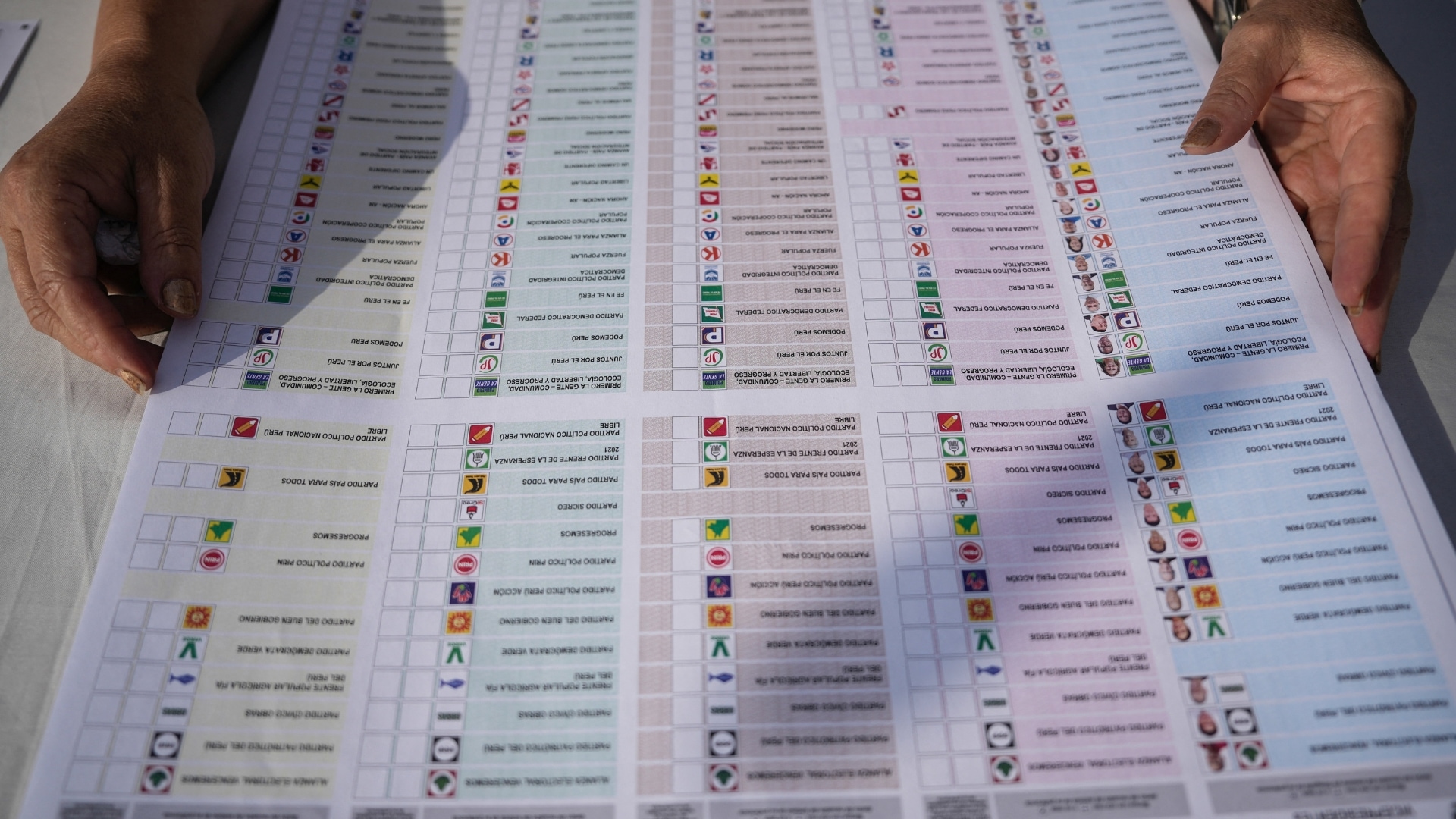
Peru’s political scene is a mess, but it’s a mess that’s finally starting to show some shape. After years of revolving-door presidencies and a homicide rate that’s essentially doubled since 2019, voters aren’t looking for hope or "change" anymore. They want order. They want someone to stop the extortion gangs and the street violence that’s making daily life a nightmare.
Early official counts from the Oficina Nacional de Procesos Electorales (ONPE) show a clear trend: the right wing is winning. With about 40% of the votes processed, Keiko Fujimori is sitting at roughly 17.17%, while her rival on the far-right, former Lima Mayor Rafael López Aliaga, is breathing down her neck with 16.97%. You might also find this connected story useful: Fico and the New Hungarian Leadership are Rewriting the Central European Playbook.
If you’re looking at these numbers and thinking they seem low, you’re right. In a field of over 30 candidates, the "lead" is barely more than a sliver. But in Peru’s two-round system, a sliver is all you need to make it to the June 7 runoff.
The Iron Fist is the Only Policy That Matters
Forget about nuanced economic white papers. This election is being fought on one thing: who can be the toughest on crime. Peruvians are exhausted. When you talk to people in Lima or Callao, they don't ask about GDP growth; they talk about the bus driver killed yesterday or the shopkeeper being extorted by international gangs. As highlighted in recent coverage by TIME, the effects are worth noting.
The candidates have noticed. You’ve got people proposing megaprisons, restricting food for inmates, and even bringing back the death penalty. It’s a "Bukele-style" fever dream that has gripped the electorate.
- Keiko Fujimori: She’s playing the "experienced hand" card. She wants to use military intelligence to hunt down gang leaders and put the army in charge of the prisons. It’s her fourth run for the presidency, and while she carries the heavy baggage of her father’s legacy, she represents a known quantity in a sea of chaos.
- Rafael López Aliaga: Often called "Porky" by both fans and detractors, he’s gone even further. He’s floated the idea of US military intervention to help capture gang leaders. He’s positioned himself as the most pro-Trump candidate in the region, betting that a hard-right, populist surge is what the country needs to "clean house."
Why the Count is Taking So Long
If you’re wondering why we don't have a final answer yet, it's because the logistics of this election were a disaster. Polling stations in Lima couldn't open on time, and thousands of people were left standing in the sun for hours.
The ONPE actually had to extend voting into Monday for over 60,000 residents in Lima and for Peruvians living in US cities like Orlando and Paterson. It’s a mess that fuels the very "institutional distrust" these candidates say they'll fix.
The reality is that Peru has had nine presidents in ten years. That is not a typo. The country has perfected the art of the presidential "vacancia" (impeachment), and the voters are cynical. They don't trust the process, they don't trust the candidates, but they’re still showing up because voting is mandatory and the fines are steep.
The Fragmented Congress Trap
Even if Fujimori or López Aliaga wins the runoff in June, they’re going to walk into a buzzsaw. For the first time in decades, Peru is returning to a bicameral system with a 60-seat Senate and a 130-seat Chamber of Deputies.
Early results suggest Congress will be just as fractured as the presidential race.
- Fuerza Popular (Fujimori's party) will likely have the biggest bloc.
- Renovación Popular (López Aliaga's party) is also set for a strong showing.
- The left, represented by parties like Perú Libre and Juntos por el Perú, hasn't disappeared; they've just been sidelined in the top-tier presidential results.
Without a working majority, the next president will spend more time fighting off impeachment attempts than actually governing. It’s a cycle Peru can’t seem to break.
What You Should Watch Next
The coming days will be about the "slow count" from the rural provinces and the votes from abroad. Historically, these can shift the needle by a percentage point or two, which is massive when the gap is only 0.20%.
Keep an eye on Carlos Álvarez, the comedian-turned-politician. While he’s currently trailing the top two, he’s been the wild card of the cycle. If his numbers spike as the final tallies come in, he could spoil the "conservative vs. far-right" runoff everyone is expecting.
If you’re invested in Peru—whether through mining stocks, travel plans, or family ties—don't expect stability anytime soon. The move to the right isn't a sign of a unified country; it’s a desperate cry for basic safety. Until the winner can actually deliver on the "security" promise without getting impeached in six months, the volatility is here to stay.
Check the ONPE website daily for the updated tally. The official proclamation of the top two candidates isn't expected for at least another week. Until then, the right-wing lead is the story, but the margin is the warning.