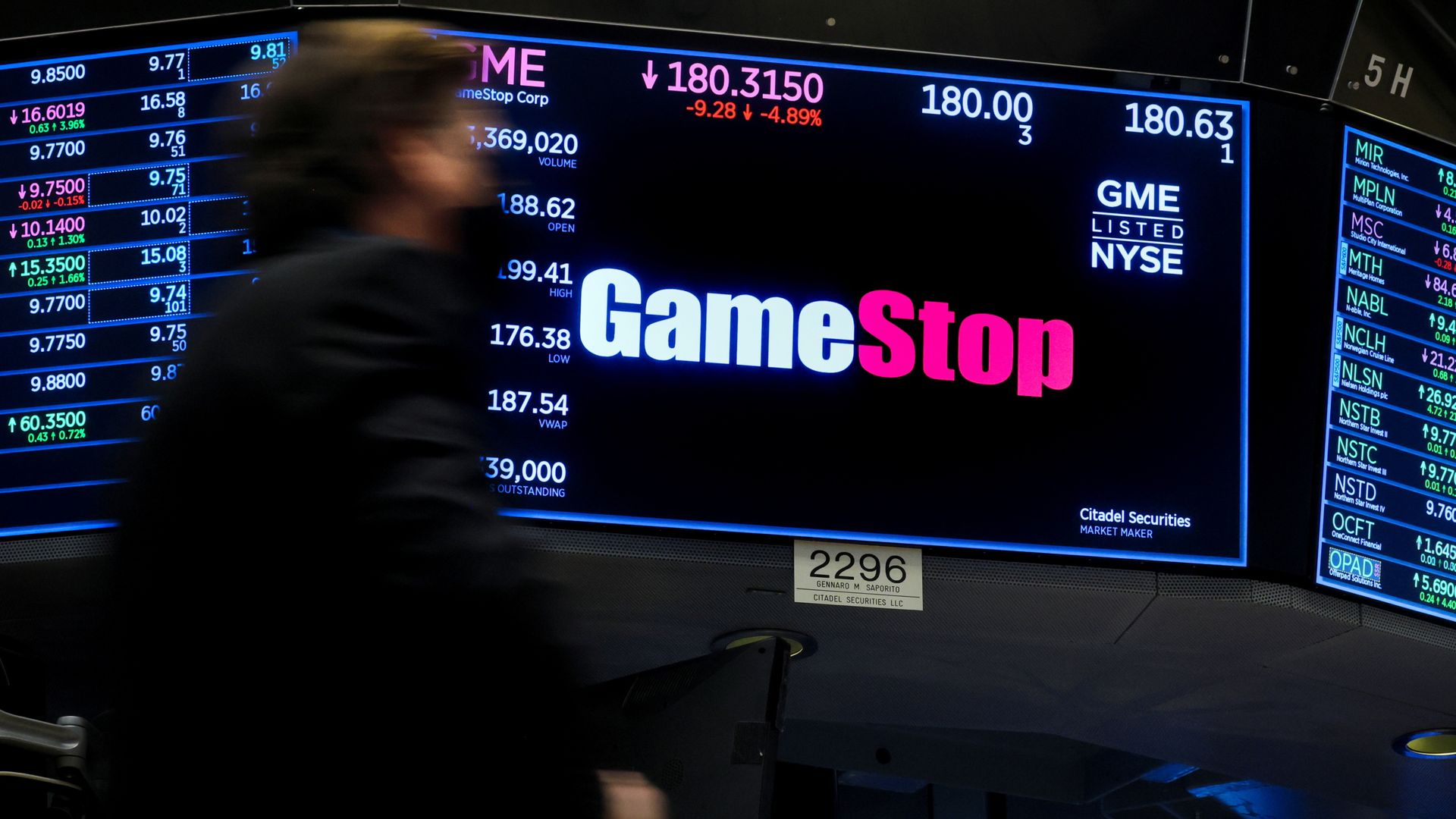
The stock tickers didn’t just tick. They screamed. In a blur of neon green pixels, the value of eBay surged upward, a violent awakening for a company that had spent the last decade settling into the comfortable, dusty role of the world’s attic. But the catalyst wasn't a new algorithm or a logistical breakthrough. It was a $56 billion handshake offered by an unlikely suitor: GameStop.
To understand the weight of this moment, you have to look past the spreadsheets. You have to look at the shelves of a suburban strip mall. Also making waves in this space: The Gilded Ghost of the Great Sea.
Think of a teenager in 2005. He walks into a GameStop with a stack of used plastic cases, hoping for enough store credit to buy a single new release. He’s met by a clerk who offers him pennies on the dollar. That teenager grew up. He learned to trade options on his phone. He joined a digital army that turned his childhood haunt into a financial fortress. Now, that same energy—the chaotic, meme-fueled, defiant spirit of the "retail investor"—is knocking on the door of the ultimate marketplace.
The Ghost in the Machine
For years, eBay functioned as the quiet backbone of the secondary economy. It was where you went to find the missing piece of a 1970s LEGO set or to sell the vintage camera you found in your grandfather’s basement. It was reliable. It was also, frankly, becoming invisible. Additional information on this are covered by The Economist.
Then came the bid.
$56 billion is a number so large it ceases to feel like money. It becomes a statement of intent. GameStop, a company that was left for dead by every analyst on Wall Street five years ago, isn't just surviving. It is hunting. By moving to acquire eBay, the brick-and-mortar chain is attempting a metamorphosis. They aren't just selling discs and plastic figurines anymore. They are trying to own the very concept of the "Used Item."
Imagine a single ecosystem where the physical trade-in counter at your local mall connects directly to a global digital auction house. This isn't just a corporate merger. It is an attempt to bridge the gap between the tactile world of things you can touch and the ethereal world of digital commerce.
The market reacted with a mixture of shock and greed. eBay shares didn't just rise; they ignited. Investors who had ignored the auction site for years suddenly saw it through a new lens. They saw a sleeping giant being poked awake by a company that thrives on volatility and populist fervor.
The Invisible Stakes of the Living Room
The real story isn't happening in boardroom meetings in San Jose or Grapevine. It’s happening in your living room.
Every time you look at a pile of things you no longer use, you are looking at dormant capital. Until now, the process of turning those things back into money was fragmented. You either drove to a physical store and accepted a low-ball offer for convenience, or you spent hours photographing, listing, and shipping items on eBay for a higher return.
GameStop’s bid is a bet that people want both. They want the high-velocity liquidity of a global market and the immediate gratification of a physical storefront.
Consider a hypothetical seller named Sarah. She has a collection of rare sneakers and a stack of old PlayStation games. In the old world, she’s running two different errands, managing two different apps, and dealing with two different sets of headaches. If this merger goes through, the friction vanishes. The "GameStop-eBay" entity becomes the central bank of the physical world.
But this ambition carries a heavy shadow.
When power concentrates this quickly, the human element often gets crushed under the weight of the "synergy." We have seen this pattern before. A titan rises, promises to make life easier, and then slowly raises the tax on our participation. The fees for sellers, the cost of shipping, the gatekeeping of what can and cannot be sold—these are the invisible costs that don't show up on a stock chart but felt deeply by the person trying to pay their rent by selling their childhood collectibles.
A Collision of Cultures
The culture clash here is staggering. eBay is the elder statesman of the internet, born in the era of dial-up and "You’ve Got Mail." It is built on a foundation of feedback scores and community trust.
GameStop, in its current incarnation, is a creature of the social media age. It is fueled by Reddit threads, short squeezes, and a relentless, almost religious devotion from its shareholders. It is loud. It is aggressive. It is unpredictable.
Watching these two entities merge is like watching a Victorian librarian marry a professional wrestler. You aren't quite sure if they will balance each other out or if the house will be leveled by the end of the honeymoon.
The skeptics are already vocal. They point to the $56 billion price tag and call it a hallucination. They argue that GameStop is overleveraging its newfound "meme wealth" to buy a business it doesn't know how to run. They fear that the technical debt of eBay’s aging platform will swallow GameStop’s remaining cash reserves.
Yet, there is a certain poetic logic to it.
The world is moving toward a circular economy. We are becoming more aware of the waste we produce. The "buy it new, throw it away" cycle is breaking. In this new reality, the companies that facilitate the "second life" of products are the ones who will hold the keys to the kingdom.
The Sound of the Gavel
As the news filtered through the trading floors, the volume of eBay trades hit levels not seen in years. This wasn't just institutional money moving around; it was the "little guy" jumping back into the fray.
For the person holding ten shares of eBay in a dusty brokerage account, today felt like a windfall. But for the small business owner who runs their entire life through an eBay storefront, today felt like a tremor. Change is coming, and in the world of high-stakes mergers, change rarely asks for permission.
The bid is still a proposal, a gauntlet thrown down in the middle of a shifting economic landscape. There will be regulatory hurdles. There will be counter-offers. There will be long nights of due diligence where lawyers pour over the fine print of twenty-year-old contracts.
But the bell has been rung.
The image that remains isn't a graph of a stock price or a logo of a corporation. It is the image of a box sitting on your porch. It represents a transition of ownership, a piece of history moving from one hand to another. For a long time, that box belonged to eBay. Now, the people who used to wait in line for midnight game releases are trying to own the box, the porch, and the very act of the exchange itself.
The hunt is on, and the hunters have more ammunition than anyone ever dared to imagine.
In the end, we are left to wonder if the soul of a community marketplace can survive being swallowed by a giant fueled by the fever dreams of the internet. We are watching the birth of a new kind of behemoth, one that trades in nostalgia and volatility in equal measure. The pixels on the screen continue to flicker, recording the moment the attic of the world was put up for auction, and the pawn shop down the street decided it was finally time to buy the whole neighborhood.