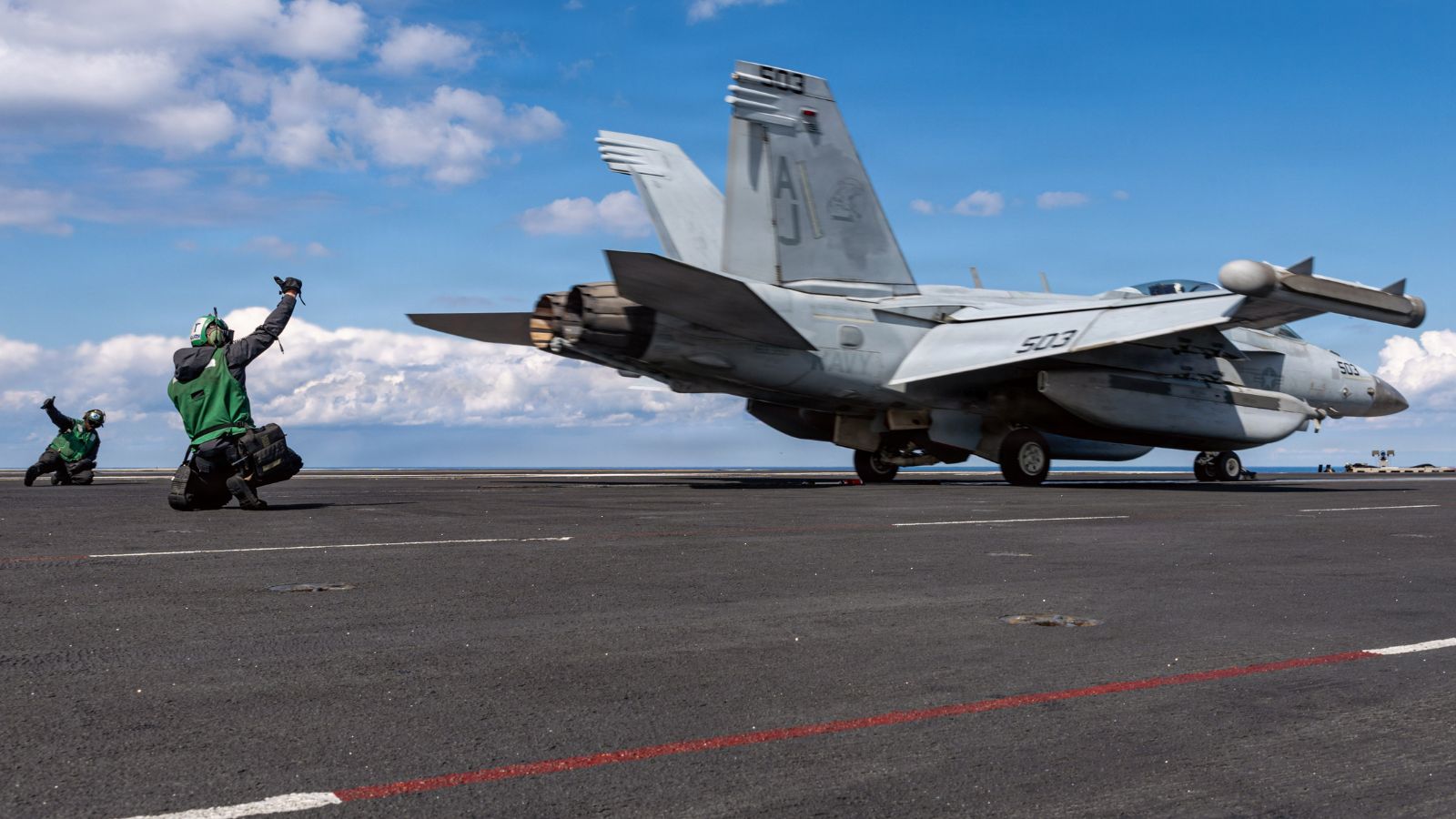
The air in the desert doesn’t just get cold when the sun drops; it turns brittle. It becomes a substance that carries sound for miles—the low hum of a generator, the crunch of a boot on gravel, or the distant, rhythmic throb of a Pratt & Whitney engine.
Inside the darkened glow of a Patriot missile battery control station, the world is reduced to a series of glowing green vectors. There is no wind here. There is no smell of jet fuel or the vast, terrifying emptiness of the Persian Gulf at midnight. There is only the interface. To a radar operator, a human life is a data point. It has a velocity, an altitude, and a transponder code.
When those data points align with the logic of an automated defense system, the machine doesn't feel hesitation. It doesn't wonder about the pilot's family or the political fallout of a mistake. It simply calculates an intercept.
Last night, the math went horribly wrong.
Three American fighter jets, multi-million dollar marvels of engineering and pilot skill, were erased from the sky over the northern Gulf. They weren't taken down by Iranian interceptors or sophisticated Russian-made surface-to-air missiles launched from the coast of Bandar Abbas. They were ended by their own allies.
Kuwaiti air defense units, pushed to a breaking point by days of relentless Iranian drone swarms and ballistic missile feints, finally snapped. In the frantic, claustrophobic atmosphere of a high-alert command center, the distinction between a "threat" and a "friend" can vanish in a heartbeat.
The Anatomy of a Tragic Error
To understand how three F-16s can be targeted by the very people they are flying to protect, you have to look past the hardware.
The Persian Gulf is currently the most congested, high-tension airspace on the planet. For weeks, Iran has been testing the boundaries, sending "suicide" drones on erratic paths that hug the coastline. These drones are designed to be annoying. They are designed to flicker on and off radar screens, forcing operators to keep their fingers hovering over the "fire" button for hours on end.
Imagine sitting in a windowless box for twelve hours. You have been told an attack is imminent. Your screen is cluttered with "noise"—commercial flights, friendly patrols, and the ghost echoes of electronic warfare.
The technical term for what happened is a failure of the IFF system (Identification Friend or Foe). In theory, every allied aircraft broadcasts a coded signal that tells the defense computer, "I'm one of the good guys." But IFF is not a magic wand. Signals can be jammed. Transponders can malfunction. More importantly, humans can override the system when they believe the computer is being spoofed.
The Kuwaiti batteries, operating under a hair-trigger ROE (Rules of Engagement) due to the escalating conflict with Tehran, identified the three incoming American jets as a high-speed strike package. They weren't seeing F-16s. They were seeing symbols of an existential threat.
The Invisible Stakes of a Digital War
We often talk about war in terms of territory or resources. We talk about oil prices and shipping lanes. But the real war, the one that claimed those three pilots, is fought in the electromagnetic spectrum.
When a conflict escalates to this level, the "fog of war" isn't just smoke and dust. It is a digital haze. Iran has become exceptionally proficient at GPS spoofing and radar "ghosting." They can make a single drone look like a squadron, or make a friendly squadron look like a cruise missile.
Consider the perspective of the Kuwaiti commander. He has seconds to decide. If he waits to verify the signal, and it turns out to be an Iranian missile, his city burns. If he fires and it's a mistake, he loses an ally.
He chose to fire.
The result was a synchronized launch. The Patriot missiles did exactly what they were designed to do. They sought out the heat and the metal, closing the gap at Mach 4. For the American pilots, the first warning was likely the scream of their own cockpit sensors telling them they were "painted" by a radar. But it wasn't a radar they expected to fear. It was the radar of the base where they had planned to land for fuel.
The Human Cost of Automated Certainty
We have spent decades trying to take the "human error" out of combat. We built systems that can track a hundred targets and prioritize them by lethality. We built networks that share data across oceans in milliseconds.
Yet, these systems have created a new kind of danger: the illusion of total knowledge.
When a screen tells you a target is "Hostile," it takes a massive amount of psychological courage to say, "The screen might be wrong." In the heat of the moment, the machine’s certainty becomes a crutch. The Kuwaiti operators weren't incompetent. They were victims of a system that demands more speed than the human brain can provide while maintaining its moral compass.
This isn't the first time this has happened, and as long as we rely on "automated" defense in crowded corridors, it won't be the last. The tragedy in the Gulf is a reminder that technology doesn't remove the chaos of war; it just accelerates it. It makes the mistakes happen at the speed of light.
The diplomatic cables flying between Washington and Kuwait City today are filled with apologies, "deep regrets," and promises of investigations. But for the families of the three pilots, the terminology of "friendly fire" is a cruel oxymoron. There is nothing friendly about a missile. There is nothing logical about dying at the hands of an ally because a computer chip failed to recognize a signature.
The Echo in the Silence
As the sun rises over the Gulf today, the search and rescue teams are picking through debris. The water is oily and dark.
This event changes the gravity of the Iran conflict. It proves that the "escalation" isn't just a political talking point. It is a physical weight that breaks things. It breaks machines, it breaks alliances, and it breaks people.
The fear now isn't just what Iran will do next. The fear is what we will do to ourselves in the panic. If we cannot tell our friends from our enemies in the glow of a radar screen, then the very systems we built to keep us safe have become our greatest liability.
The desert is quiet again, but it is a heavy, expectant silence. Somewhere in a bunker, another operator is staring at a green dot. He is tired. His eyes are burning. He is trying to decide if that dot is a person, a drone, or a ghost.
He reaches for the button. He hesitates. In that hesitation, the entire future of the region hangs, vibrating like a plucked wire.
The jets are gone, and the sky is empty, but the machines are still listening, waiting for the next heartbeat to misinterpret.


