The Baltic Sea is rarely silent. Even in the dead of winter, the water thrums with the low-frequency vibration of steel hulls and massive diesel engines. For decades, the port of Primorsk has been the beating heart of this mechanical pulse, a sprawling industrial cathedral where Russia’s Siberian wealth meets the global market. But on a recent Tuesday, the rhythm changed.
The sound that replaced the engine hum wasn’t the roar of a jet or the whistle of a missile. It was a lawnmower. Also making headlines recently: The Global South Power Play Connecting New Delhi to Kingston.
Hundreds of them. Or so it seemed. In reality, it was a swarm of Ukrainian long-range drones, plywood and plastic birds of prey carrying kilograms of high explosives, weaving through the frigid air toward one of the most protected oil hubs on the planet. This wasn't just another skirmish in a long, bloody war. It was a surgical strike against the "Shadow Fleet," the ghost ships that keep the Kremlin’s engine running while the rest of the world tries to pull the plug.
To understand why a few dozen drones in the Baltic matter more than a thousand tanks in the Donbas, you have to look at the plumbing of global power. Further details into this topic are covered by Reuters.
The Invisible Veins of the Baltic
Imagine a sprawling, ancient mansion. The owners are under house arrest, their bank accounts frozen, their front door barred. Yet, every night, the lights stay on. The heaters hum. Gold is delivered to the back door in the middle of the night.
Russia is that mansion. Primorsk is the back door.
Primorsk isn't just a harbor; it is a terminal that handles roughly 30% of Russia’s seaborne oil exports. When the West imposed price caps and sanctions, the world expected the oil to stop. It didn't. Instead, it moved into the shadows. An aging armada of tankers—often uninsured, with murky ownership and expired safety certificates—began zig-zagging across the oceans. This is the Shadow Fleet. These ships are the literal lifeblood of the Russian war machine, turning crude oil into the hard currency that buys Iranian drones and North Korean shells.
When those drones crested the horizon over the Gulf of Finland, they weren't just targeting tanks of flammable liquid. They were targeting the financial loophole that keeps the war alive.
The Anatomy of the Swarm
Modern warfare has a terrifyingly low barrier to entry. For the cost of a single high-end German sedan, Ukraine can now build a fleet of drones capable of flying 1,000 kilometers. They are slow. They are loud. But they are many.
Think of it like a cloud of gnats. You can swat one, two, or ten. But if there are fifty, and you only have two hands, eventually, you’re going to get bitten.
The Russian air defenses around Primorsk are among the most sophisticated in the world. S-400 missile systems, Pantsir units, and electronic jamming towers create a "dome" of protection. But the drones are designed to exploit the gaps in the dome. They fly low, hugging the wave tops to stay under radar. They use basic GPS and visual navigation that can be difficult to jam.
As the swarm approached Primorsk, the sky lit up. Tracers from heavy machine guns stitched the darkness with red lines. The boom of interceptor missiles echoed across the water. But the math was on the side of the machines. One drone got through. Then another.
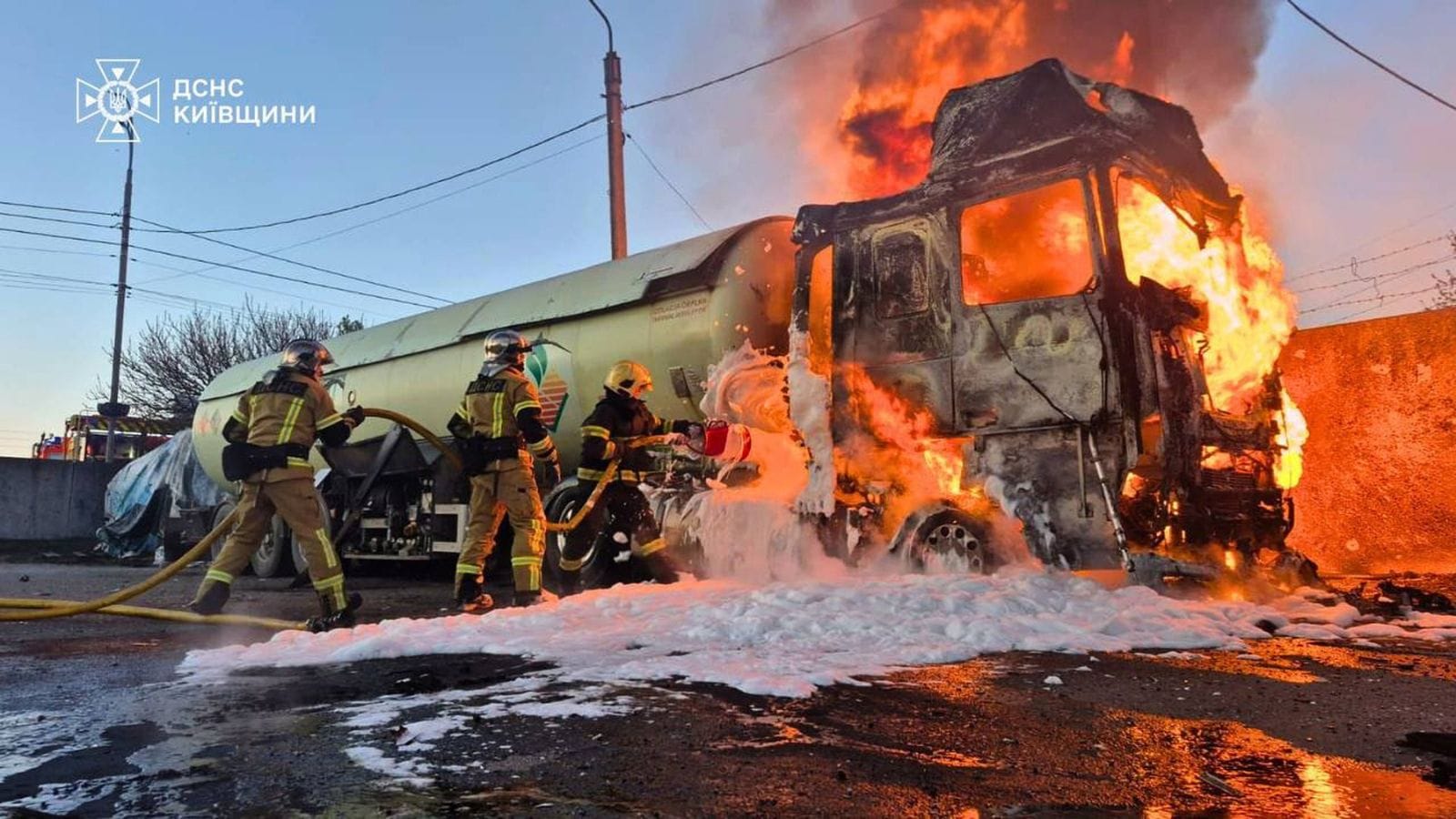
A fireball erupted at the terminal, a pillar of orange light that could be seen by crews on merchant ships miles away. In that moment, the "shadow" part of the fleet became very, very visible.
The Human Cost of a Ghost Ship
We often talk about these strikes in terms of barrels per day or geopolitical leverage. We forget the people on the decks.
Consider a hypothetical sailor named Marek. He isn't Russian or Ukrainian; he’s a merchant mariner from a developing nation, hired through a shell company based in Dubai to work on a twenty-year-old tanker. He knows his ship is "hot." He knows the insurance is fake. He knows that if his ship catches fire in the middle of the Baltic, no official coast guard is coming to save a vessel that technically doesn't exist on any legal ledger.
When the drones struck Primorsk, sailors like Marek watched the horizon burn. They realized that the "safe" waters of the Baltic, thousands of miles from the front lines, had become a combat zone.
This is the psychological front of the war. If the crews of the Shadow Fleet refuse to sail, or if the insurers—even the black-market ones—decide the risk is too high, the oil stops. And when the oil stops, the money stops.
The Fragile Logic of Energy Security
There is a deep, uncomfortable irony in this conflict. The very countries supporting Ukraine are often the ones terrified of what happens if Russian oil truly disappears from the market. A sudden spike in gas prices can topple Western governments and trigger global recessions.
Ukraine knows this. Their strategy isn't to destroy every drop of oil, but to make it prohibitively expensive and dangerous to move. They are forcing a "risk premium" on every barrel. By hitting Primorsk, they are telling the world that the Shadow Fleet is no longer a safe bet. They are pulling the ghosts out into the light and asking the global market: Is this worth it?
The strike at Primorsk was massive, involving over 50 drones. It wasn't just a nuisance; it was a demonstration of reach. Ukraine was saying, "We can touch your heart while you are trying to break ours."
The Shifting Horizon
The smoke eventually cleared over the Baltic, but the air remained heavy with the smell of burnt hydrocarbons and the weight of a new reality. The "rear" no longer exists.
War used to be a line on a map. You stayed behind the line, and you were safe. Today, the line is everywhere. It is in the code of a navigation system. It is in the fuel lines of a terminal in the frozen north. It is in the bank accounts of the men who think they can hide behind shell companies and flags of convenience.
The Shadow Fleet continues to sail, for now. But the crews are looking at the sky more often. They are listening for that lawnmower sound. They know that somewhere, a thousand kilometers away, a technician is clicking a mouse and sending another swarm into the night.
The pulse of the Baltic is still there, but it’s skipping beats. Every time a drone finds its mark, the mansion gets a little darker, the heaters get a little colder, and the back door feels a lot less secure.
The silence that followed the explosions wasn't just the end of the attack. It was the sound of a world realizing that even shadows can be hunted.